The Flag Man of Platte County
“The government gives you the words,” Emil said. “They’re the same for everybody, and a family can tell. So you find one thing about the man that’s true. You say it after. One sentence. Short. Don’t make it pretty.”
I asked him what if I didn’t know the man.
“Then find out,” he said.
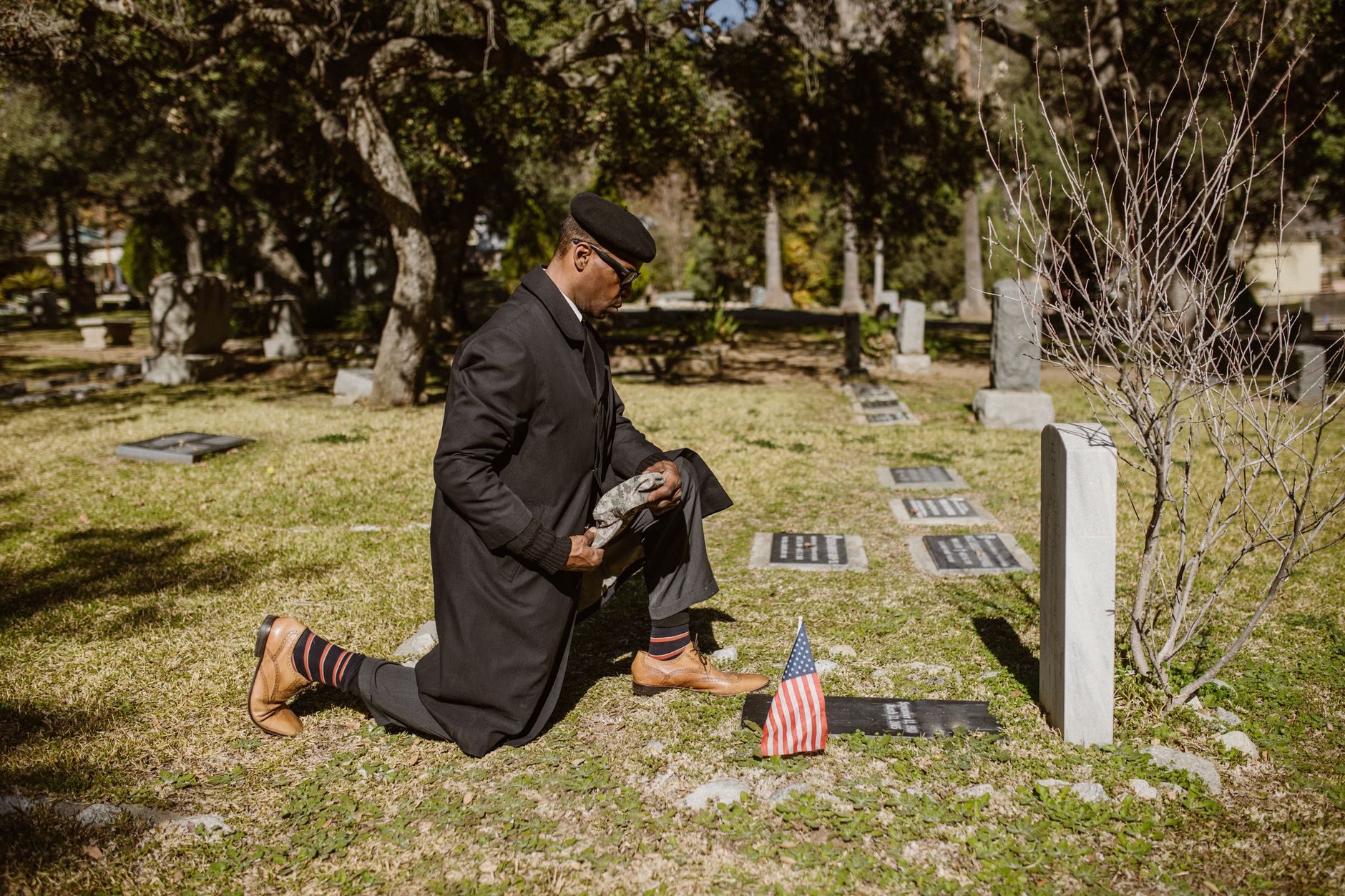
Emil died that November, in his sleep. I folded the flag at his funeral with my hands steady and my voice not, and I knelt in front of his widow Agnes and said the words. Then I told her, “He taught me with shaking hands and never folded one wrong.” She held my wrist for a second after she took the flag.
That night I bought a green ledger book at the surplus store in Grand Island for four dollars. The first line says number 1, the date, Emil’s name, his branch, and the sentence. I wrote one line for every flag after that, and I never skipped one.
Platte County buries a veteran about every twelve days, once you count the old ones from the war and the Korea boys and the Vietnam men who are going now. I drove a feed truck for the co-op for thirty-eight years, and my route took me through every township in the county. A lot of my sentences came off the seat of that truck.
Wilbur Dostal, Army, 1996. Could back a hay trailer through a keyhole.
A Navy man from Duncan who sang bass in the Lutheran choir for fifty years and could not carry a tune anywhere else.
A Marine from Platte Center who bought the school band uniforms three seasons running and told nobody.
When I did not know the man, I called the funeral home, and then I called the widow, and if she was too tired to talk I called a neighbor. Emil was right. A family can tell.
And I never missed one. That was the part I was proud of, and I was prouder than I should have been.
In January of 1996 a blizzard closed every road north of Highway 30, and a farmer with a four-wheel-drive tractor plowed a lane to the cemetery so we could bury a Korean War man at two degrees below zero. In August of 2012 it was 106 in a cemetery with no trees, and Audrey soaked my gloves in ice water before I left the house.
The morning our daughter Terri was born in 1988, I had a flag to fold in Duncan at ten. Audrey told me to go.
“This baby is not coming before lunch,” she said. “Go fold your flag, Ray.”
She was right by about forty minutes. I made it to the delivery room with my gloves still in my coat pocket.
Audrey died in March of 2021, after two years of cancer that took her a pound at a time. A week after we buried her, I folded the flag for a man from Genoa, because it was on the calendar. I am not saying that was healthy. I am saying that book had turned into the place I put my hands when everything else would not hold still.
They kept me in the hospital four days. Terri drove up from Lincoln, an hour and a quarter, with her nurse’s badge still clipped to her coat. She looks like her mother when she is deciding whether to be mad at me.