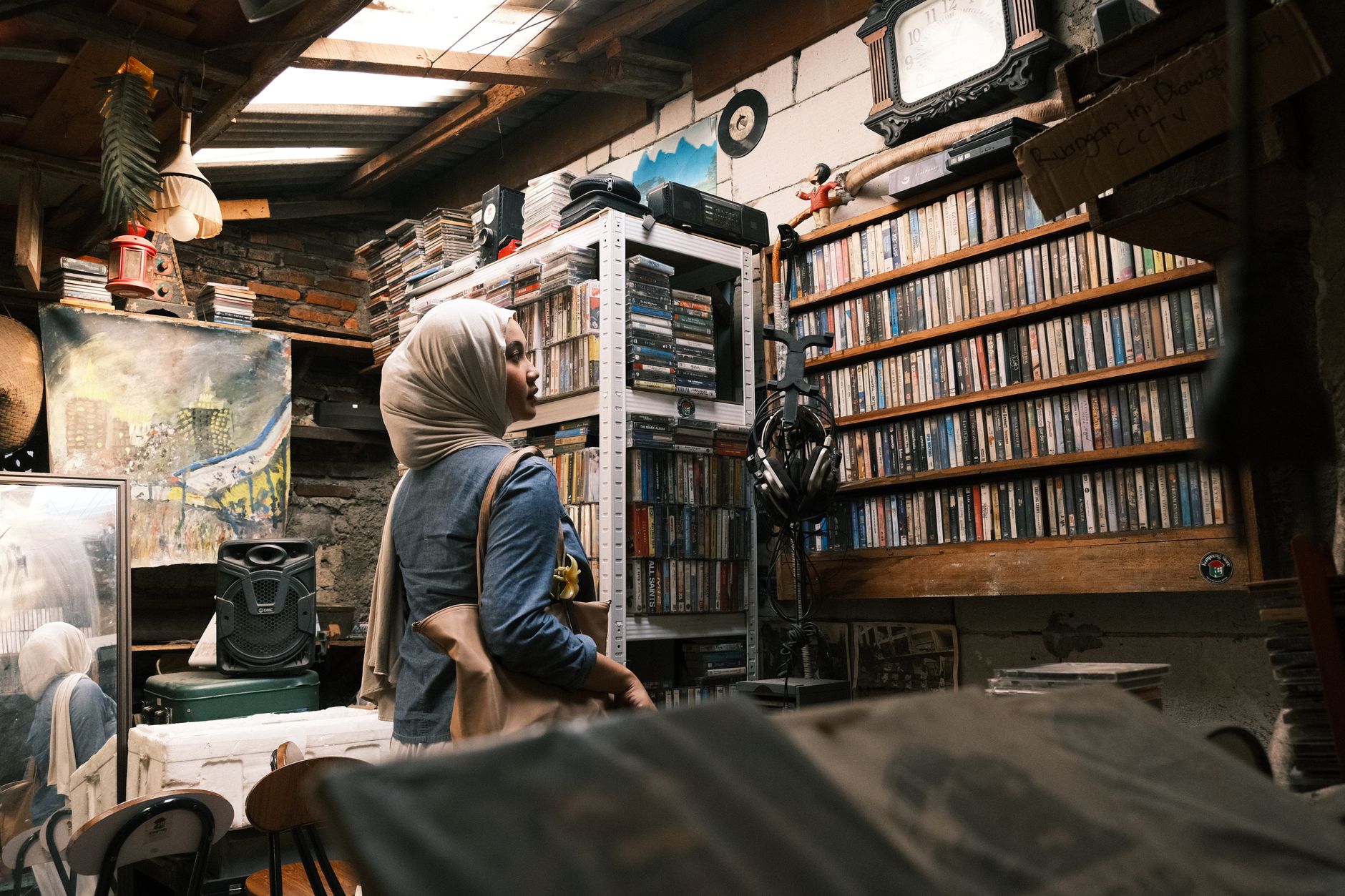
The Tapes That Came Back To Me
When the words began to swim
I was sixty-eight the year my own eyes started to fail, and I was too busy to notice it at first.
It came as a smudge. A soft gray thumbprint right in the middle of whatever I looked straight at.
I could still see around it. I read by moving my eyes to the side, catching the words at the edge, and I told myself it was nothing but age.
I turned Harold’s gooseneck lamp up brighter. I held the paper closer. I got a magnifying glass from the drug store and told no one.
But a reader knows. A woman who has read a newspaper out loud twice a week for seventeen years knows exactly when the page is betraying her.
The day I read the school lunch menu and could not make out whether it said Tuesday or Thursday, I knew I had to go see somebody.
The eye man in Bethany sent me on to a specialist in Kansas City. Three hours each way, and Katie drove me, grown now and working at the hospital.
The specialist put drops in and shined his lights and had me look at a grid of lines, and some of the lines were bent and gone where my brain was filling in what my eye could not.
He called it macular degeneration. The dry kind, he said, the slow kind, which was meant to be the good news.
There were shots for the other kind. There was nothing much for mine but to watch it go.
He was kind about it. He said I would likely always keep some side vision, enough to get around my own house, to see a doorway and a face as a shape.
But the center, the part you read with, the part you thread a needle and sign your name and look a person in the eye with, that part was leaving and would not come back.
I asked him the only question that mattered to me. I asked if I would be able to read.
He looked at my chart, at the dates, and he understood what he was looking at, a reader going blind.
He said, gently, that the reading would get very hard, and then it would not be possible, and that it would happen within the year.
Katie held my hand in the elevator and did not say anything, which was the right thing to do, because there was nothing to say.
Then in the parking garage, in her little car, I came apart. I cried the way you cry when you are too old to pretend it will be fine.
I was not crying for the sunsets or the faces, though I grieved those. I was crying because I thought the tapes were over.
I thought of my listeners out there in the dark, and I thought there would be no voice reading them the county anymore, and I could not bear it.