The Recliner That Went to Town
Emma
I need to say something about my daughter, because I didn’t know she had it in her, and I should have.
Every night after supper, Emma sat with Dad in the dining room that was now his bedroom and read him the sports page from the St.
Cloud paper. Every word of it. The high school wrestling scores, the Gophers, the Vikings, the box scores.
She hated sports. She’d tell you so. But she read him every line, and when she got to a name he knew, a grandson of somebody from church who was wrestling at Pierz, he’d tell her a story about that boy’s grandpa.
Some nights he fell asleep partway through. His good hand would be resting on the blanket, and Emma would slip her hand into it, and she’d sit there until his breathing went slow and even, and then she’d turn out the lamp.
One night I stood in the doorway and watched her do it. She didn’t know I was there.
She bent down and kissed him on the forehead, right on the left side, the side the stroke took, and whispered goodnight, Grandpa, like it was the most ordinary thing.
I went into the bathroom and ran the water so nobody would hear me.
The empty farm
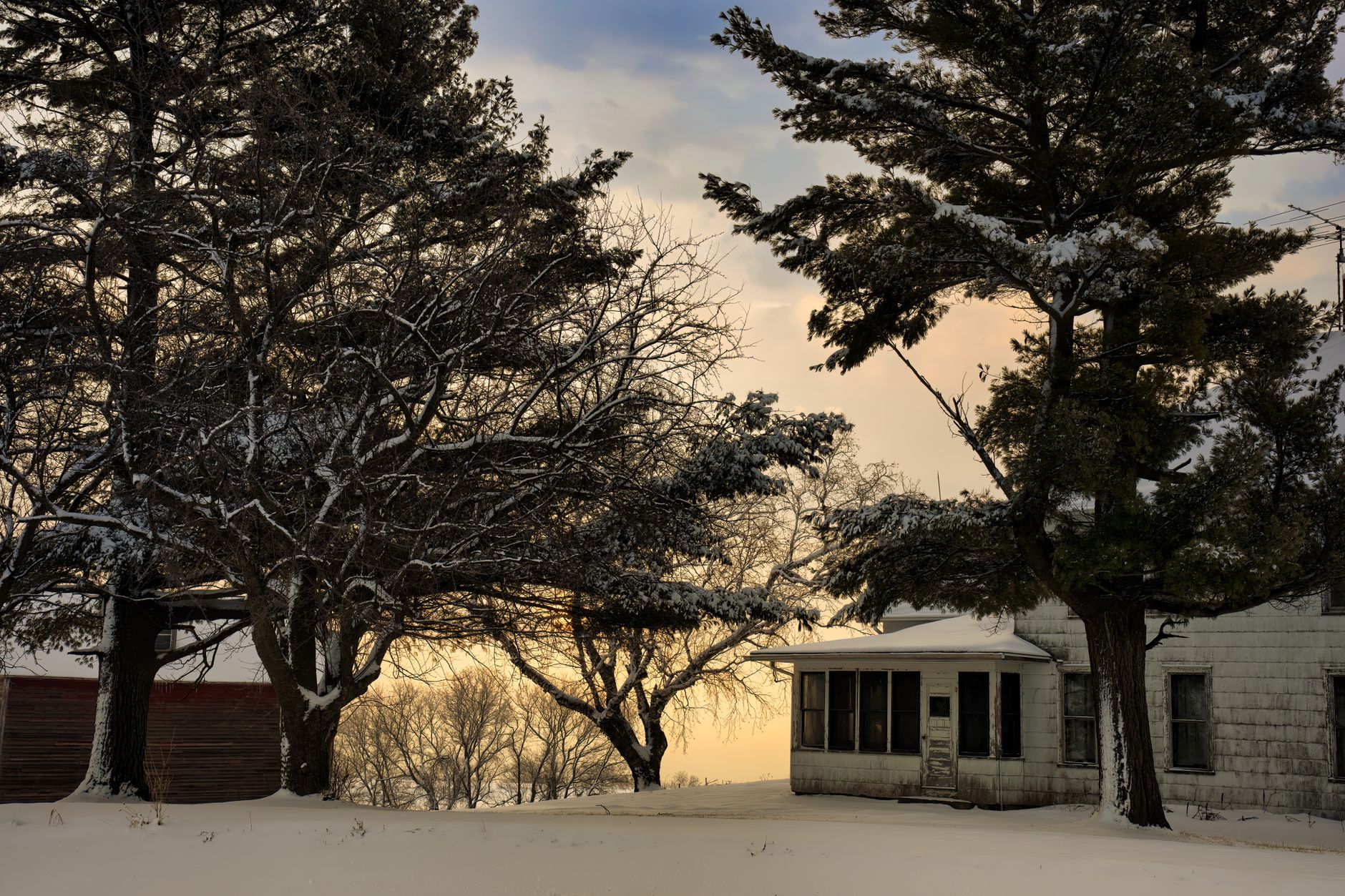
Out at the farm, things went quiet. I drove past it twice a day on Route 6, morning and afternoon.
The yard light went on at dusk and off at dawn, the same as always. Carla’s car sat by the house. The driveway didn’t always get plowed.
At church, people asked Carla where Walt was. It was a small congregation, and Dad had been an usher for thirty years.
Somebody always asks where you are when you’ve been sitting in the same pew since 1974.
I heard from my cousin Deb that Carla told people he was in town for therapy, which was true.
I heard she said it with her chin up. After the second Sunday in December, she stopped coming to church at all.
I am not proud that a small part of me was glad. I want to be honest about that.
Brian had written the date in his notebook, and I had kept count too, in my own way, every night I lay awake in that slanted room.
But mostly I felt sick about it. Dad called her every evening at seven. I’d hear him in the dining room on his flip phone, his voice low.
I didn’t listen. I didn’t need to. I could tell from his face that the calls were short.
The knock
It was a Saturday, the nineteenth of December. Brian was at the mill. Emma was at a friend’s.
I was in the kitchen making a double batch of krumkake for the church bake sale, because I’d signed up in September and you don’t back out of a church bake sale.
Somebody knocked on the front door. Not the back door, where everybody we know comes in. The front door, which we hardly use.
I wiped my hands on my apron and went to open it.
Carla was standing on the step in her winter coat, zipped this time, with a nine-by-thirteen pan wrapped in foil in both hands and her car keys still squeezed in one fist.
“I made bars,” she said. “Seven-layer. Walt likes them.”
“Come in,” I said. “It’s cold.”
She stepped inside and stood on the rug. She looked past me down the hallway toward the dining room, and I watched her face change.
Dad was coming down the hall. He’d heard her voice. He was coming on his cane, one hand trailing the wall, the walker left parked by the back door, one slow step at a time, his left foot lifting now instead of dragging, his good hand on the cane and his left hand out a little at his side for balance.
Carla’s mouth opened, and nothing came out. She stood there holding the pan of bars and watched him walk the whole length of that hallway, maybe thirty feet, without stopping once.
Dad stopped at the kitchen doorway and leaned his shoulder on the frame. He was breathing hard, but he was smiling, the half smile, and his eyes were wet.
“Hi, Carla,” he said.
“Walt,” she said. It was barely a word.
“Sit down, Carla,” he said. “Kelly, you stay too. Don’t go running off to the bake sale.”