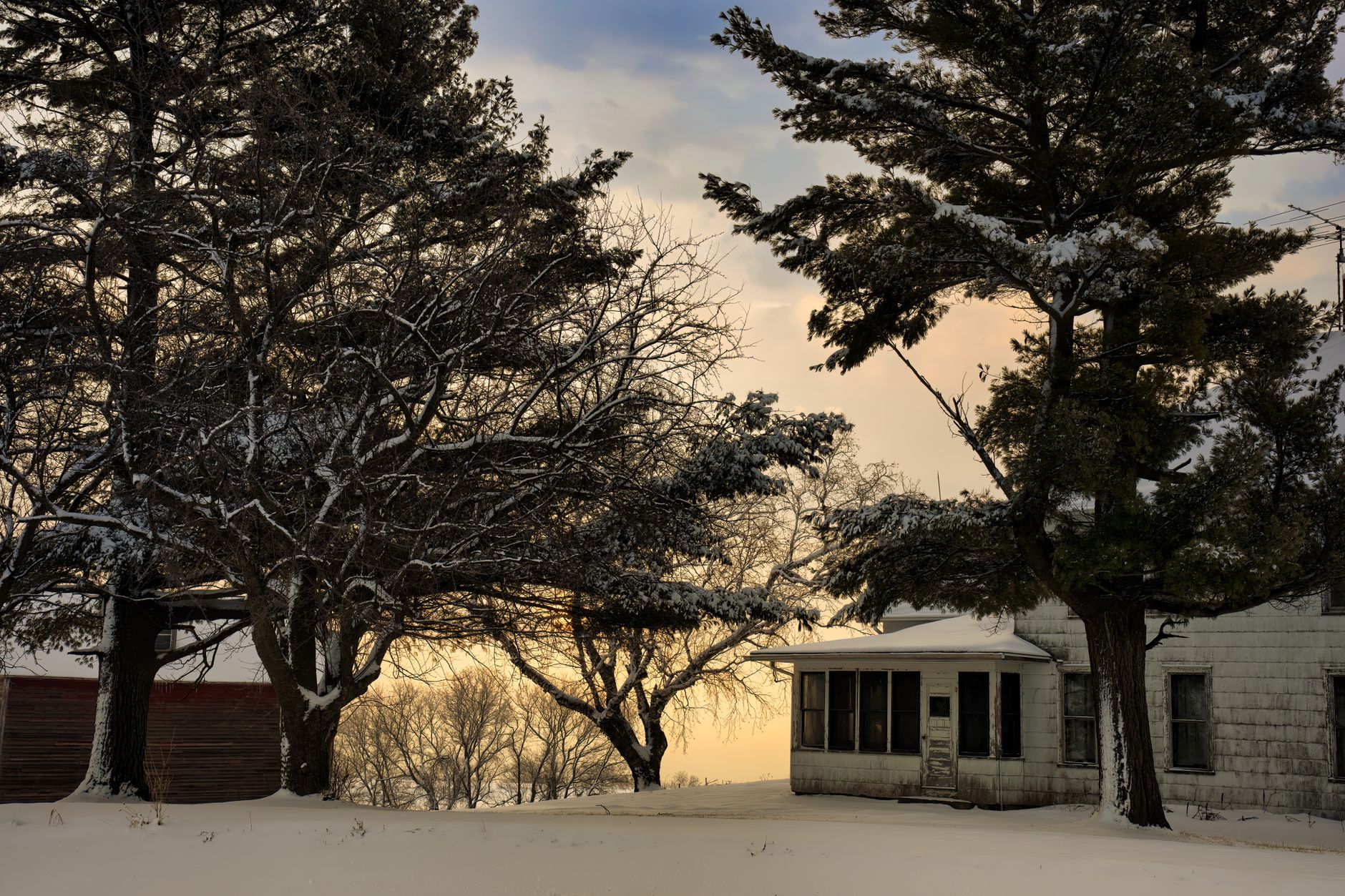
The Recliner That Went to Town
How I came to be sleeping in my old room
My name is Kelly Moe. I am forty-four years old, and I have driven a school bus for the district for eleven years.
Route 6, the long one, out along the county roads past the dairy farms and back.
My husband, Brian, works at the feed mill in town. He runs the pellet line and fixes whatever breaks, which at a feed mill is most things.
We have a daughter, Emma, who was fifteen that winter and taller than me already.
We live in a small yellow house in town, a story and a half with a detached garage and a maple in the front yard that drops helicopters all over the sidewalk every spring. It is eleven miles from the farm where I grew up.
My dad, Walt, farmed that ground for fifty-one years. Corn and beans, and a dairy herd until 2009, when the milk check stopped covering the feed bill and he sold the cows to a man from Stearns County.
He cried in the barn that day. He told me later it was the dust.
My mother died six years ago of a heart that just quit one morning while she was making oatmeal.
After that it was Dad alone in the farmhouse, renting most of his cropland to the neighbor, keeping a few acres and his machine shed and his routines.
Then, two summers ago, on a gray afternoon in late August, he went out to the machine shed to grease the bearings on his old Farmall and didn’t come back in for supper.
The neighbor, Gene Anderson, found him. Gene had come over to borrow a log chain and saw the shed door open and Dad sitting on the floor against the tractor tire, trying to talk and making only sounds. Gene called 911 and then he called me.
I was in the bus garage finishing my pre-trip inspection for the fall.
I left the clipboard on the seat and drove the eleven miles in about eight minutes. The ambulance from town was already in the yard when I pulled in.
It was a stroke on the right side of his brain, which meant his left side quit on him. His left arm, his left leg, the left half of his face.
The doctors at St. Cloud said the clot buster helped, and that he was lucky Gene came by when he did.
He spent eleven days in the hospital and then three weeks in inpatient rehab.
When they discharged him, the social worker sat down with me in a little room with a box of tissues on the table and asked what the plan was.
I didn’t have a plan. I had a husband, a teenager, a bus route, and a father who could not get from his bed to the bathroom by himself.
So I made the plan right there in that little room. I would move home for a while.
Brian didn’t argue. He said, “Do what you need to do, and I’ll hold down the house.” That’s Brian. He doesn’t say much, but what he says he does. He kept Emma fed and to school, and he drove out every weekend to mow or plow.
I slept at the farm Sunday night through Thursday night. Mornings I got Dad up, got him to the toilet and into the shower chair, washed him, dressed him, made his breakfast, and set out his pills. Then I drove to the bus garage for my morning route.
Carla
Dad met Carla at the Lutheran church in town about seven months after his stroke.
She had moved there from somewhere near Brainerd to be closer to her sister, and she sang alto in the choir.
She brought him a hotdish one Sunday after he had made it into the back pew on his walker for the first time.
Tater tot, with the cream of mushroom and the ground beef. He told me it was the best he’d had since Mom’s.
I thought it was sweet. I honestly did. My father had been alone for five years, and then he’d been sick and scared and stuck in a chair.
Here was a woman who laughed at his jokes and didn’t seem to mind the left side of his face.
They married a year ago in October, in a small ceremony at the church with maybe forty people.
Dad wore his good brown suit and walked her back up the aisle with his cane. I cried. Emma cried. Even Brian blew his nose.
Carla moved into the farmhouse. She was sixty-two and still working three days a week at the clinic front desk in Little Falls.
She had a bad back, two herniated discs from years of lifting at a nursing home, so she couldn’t do the transfers.
That meant I still did them. The shower, the exercises, the nights he needed help.
Dad was much better by then, but the shower was still the dangerous part, and a fall at his age after a stroke could undo everything.
So I kept coming. Four or five nights a week, my old room. Carla and I were polite to each other.
We split the cooking. She kept the house cleaner than I ever did. Some nights we watched Wheel of Fortune together, all three of us.