The Pond Nine Fathers Flooded
How Walt made it
To understand why nine grown men were in my backyard in the dark, you have to understand what Walt built there, and why.
He started it in the winter of 1991.
The back half of our lot sits low. We are on the edge of Hazen, a town of about nine hundred in Winneshiek County, Iowa, and our street runs along a shallow draw. Every thaw, water came off the higher lots and pooled in our back half and sat there. In summer it was a mud hole that bred mosquitoes. In November it froze lumpy and useless.
Walt looked at that mud hole for two winters, and the third winter he said, that water wants to be a pond, so I am going to let it.
He was a practical man. He fixed grain augers for a living, and he thought in terms of letting things do what they already wanted to do.
That first year he borrowed a neighbor’s skid loader and pushed up a low dirt berm along the back fence line, maybe eighteen inches high, to hold the water where it gathered instead of letting it bleed off into the alley. He shaped the bottom so it drained to one low corner he could manage.
Then he learned the ice.
This is the part people got wrong when they tried to help him over the years, and the part Danny Kessler was getting wrong that Tuesday night with the hose.
You cannot make good skating ice fast. If you flood two inches of water at once and let it freeze, you get white ice full of cracks and trapped air, and it heaves and splits the first warm afternoon. Walt learned to build it the way you build anything that lasts, thin and patient.
Thick layers crack, he used to say. Patience freezes clear.
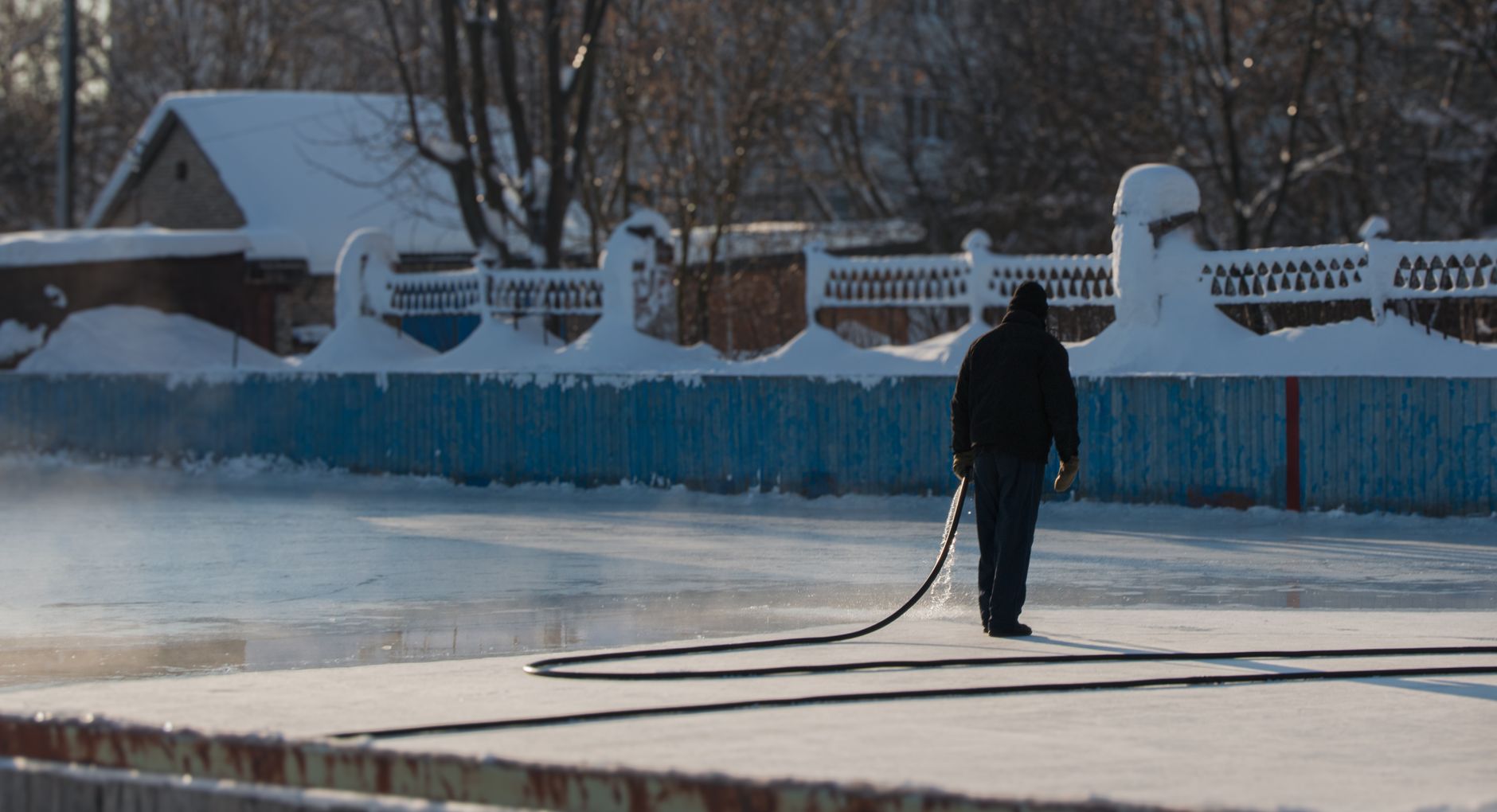
He would wait for a run of cold nights, the kind where it drops to ten or fifteen and stays. Then after supper he would run the hose out the mudroom window and lay down a skin of water, no more than you could cover with a wet rag, and he would walk away and let the night do the work. By morning it was glass. The next night, another skin. Six or eight nights of that and you had three inches of ice you could drive a truck on, clear enough to see the grass blades frozen underneath.
He strung lights on two cedar poles he set at either end, so the kids could skate after supper when the school day was done and the dark came at five.
And he painted a board.
It was a scrap of barn siding, gray and split, and he painted on it in white house paint, skate at your own risk. He wired it to the gate with baling wire. It was his one nod to the lawyers.
Then he let every child in the county walk right past that board and onto his ice, for thirty-two years, and never once asked a dime or a signature.