The Letters That Came Home
Denny’s knock
It was not the end. I had forgotten that a letter goes two ways, and that a town this size has a long memory and a mouth on it.
I do not know exactly how the word got around. I think it started at the pharmacy, where the girl at the counter read my new prescription and told her mother, who had been in my class in ninety-one.
I think from there it went the way everything goes here, over coffee and across fences and in the line at the feed store, until half the county knew that Mrs. Marsh could not see to write her letters this year.
And somewhere in there, somebody had an idea, and the idea caught.
They did not call me. Nobody said a word to me, which is the only reason it worked, because I would have told them to save their stamps and their trouble.
Instead, one at a time and then by the dozen, they sat down at their own kitchen tables, all those grown seniors of mine, and they wrote me a letter back.
Denny told me later that the sack had been filling at the post office for two weeks. He had watched it grow and kept his mouth shut because they had asked him to, and because he wanted to be the one to carry it up my steps himself.
“I been dropping your mail in that box for twenty years, Miss Marsh,” he said, standing on my porch with the sack tipped open. “I wanted to hand you this one.”
There were four hundred and some letters in that first sack. More came the rest of the week. They came from thirty-one of the thirty-eight graduating classes. They came from this town and from across the country.
They came from the farm boy and the lawyer and the twins, who are grown men now and wrote me on the same day without telling each other.
Every one of them was a letter about a letter. About the one I had written them, and where they had kept it, and what it had done.
Reading them
I could not read them fast, and I did not want to. That is the mercy in bad eyes, maybe. You are made to go slow.
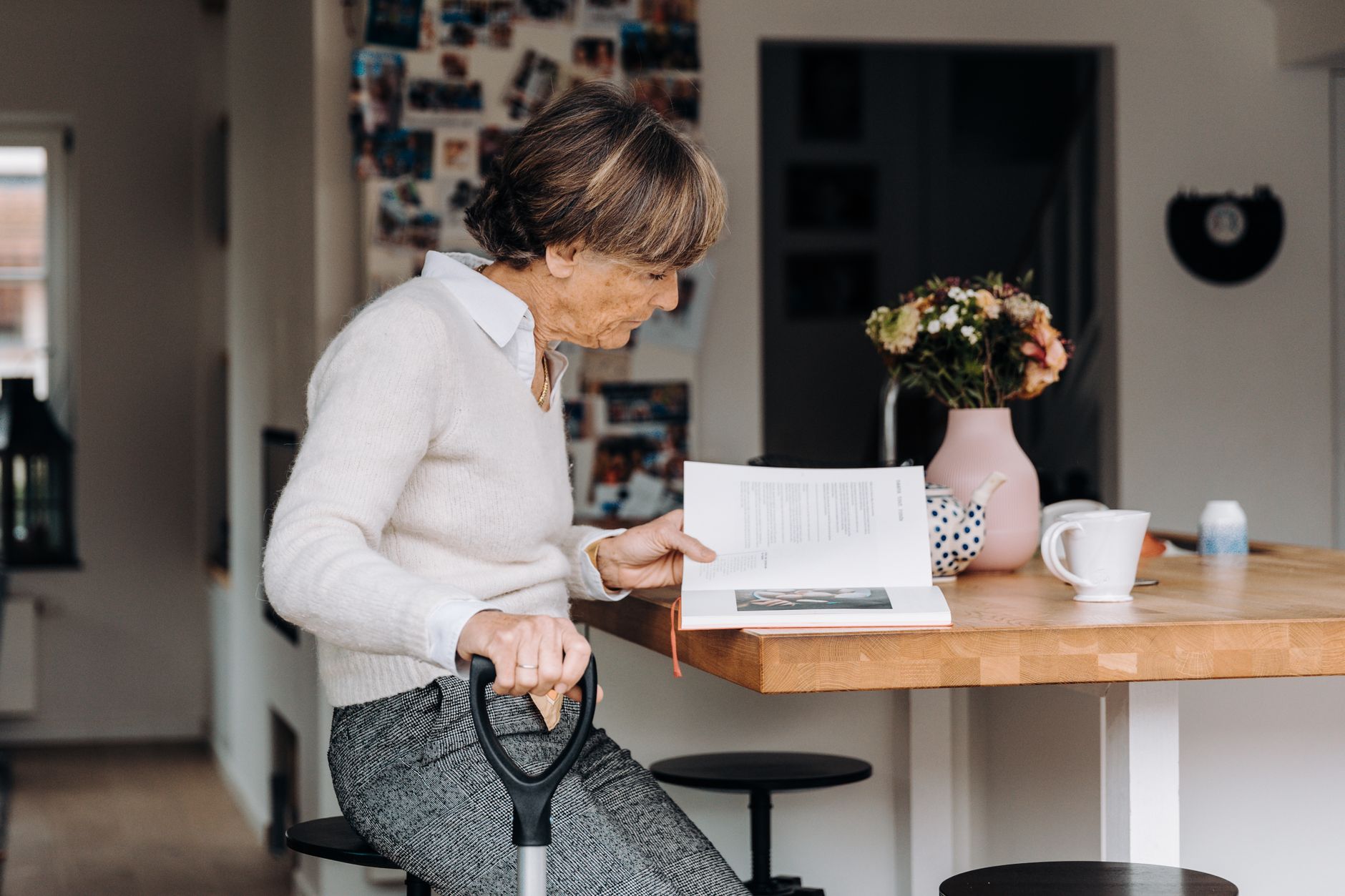
My grandson came over that first weekend and set up a reading lamp and a lighted magnifier on a stand by the front window, where the afternoon light is best.
I read one letter a day. Sometimes two, if they were short. I sit in the good chair by the window in the afternoon with the magnifier, and I go down each line like I am walking a furrow.
Some of them I have read three times. Some I have to put down in my lap and look out the window a while before I can go on.
There is a particular quiet in reading a hundred letters that all begin, in a hundred different hands, with some version of the same sentence. “You probably do not remember me.” Every one of them thought they were the forgotten one. Every one of them was sure the letter had been a form thing, a nicety, something I mailed without meaning it, because that is what the world had taught them to expect. And every one of them had kept it anyway, in a Bible or a jewelry box or a wallet, for ten or twenty or thirty years, just in case it had been real.
It was real. That is the thing I keep wanting to climb through the magnifier and tell them. There was never a form letter. There was never a year I phoned it in. I would sooner have skipped a child than lied to one on paper.