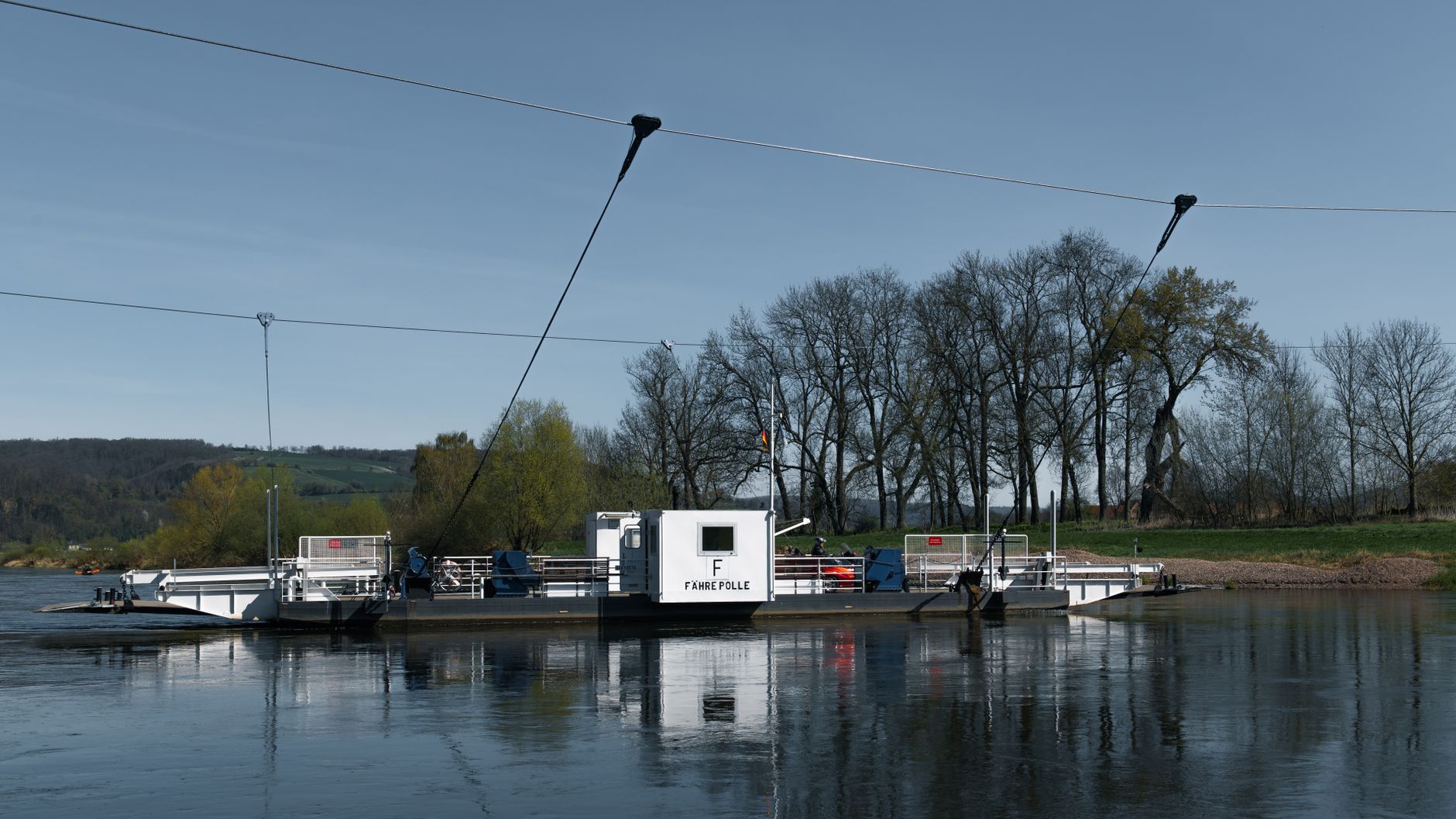
The Last Ride Across The Ferry
The morning the bridge opened
The bridge was set to open at eight in the morning. The ferry was set to stop at the same hour, whenever my father made his last crossing.
I came down to the landing before daylight, in the dark, because I did not want him to be alone when it stopped.
I expected it to be quiet. I expected the two of us to sit in the cold with the green thermos and watch the sun come up on a crossing that nobody needed anymore, and then watch him tie the boat off for the last time.
I had braced myself for how sad that was going to be. A whole life, and then one ordinary Tuesday, and then nothing.
I was wrong about the morning in every way a person can be wrong.
As I came down the bottoms road in the dark, my headlights caught something I could not make sense of at first. Taillights. A whole line of them.
Trucks. Parked along the shoulder of the bottoms road, nose to tail, farther than my lights could reach. Exhaust rising white in the cold.
I slowed down and rolled my window down. I knew most of these trucks. I had known them my whole life, the way you know trucks in a small county, by the dents and the dogs in the beds.
There was Denny Kerr’s feed truck. There were two grain trucks from out toward the county line. There were pickups, and family cars, and both of the church vans, the Baptist one and the Methodist one, idling in line.
I got down to the landing and my father was already there in the dark, standing by the winch in his good hat and his good coat, the ones he wore to funerals.
He looked at the line of trucks coming out of the dark, and he looked at me, and for the first time in my grown life I saw my father not know what to do.
He said, Carolyn, what is all this.
I told him I did not know. And that was the truth. I did not yet.
The first trucks
The sun came up gray and then gold over the far bank, and the first truck rolled down to the landing.
It was old Denny Kerr. He drove his feed truck onto the boat, set the brake, rolled his window down, and held a dollar bill out the window to my father.
My father tried to wave it off. Habit, I think. Denny would not take it back. He pressed that dollar into my father’s hand and he said, run me across, Harlan. One more time.
So my father rang the old hand-bell once, the way he always had at the start of a crossing, and he worked the winch, and he carried Denny Kerr across the Saline.
That bell. I have to tell you about the bell. It is a brass hand-bell, worn smooth, that hung on a nail on the winch post my whole life.
When I was small my father let me ring it to start each crossing. It was the best job in the world. One clear ring across the water, and then the cable would take up and we would go.
He rang it himself that morning. One ring. And carried Denny across, and then turned the boat around and came back for the next one.
And the next truck was waiting. And the one behind it. And the one behind that.
They came all morning. Grain trucks, pickups, a boy on a four-wheeler, a man on an actual horse. Every one of them paid a dollar at a crossing they did not need, with a brand new bridge sitting a mile downriver in the morning sun.
I stood on the bank and watched. I did not understand yet what the dollars were for. I thought the whole county had just decided, on its own, to come say goodbye the only way that made sense to them.
And maybe part of that was true. But the rest of it had been arranged, quietly, by people who loved my father and never once let him catch on.
I watched men I had gone to grade school with drive onto that steel deck and take their caps off. Grown farmers, holding their caps against their chests, the way you do in church, the way you do at a graveside.
My father carried every one of them across and brought the boat back and rang the bell and did it again.