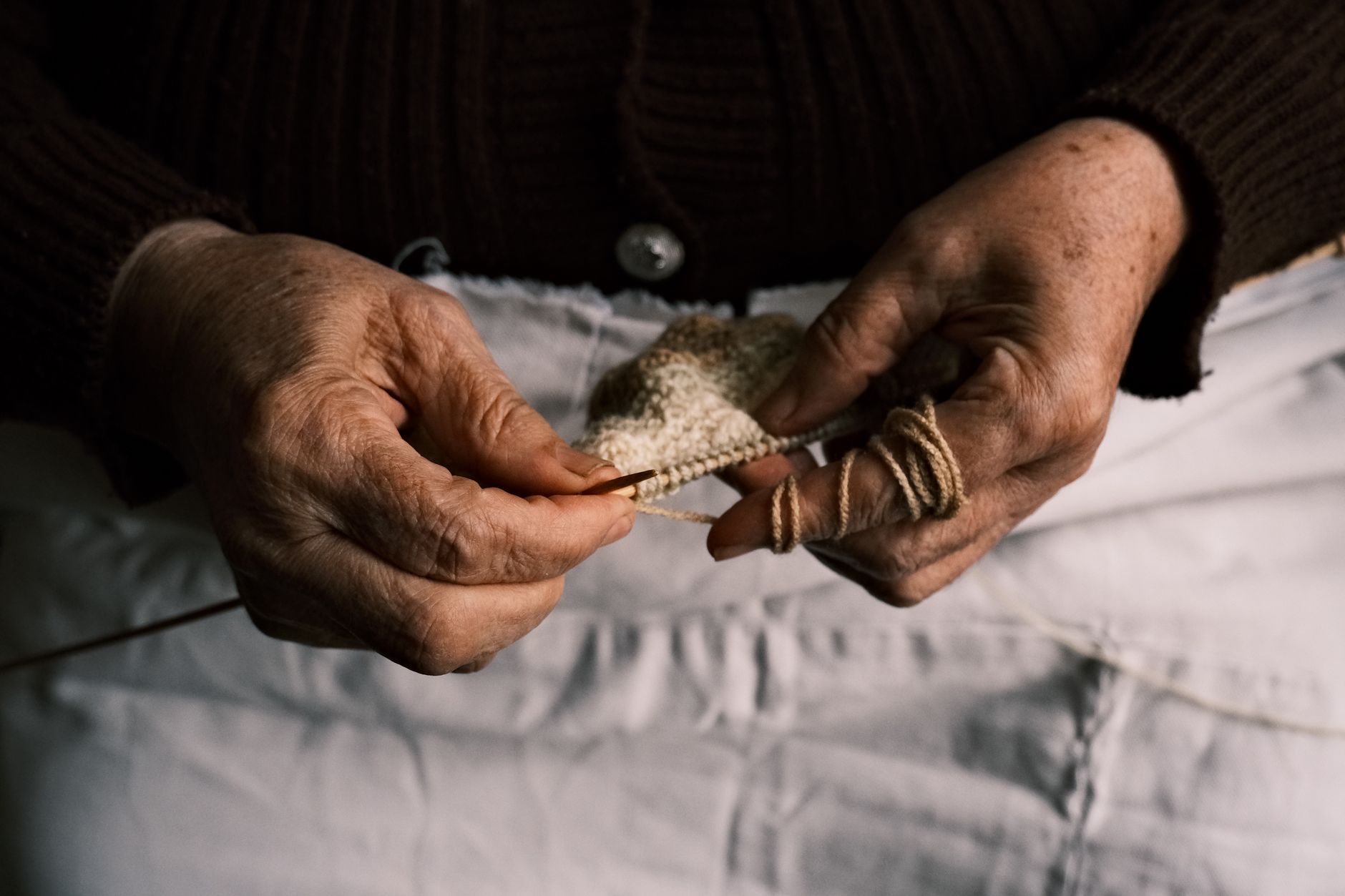
The Caps My Wife Knit for the Ward
The Winter After
After the funeral the house did what houses do when there is one person in them instead of two.
It got loud with small sounds. The furnace kicking on. The clock in the hall. The ice sliding off the barn roof in a long scrape in the middle of the night.
People were good to me, the way country people are, which is to say they brought food and did not make me talk about it.
The church ladies filled my freezer with casseroles I was still working through come March. The co-op boys plowed my lane out twice without my asking and would not take a dime.
But the winter is long up here, and January is the longest part of it, and a man alone finds all the hours there are in a day and then some.
I kept the farm going, what is left of it, a few head of cattle and the chickens, because animals do not care that you are grieving. They want feeding at the same time every morning, and that is a mercy when you cannot think of a reason to get up otherwise.
In the evenings I sat in my chair, not her chair, I never once sat in her chair, and I looked at the yarn basket, and the half finished blue cap looked back at me.
I knew what she would have wanted. She would not have wanted that yarn to sit there gathering dust and making me low every time I passed it.
Margie had no patience for a thing that just sat. She would have wanted that yarn in somebody’s hands, warming somebody’s head, not shut up in a basket in a sad man’s front room.
So one evening in January, with the wind pushing snow against the storm door, I decided I would take it all back to the hospital.
I thought, they took her caps for nineteen years, so maybe they will take her yarn, and some other woman up there who knows how to do this can put it to use.
I did not know there was anyone up there to take it. I thought her Thursday errand had died when she did, I truly did, because who else would do such a thing, year after year, for strangers, for free, and never once say a word about it.
I was about to find out how wrong a man can be about his own wife and the reach of one quiet kindness.
I Loaded the Basket in the Truck
It took me the better part of a week to do it, because every time I bent to pick up that basket my hands would not close around the handle.
Finally on a Thursday, and I picked a Thursday on purpose, I loaded the oak basket and three cardboard boxes of yarn into the cab of the truck.
I set the basket on the seat beside me, in the spot where Margie had ridden for forty-four years, and I ran the seatbelt around it and buckled it. I do not know why. It just felt wrong to let it slide around loose on the turns.
The roads were snow packed and the sky was that flat Iowa gray that sits down on your shoulders all winter and does not lift.
I drove the eighteen miles the way I had driven it a thousand times, past the old Reinhart place and the closed country school and the grain elevator, except this time the radio was off and the seat beside me held a basket instead of my wife.