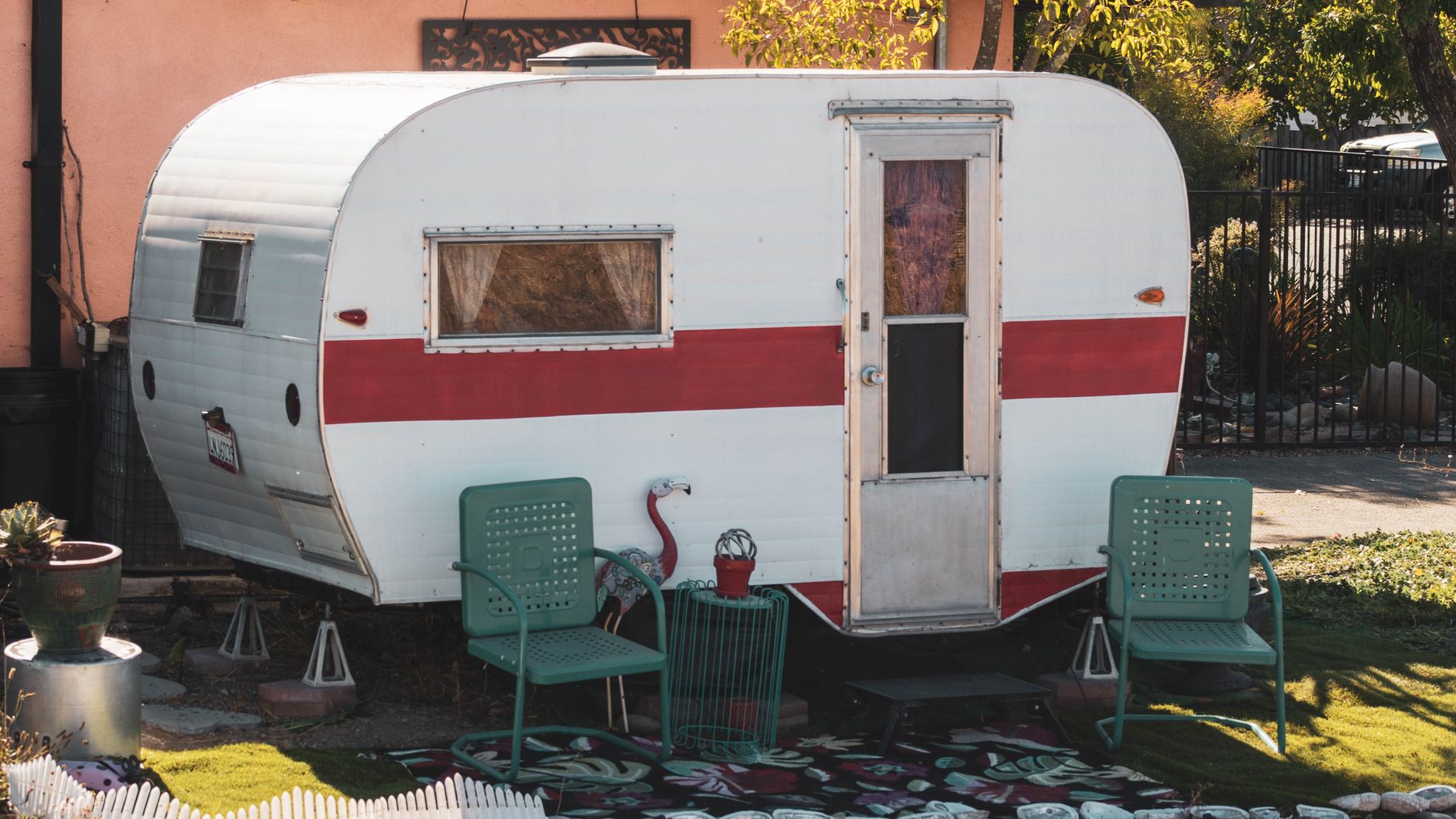
The Camper in the Side Yard
The Ninth Night
The ninth night it rained hard. Cold, driving rain.
I had done the dishes and helped Phyllis to bed around a quarter to nine. I checked her water and her walker and the little brass bell I had given her.
I had dug out our old baby monitor from when Cooper was small, so the receiver sat by my camper bed every night, and Brian was right at the top of the stairs.
Then I went out to the camper. I was lying on the back bed in a sweatshirt with a library book I was not reading, listening to the rain hammer the roof.
Something knocked on the metal door. Not a knock like a fist. A knock like something hard and aluminum.
I sat up. I knew what it was before I reached the door.
I threw the door open. Phyllis was standing at the bottom of the step in the dark and the pouring rain, in her nightgown with Brian’s old barn coat over her shoulders, both hands clamped on her walker.
The rubber feet of the walker were sunk in the wet grass. Her white hair was plastered to her head. Two weeks out of surgery, on a new hip, she had crossed the whole side yard alone. Over that rain, the monitor never caught a sound.
I was down that step with my arm around her before I knew I had moved. “Phyllis,” I said. “What are you doing. You could have fallen. You could have broken the other one.”
“Well, I didn’t,” she said, and her teeth were chattering. “Help me up that step, Amy. I need to sit down, and I need to tell you something, and I am not doing it in the rain.”
What Phyllis Said
I got her up the one step the way the therapist taught us for curbs, good leg first, my hands on her hips, the walker lifted in behind her. I sat her on the edge of the bed and wrapped her in my quilt.
I smacked the furnace panel twice and turned it up. I put the kettle on the little stove. My hands were shaking now, finally, the way they had not shaken at the front desk nine days before.
Phyllis looked around in the yellow light at the pine tree sheets, my laundry basket on the floor, and my work slacks hanging from the curtain rod.
“So this is where you live now,” she said.
“For a while,” I said.
“I want to tell you about 1971,” she said. I sat down on the dinette bench across from her and waited.
“Brian’s father was a good man,” she said. “You know that. Ron worked that farm sixteen hours a day for forty years and never once raised his hand to me or those boys.”
“I know he was,” I said.
“In the spring of 1971 his mother had a stroke,” she said. “Irene. I was twenty-four. I had a baby in diapers, and I had just found out I was expecting Brian.”
“Ron went to the hospital in Wausau and talked to the doctor,” she said. “He came home that night and told me his mother was moving into our front bedroom. Which was going to be the nursery.”