Three Old Farmers and a Locked Door
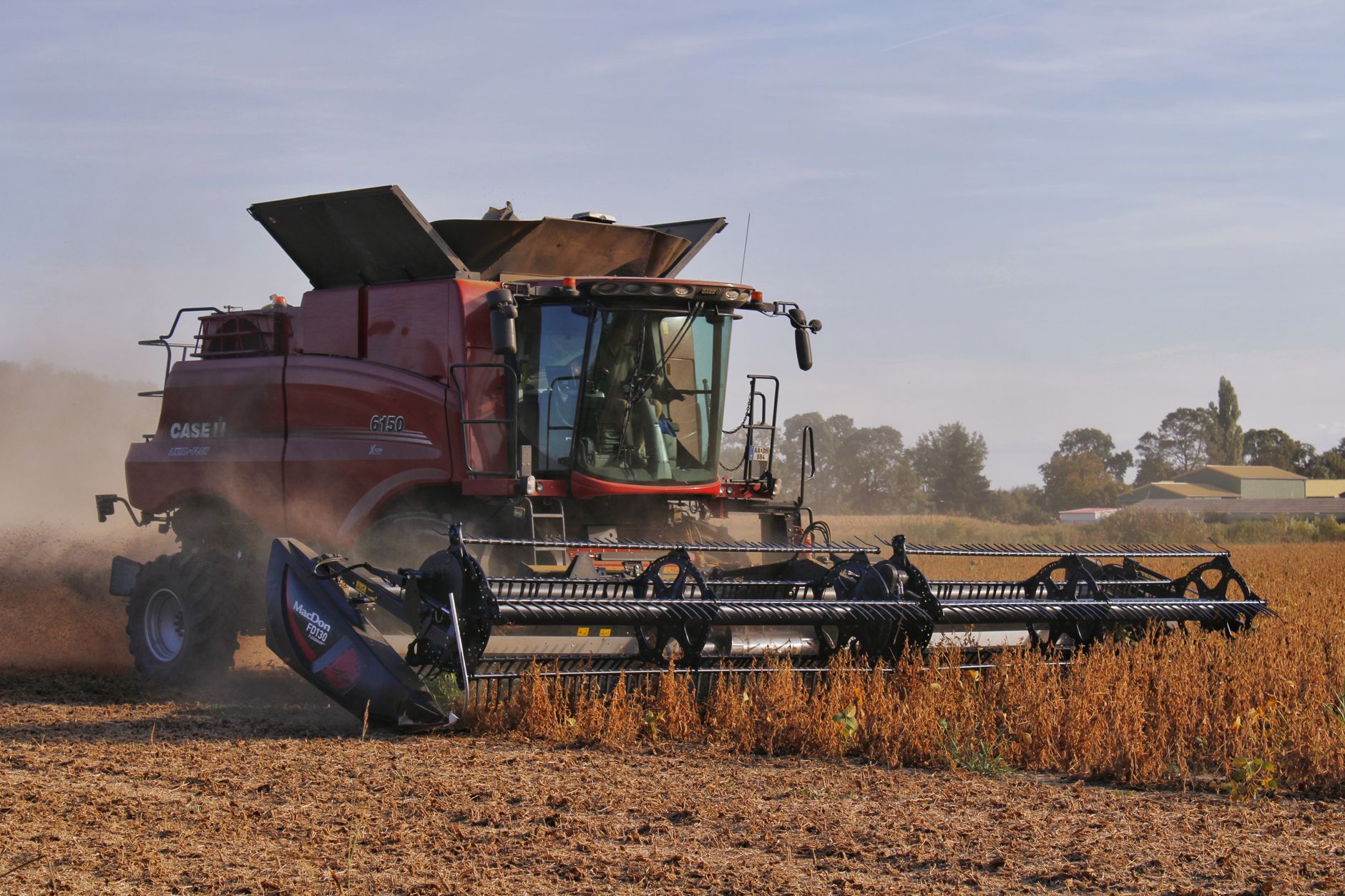
Saturday was one of those October mornings that makes a person grateful for the whole year. The fog lifted off the bottom ground at eight, the sky went high and clean, and the beans stood in their long dry rows rattling like paper. Marv’s combine came up the section road at ten till nine, with Dewey’s and Ed’s behind him. I rode in with Arlene in her Buick, with a roaster of ham and a thermos of coffee big enough for a county. Maxine Abbott came right behind us with a folding table in her trunk.
That was the whole crowd. Three men, two wives, one beagle, and me. Dewey’s wife Maxine had been the church secretary for 21 years, and she knew exactly how much talk a plain morning could carry without anybody saying a word of it out loud.
The padlock hung on the kitchen door the whole time. I told Marv, “Nobody breaks anything,” and Marv said, “Judy, I wouldn’t dream.” The beans were in the field, and the field was open to the section road, and this was what my father had asked of his friends.
They took off the first round at 9:20. The whine of the head and the beans drumming into the hopper went across the yard, and the dust came up gold behind the machine. I watched Dewey Abbott, a man who had never in his life done anything fast, run a perfect straight line down the edge of the field. Maxine put a cup of coffee into my hand and did not say a word.
At twenty minutes to ten, a silver Silverado came up the lane and slowed down, and then slowed down more.
I will give my brother this. He did not turn around.
He stopped in the middle of the yard, with Kent Dobbs’s white Buick pulling in behind him. I saw him through his windshield, taking in the combines, the folding table, the two women with their ham and their coffee, and me. I saw his face change a bit at a time, the way a barn changes when a cloud passes over it. Drew sat in the passenger seat looking straight ahead.
Roger got out. He had his good boots on, and a clean canvas jacket, and a folder under his arm.
“What is this,” he said.
Nobody answered him. The combines out in the field were still running, and the sound of them carried across the stubble.
“I asked what this is. This is estate property. Nobody was given permission to be on it.” He turned and pointed at me, and I’ll never forget how his finger shook just a little. “Judy, did you do this?”
“I asked Marv and Dewey and Ed to take Dad’s beans off,” I said. “They’re ready. It’s going to rain tomorrow night.”
“That is not your decision to make.”
“No,” I agreed. “It isn’t. It was Dad’s. He asked them in August.”
Something crossed his face then, and I think it was surprise. Dad had never told him either. Dad had told the three neighbors and nobody who wore a suit.
Kent Dobbs got out of his Buick and stood by the fender. Kent was a soft-spoken man of fifty who had sold half the farms in the county, and his father had farmed with Dad’s own father. He looked at the combines, then at the two women, and then he did a thing I will always give him credit for. He took a step back from Roger’s truck, not toward him.