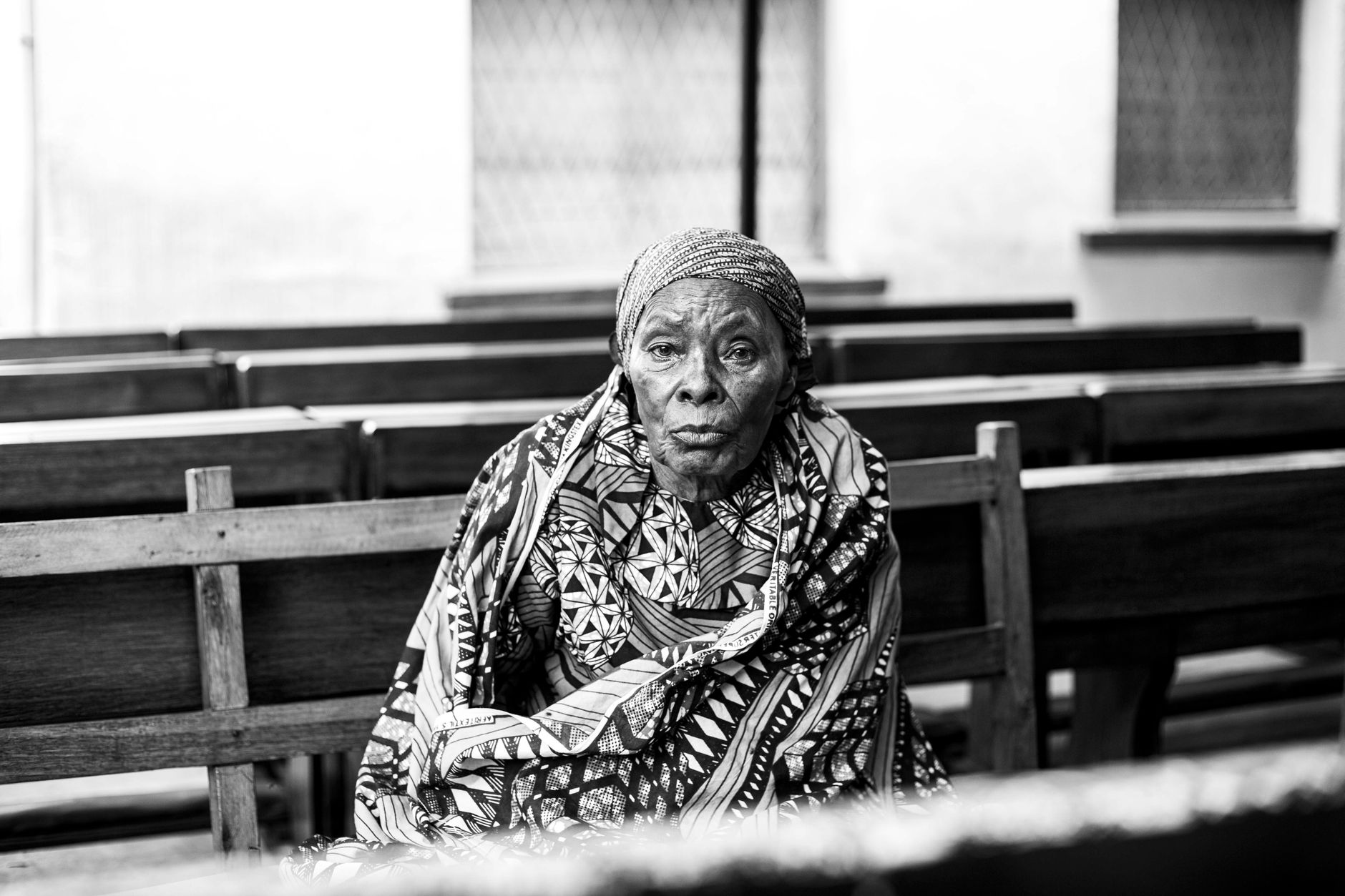
The Pew My Son Swore Off
“And then she hung up.”
“Good girl,” I said.
“Yes, ma’am. She is.”
But he did not come that spring. He told me that, too, and I am glad he did, because it would make a prettier story if he had, and it would not be true.
“I drove up to Verdell the first Sunday in April, Mom. I parked at the co-op elevator across from the church with the engine running. I watched you go in, in that blue coat. Then I drove home. I did that six Sundays between April and September.”
On a Sunday in September, the sixth time, someone tapped on his window. It was Pastor Dale Henning, in his robe, with a paper cup of coffee in each hand.
“He didn’t say a word about church,” Danny said. “He said, ‘Looks like you could use this,’ and he stood there while I drank it. Then he went back across the street.”
That was all. A week later, Danny called the church office from the cab of his truck.
“I asked him if the old pew was still there. He said, ‘Third on the left. Nobody’s moved it. Nobody sits in it but your mother.'” Danny shut his eyes. “I’d never once thought of that, Mom. Empty beside you for forty-three years.”
“Danny.”
“I said, ‘Don’t tell her. If she knows I’m coming she’ll cry, and if she cries I’ll turn the truck around.’ He said, ‘I’ve never told a woman in your family anything that was your business.’ And he told me the side door is unlocked every Sunday at ten after eight, because Doris Pelzer opens it for the bulletins.”
I began to laugh, and then I was crying, and then I was doing both at once, in front of the coffee pot. Doris Pelzer. Who told the whole town about her gallbladder.
So the church had known. Pastor Henning had known, and Doris had stood in that aisle holding her bulletins and said nothing. In all her years in Verdell that was likely the one secret she ever kept, and she kept it for me. I intend to repay her with a pie.
“It was Josie that settled it,” Danny said. “I’d have probably kept parking by the elevator until I was ninety.”
Josie is Kate’s girl, nine years old. In September she came home with a fourth-grade project: a family tree on butcher paper, with a paper leaf for every person. Kate had written in Danny’s name and Pam’s and Harold’s and mine. Josie studied it a long time and said, “Mom, you said Grandpa had a brother. There’s no leaf for him.”
That Saturday, Josie sat on an upside-down bucket in his garage while he took the carburetor off the weed whacker, and asked what Uncle Tim was like.
“I said, ‘I don’t know how to tell you, honey.’ She said, ‘Do you have anything of his?'”
He looked at the shelf above the workbench.
“I got the shoebox down. She asked what was in it, and I said, ‘Letters from your great-grandmother about my brother.’ She said, ‘Can you read me one?'”
He read her the tin boat.
“By the third letter I was laughing. By the sixth I had to stop. I couldn’t see the page. And Josie took it out of my hands and read the rest herself, sounding out ‘extraordinarily,’ every syllable, real slow. She made me promise to do the rest the next Saturday.”
“And you did.”