The Organ Bench Nobody Could Take
Pastor Caleb pressed the screen.
The speaker went dead in the middle of a bar. There was a small click and then nothing from it, and the white cable lay on the carpet as it had before.
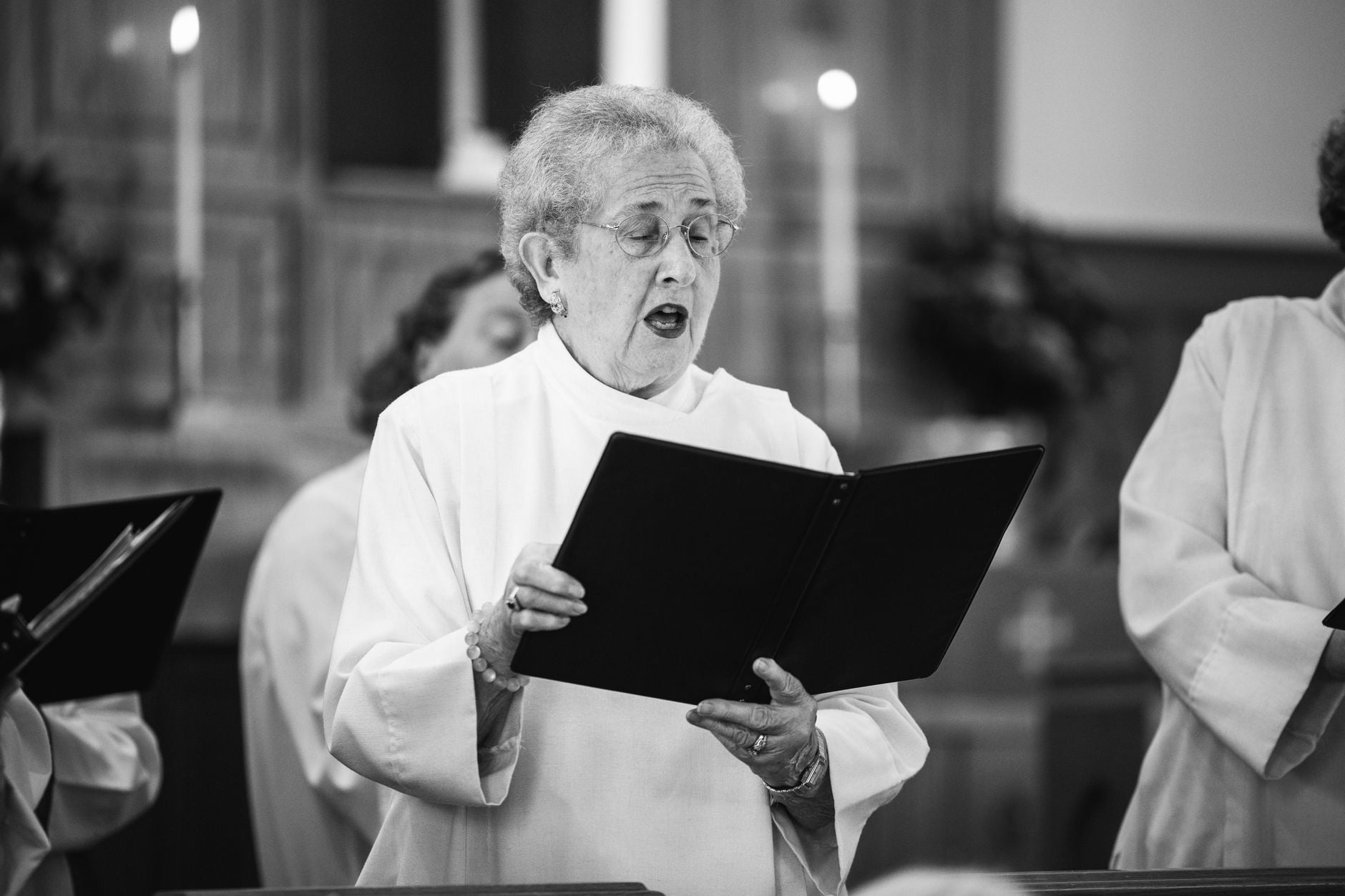
He did not say anything. He stood there with the tablet down against his leg, and the choir sang the rest of that hymn the way it has been sung in that church since before I was born, nine people with no instrument, and the rain on the roof for a pedal. By the last verse Merle had stopped being a bass and become a floor, and Faye’s voice was going up over him like a bird off a post.
When they finished, nobody said amen. Nobody coughed. The sound hung in the rafters a moment, and then the rain took it back.
“Let’s pray,” Pastor Caleb said.
That was all. It was a short prayer, and it did not mention music. He gave the benediction. I will say that his hands were not quite steady on the lectern, and that nobody in that church looked at him while they gathered their coats, which is a kindness folks here do without being asked.
I stood in the aisle with my hymnal. People went around me on both sides, the way water goes around a post.
He was at the door when I got there. He shook hands with the Pfeiffers, and with Marjorie, and then with me, and his hand was cold.
“The music committee meets Tuesday night,” he said. “If you’re able.”
“I’m on it, Pastor.”
“I know.” He almost smiled. “I’ll bring the bylaws.”
“Vernell has the bylaws.”
“Then I’ll bring Vernell.”
And that was the whole of what he said to me. I drove home in the rain.
The music committee met Tuesday night in the fellowship hall, the three of us and the pastor and, because Pastor Caleb had in fact brought him, Vernell Dahl with a binder under his arm. The committee is me, and Faye Bledsoe, and Clark Pfeiffer from the youth group. There was a chess pie in the middle of the table that Marjorie Kloster had sent over with her granddaughter, and a pot of coffee that was stronger than anyone wanted.
Most of it was Vernell reading the bylaws aloud to a room that kept saying, “Well, I never knew that.” Music was the committee’s business. It had always been the committee’s business. It said so on page eleven, and nobody had opened the binder since 1990. “That’s on us, not on the boy,” Vernell said, and the pastor looked at the table.
What we decided took twenty-five minutes.
The speaker and the $1,640 system would not go in the trash. They would go to the youth service at six on Sunday evenings, where Clark’s band wanted a better sound anyway, and where the kids who thought ten-thirty was a museum could have their own music, loud, with guitars. The pastor had been right about one thing. Some of those families were never going to come to the early service. Fine. They had their own hour. A dozen of them showed up the first Sunday evening, and I will not call that a revival.