The Organ Bench Nobody Could Take
“Please rise,” he said, “and join in ‘It Is Well with My Soul.'”
He touched the screen.
The speaker crackled. Then strings came out of it, thin and shiny, a synthesized orchestra swelling with no body behind it. It was the right hymn and the right key. I will give the boy that. He had picked well, a hymn every soul in that building has had in their mouth since they could talk. But it came out of that box the way light comes out of a refrigerator, cold and from nowhere.
The congregation stood, the way you do. A hundred-some people on their feet with open hymnals, and the strings going, and the first line coming up, and not one mouth moving. I could hear the rain on the roof.
I did not turn around. I held my hymnal open to 108. I looked at the cross on the front wall.
Pastor Caleb looked up from the tablet.
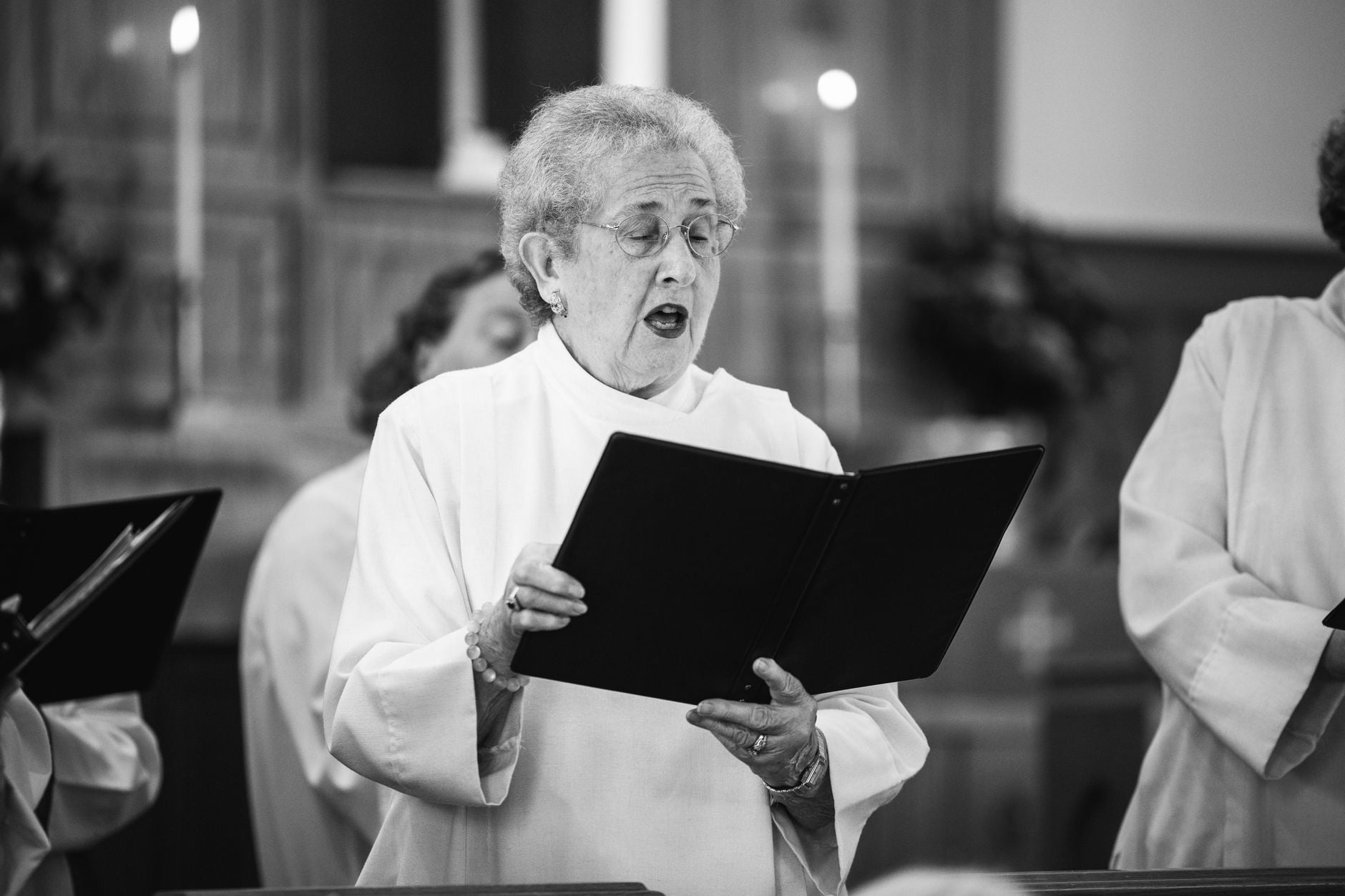
In the loft, in the back row of the basses, Merle Gaskins took one long breath.
Then he opened his mouth.
When peace like a river attendeth my way
He sang it alone, and he sang it without the music. He did not follow the track. The track was a little fast for him, a canned thing, and he simply sang over it, slow and low and round, the way he sings it in his truck and at funerals. The sound went out through that sanctuary the way a hand goes across a table, taking things with it.
On the second line, Faye came in over him.
When sorrows like sea billows roll
Then the altos. Then Gloria’s trumpet. Then Sherman and the rest of the loft, until it was nine voices in four parts in a rainy room, with a speaker playing the wrong tempo underneath.
Nobody else sang.
I had half expected the church to rise up. It did not. A hundred people stood in their pews with their hymnals open and listened, the way you listen to a thing you have not heard in a long time and are not sure you are allowed to join. Marjorie Kloster, in the second pew, planted her cane and sang along under her breath. She has no more voice than a gate hinge. I could hear her from six pews back. Everyone else just stood.
The pastor had his thumb above the screen.
I watched him from the corner of my eye. He had one hand on the lectern and the other held out with the thumb over the glass, the way you hold your hand over a stove to see if it is on, and he was looking up at the loft with an expression I could not read. It was not anger. I had expected anger. It looked more like a man listening for something in a house he thought was empty.
The track went on under them. Verse one ended. The strings swelled into an interlude the choir did not wait for, and Merle came in on the second verse on his own, and the others came in behind him.