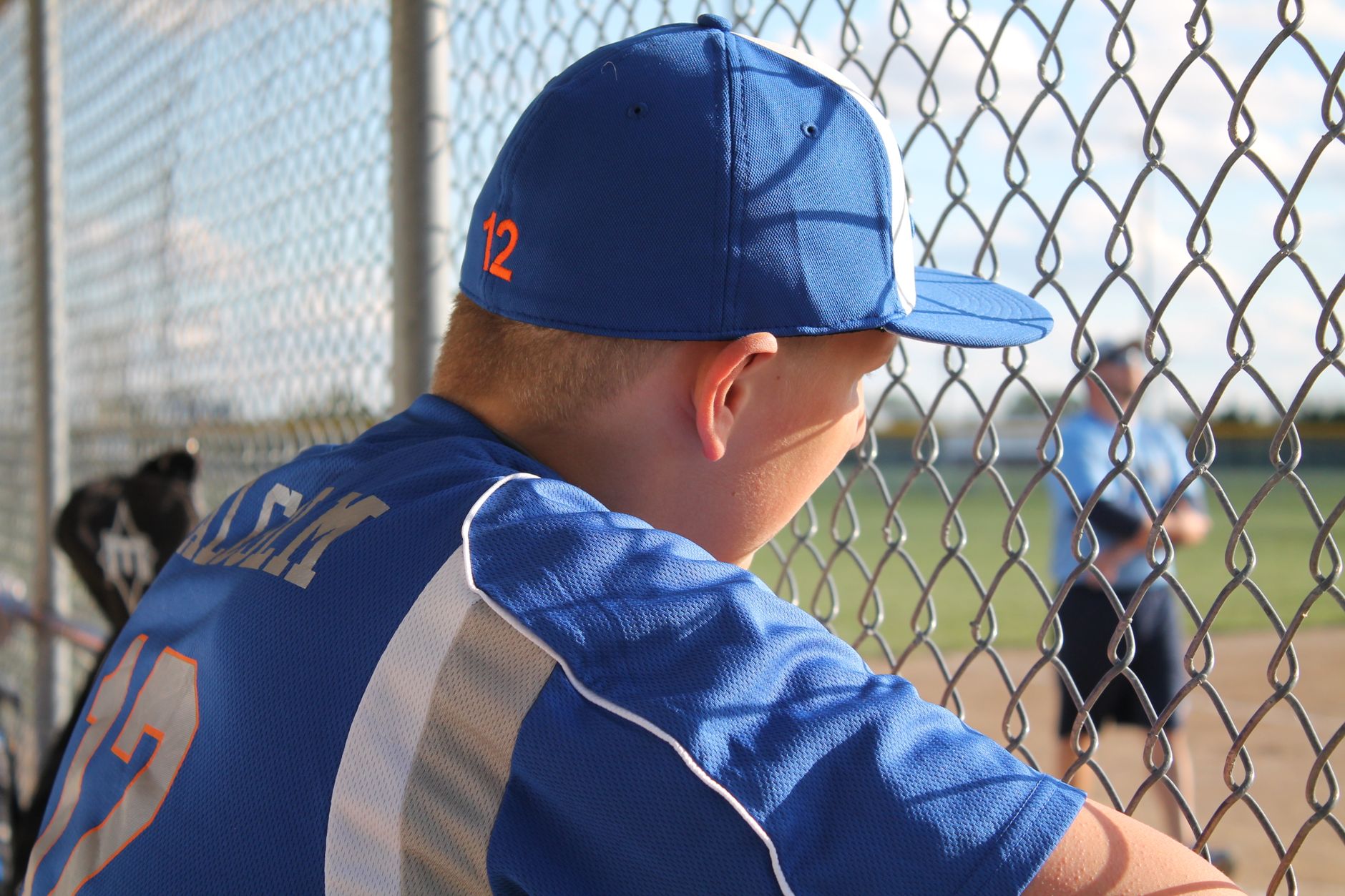
The Coach Who Cut a Grieving Boy
“If I say no, do I get to say yes later?”
“Any time you want.”
“Then I want to catch,” Eli said. “Even if he’s there. I’m not going to say anything to him, though.”
“You don’t have to say anything to anybody.”
“Okay,” he said, and went to dig his jersey out of the laundry basket, where it had been since the Kearney weekend.
At 6:40 Saturday morning, my phone buzzed on the nightstand.
Doug Reiter.
“Be at the field by 8:30. Bring Eli. Bring his mitt.”
That was all. I looked at it twelve or fifteen times.
We pulled into the ball complex at 8:25. The corn was half off in the fields around town, and the air smelled like it. The Rangers’ first game was at 9:30 on Field 2, and a few mothers were already in the stands with blankets.
Eli had his catcher’s mitt on his knee. He put his hand into it and flexed his fingers.
I turned off the engine.
I had braced for I don’t know what. An army, maybe. A line of trucks. What I saw was the ordinary thing: Wade Hoffer dragging the infield with a bucket of lime, Owen Reiter and two other boys throwing in the outfield, Ernest Nance at the end of the third-base bleachers with a thermos, on the exact spot where Ron used to sit. Kent Mallory’s truck was nosed up beside the dugout.
Kent himself was inside it, bent over the lineup card with a pencil. He wore a Rangers cap, a windbreaker and the whistle.
I watched Doug Reiter see us. He said something to Wade, and then he started across the grass toward the dugout, and he did not hurry.
I got out of the car. Eli did not.
“Mom?”
“I’m going to stand with Doug a minute. You can come with me, or you can go sit with Mr. Nance. Your pick.”
He looked at the bleachers. He looked at Ernest, who had put up a hand without standing.
“I’ll go sit with Mr. Nance,” Eli said. He got out, his mitt on his fingers, and walked over the gravel by himself, not fast.
Doug waited for me at the gate of the dugout. When I got there he gave me a short nod, and he did not say good morning.
“Kent,” he said. “Before you write out that lineup, I need a word.”
Kent didn’t look up right away. “I’m busy, Doug. Game’s in an hour.”
“I know it is. Lori’s here with Eli.”
Now he looked up. His eyes went from Doug to me, and then they went out across the bleachers and found my son sitting beside an old man in a feed-store cap, and they stayed there a moment too long.
“I made that decision,” Kent said, “and I made it for the team. You can’t run a travel squad by committee. I told you all at the start of the year…”
“You did,” said Doug. “You said you’d make the hard calls. And I said that was fine, because I figured the hard calls would be about hitting and pitching.”
“It is about hitting. He was off in Kearney. He’s missed practice, he drops balls…”