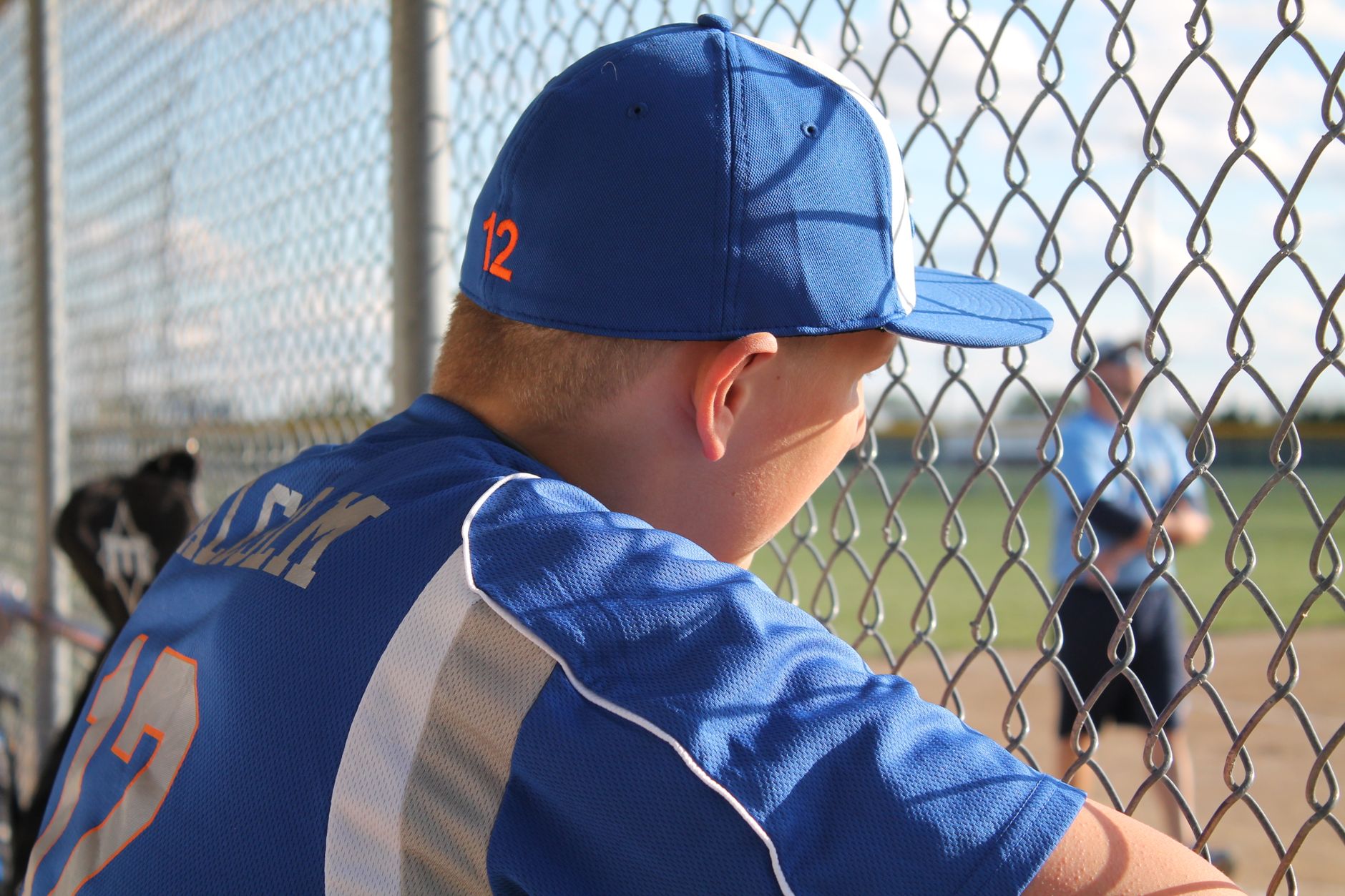
The Coach Who Cut a Grieving Boy
“What did he ask?”
“He asked me what dragging means.”
I heard him sit down hard on something.
“Doug, there’s one other thing. Eli told me Ron said something to you at Kearney. About him. I wasn’t there, I was in the concession stand, and I’d like to know what it was, if you remember.”
He was quiet. Then he laughed, once, not because it was funny.
“I remember,” he said. “Third inning, runner on third, and Hunter Mallory bounced a curve about six feet in front of the plate. Eli went down on both knees and took it right off his chest protector and had the ball in his hand before the runner could think about breaking. Ron was standing next to me at the fence with the scorebook on his knee. And he didn’t say it to me, Lori. He said it to the air. ‘That’s my catcher.’ Real quiet. Then he looked at me, to make sure I’d heard him, and he said it again.”
I sat down on the floor of the kitchen with my back against the cabinet.
“He kept the book that whole weekend,” Doug said. “Fourteen balls in the dirt, by his count, and he blocked every one. Ron told me that on the drive out of the parking lot. He said it like he was reading me a score.”
“Thank you for telling me.”
“Lori.” His voice had changed. “Okay. Okay. Thank you for calling me.”
That was the whole call, six minutes, and I put the phone on the linoleum beside me and stayed there for a while.
I called Wade Hoffer next. Wade was a big, loud, friendly man who owned a body shop, and he had answered the coach’s text with a thumbs-up. I could see the little thumb right there under it. I hadn’t been able to stop looking at it.
“Lori! Hey. Look, let me explain how it is with Kent.”
“I’m not asking you to explain it, Wade.”
“He’s under a lot of pressure. People forget that.”
“I know he is.” And I did know it. “I’m only calling to read you something.”
I read it. Then I said, “Ron’s boy asked me tonight what dragging means.”
Wade didn’t say anything. I heard his chair creak.
“You still there?”
“Yeah,” he said. “Yeah, I’m here.”
“Ron liked how you laughed at the games.”
There was a long silence. I checked the screen to make sure the call hadn’t dropped.
“I put a thumbs-up on that text,” Wade said, finally. He said it to the floor of his shop, I think. “I didn’t read it all the way. I was in the shop with a quarter panel.”
“That’s all right.”
“No, it isn’t,” he said. “It’s not all right.”
I called Ben Nance’s grandfather next, even though he was not a father at all. Ernest Nance was 71 and he had raised Ben since the boy was four, after his own son put a pickup into a bridge rail on Road 9. He lived in the little house behind the Co-op feed store, and he picked up on the eighth ring.
“Hello.”
“Ernest, this is Lori Sandvig. I’m sorry it’s late.”