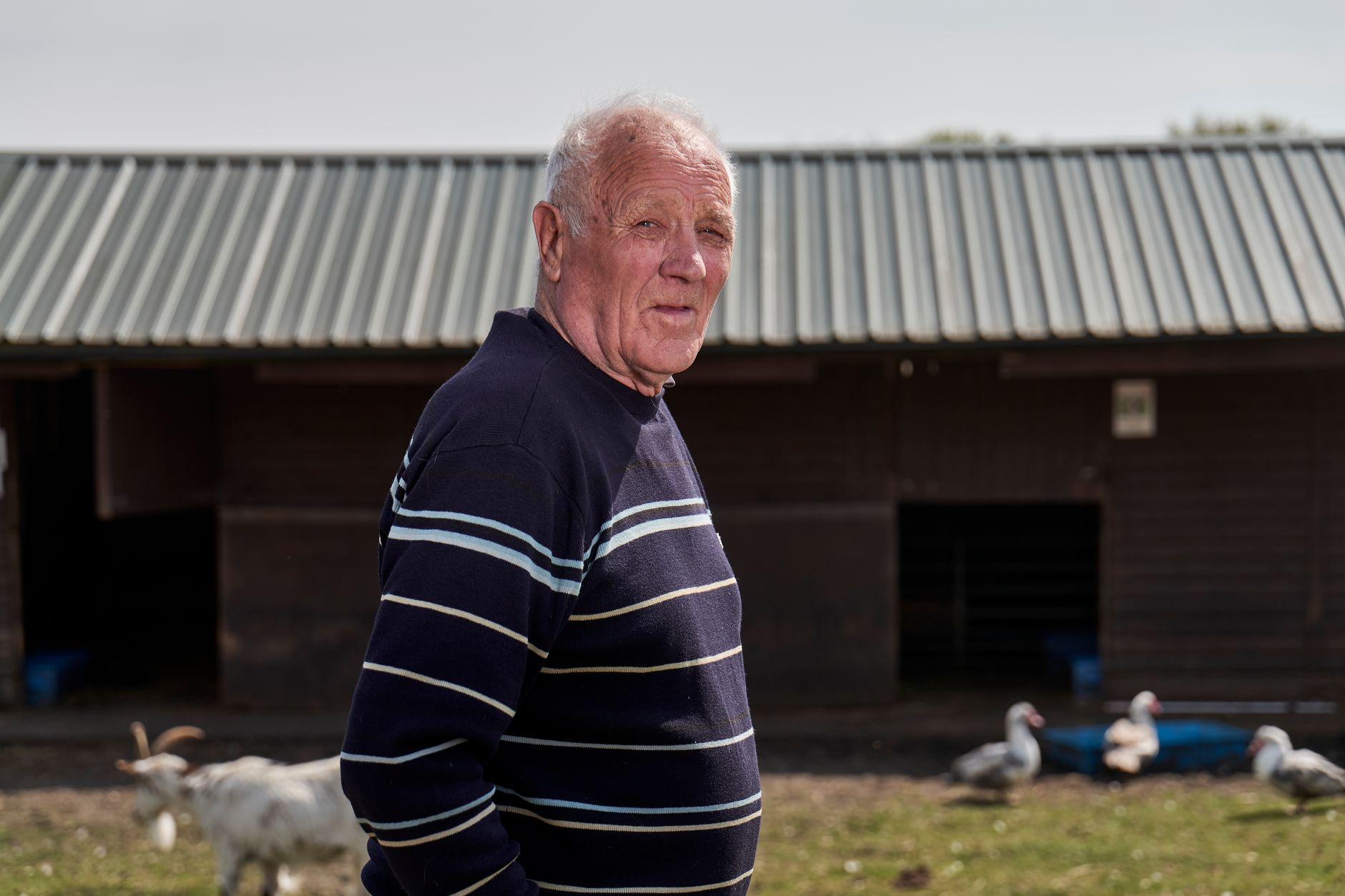
The Barn the Adjuster Called Rotten
My father put it up in the summer of 1964, with oak posts cut at a sawmill in Missouri and fir beams that came in on a flatbed. It was forty feet by seventy-two, with a hip roof of tin and a loft that held eleven hundred small square bales. The whole neighborhood came for the raising. I was four, and my mother says I carried water to the men on the ladders in a coffee can and spilled most of it down my own front.
Arvid Davenport held the plumb line on the first bent. Marvin Tucker’s father drove the oak pegs, the hardwood dowels that lock a post to a beam, with a maul and a drift pin and a cigarette in the corner of his mouth. When the last rafter was in, the women brought supper out on sawhorse tables, and my father stood in the middle of the dirt floor with his hat off and turned around once, slowly, looking up. I am told he did not say anything.
For sixty-two years that building held every calf we raised and every bale we cut.
Then, on the Sunday of Memorial Day weekend, it was gone in about forty seconds.
I did not see it. Joan, our grandson Brantley, and I were in the cellar by then, on upturned buckets, with a battery radio, a flashlight, and the stuffed bear Brantley had slept with since he was two. The warning came over the radio at 7:31. The sound came a quarter of an hour later.
When we climbed out, the house was standing with half its siding off and every west window gone. The silo had a bend in it like a dropped straw. Where the barn had been there was a flat gray field of splinters and cow-lot mud. All seventy-four cows were alive in the north pasture, bunched at the far fence with their heads up.
Brantley is eight. He stood a long time looking at the flat place. Then he asked where the roof went, and I told him I didn’t know.
The neighbors knew.
There is a hill on Marvin Tucker’s place that every family on Elm Creek Road has used for storm watching since before I was born. It sits half a mile east of mine and a little higher, with a clear view across the Hanke bottom. When the sky goes green in May, people stand around the tailgates with their arms folded, looking west. When the siren goes, they run for Marvin’s cellar. It is not a wise habit, but it is how we are.
That Sunday evening eight of them were up there. Marvin and Lucille Tucker, who were hosting. Arvid Davenport, who is 91 and had come to supper. Jerry and Nina Easley from the section south of mine. Terry Yates, whose bean ground lay past my pasture. Pete Hanrahan from the corner. And Joel Kuntz, who is thirty-four and runs his father’s cattle.
They watched it come across the bottom. And at 7:48, by Arvid’s watch, the whole roof of my barn lifted off the walls in one piece, tin and purlins together, and went up into the air like a hat off a man’s head.
On the Monday, Marvin had stopped me at the co-op and said, “We watched it go, Lloyd.” I nodded and said thanks. I took it for what neighbors say. It did not cross my mind that what they had seen was also a fact, and that facts were the one thing I was short of, until a month later, with a letter in my hand.