Every Line of the Funeral Bill
Yvonne married Art Goodwin when she was 21. Art ran the scale house at the grain elevator for thirty-eight years, a quiet man, an Army man, and he died on a Tuesday in late September at ten minutes to five in the morning, in the hospital bed we had set up in their front room, with Yvonne holding his hand.
He was 71. The cancer had taken eleven months.
Yvonne called Les at 5:05. He and his son Travis were at the house in twenty minutes. Les carried Art out through the kitchen himself, with a quilt over him that Yvonne had picked from the cedar chest, and he stopped at the screen door and said, “Take your time, Yvonne. We’re not in any hurry.” She was still thanking him for that on the phone the day the bill came.
I want you to remember that morning, because it matters later. Les could be a good man. He had been one to us.
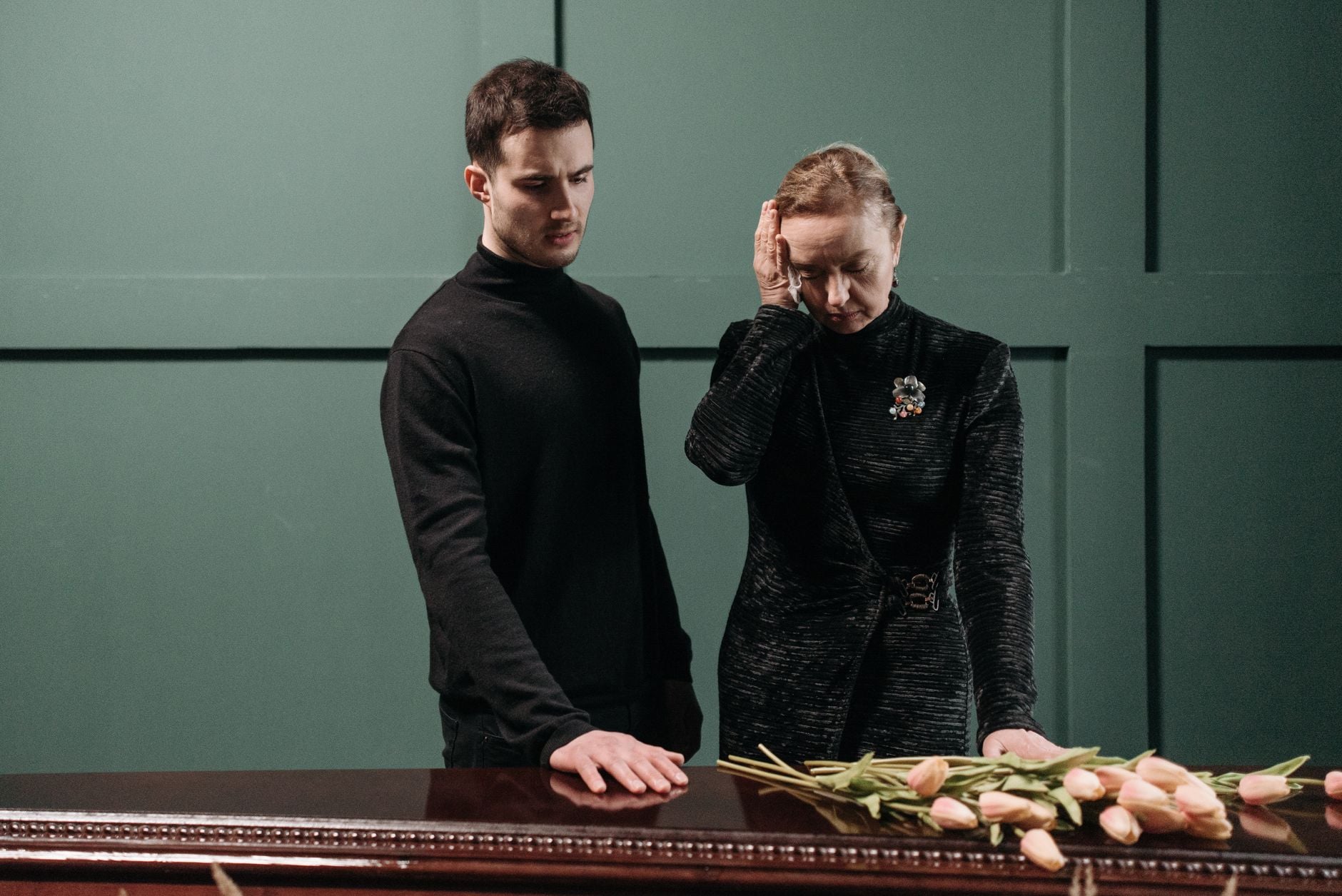
The funeral was Saturday at First Lutheran, with visitation at the funeral home Friday evening from 5 to 8. The casket stayed closed, as Art had asked years ago, under the flag. Two hundred and some people signed the book, and everyone said it was a lovely service, which it was.
My sister did not read a single paper that week. She met with Les on Wednesday morning, with her son Hubert on the speakerphone from Denver, and she signed where Les pointed. Art’s burial policy was $12,000, bought through the Farm Bureau in 1998, and Les told her he would handle it and she could just sign the assignment. He gave her a blue folder with his price lists in it, the way the law says. She put it in a drawer under the phone book.
The itemized statement of what she had chosen, the one Les said he would mail, never came. The first itemized paper she ever saw was the invoice, which came the following Monday, in a cream envelope with the funeral home’s return address embossed in the corner.
Yvonne called me at 7 that night. She was not crying yet. She was reading numbers to me in a flat voice, the way you read a diagnosis.
“Jean, it says $18,045. It says the insurance covers $12,000 and I owe $6,045 by the end of the month. I don’t have $6,045. I have the checking account and the check from the elevator that’s supposed to last me.”
“Read me the lines,” I said.
She read them. I wrote them on the back of an envelope.
Here is the thing about me. I spent thirty-four years in the Farm Bureau insurance office in Marysville reading other people’s invoices and proofs of loss. I can tell you in four seconds when a body shop has billed for a bumper twice. When Yvonne read me the third line I put my pencil down. By the sixth, I had picked it back up.
“Yvonne,” I said. “Did you pick a bronze casket?”