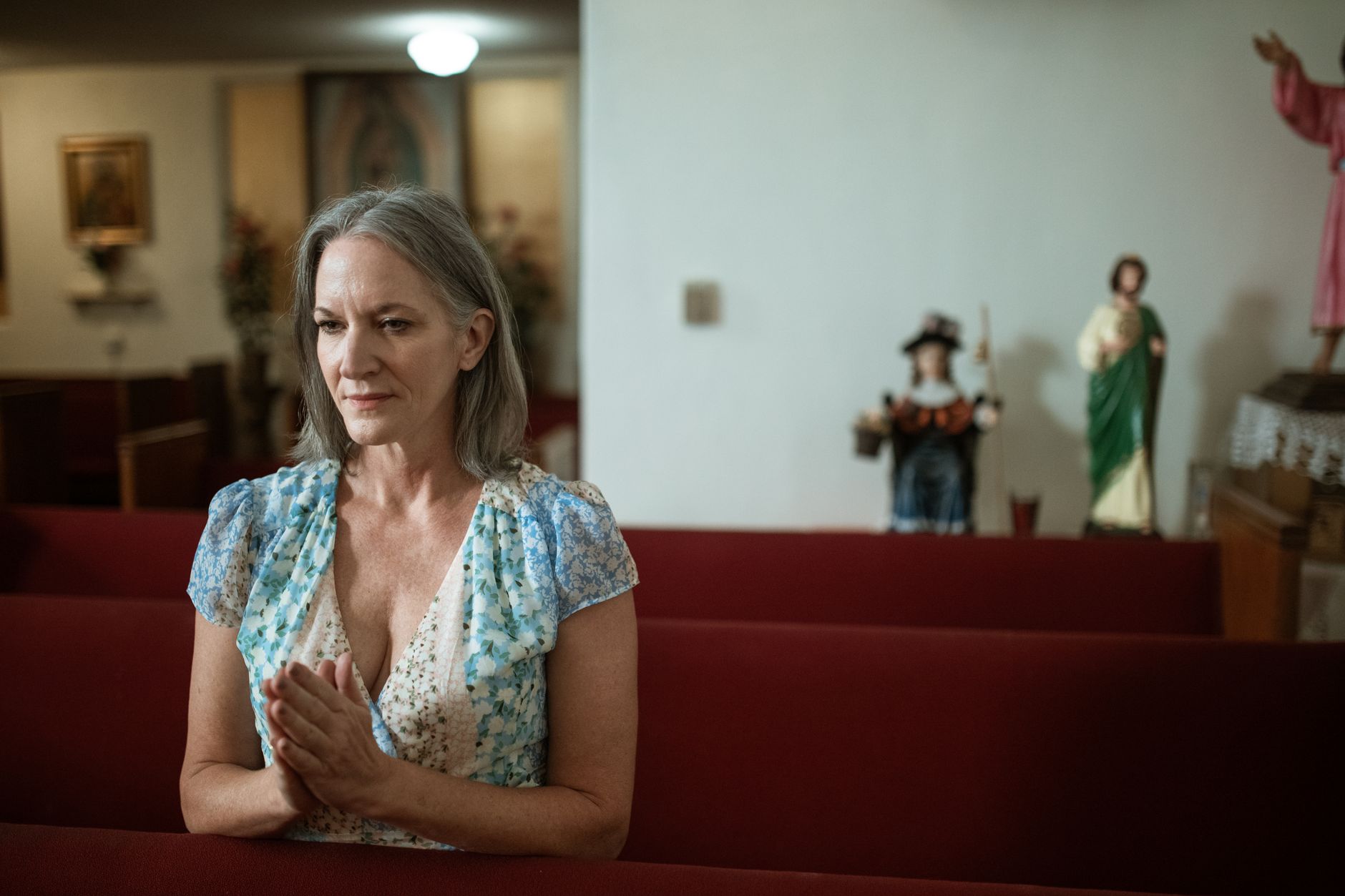
Thirty One Days in the Church Basement
Kenzie
That first night in the basement, after the little ones were asleep, Kenzie came and sat on the end of my cot.
“Why didn’t Aunt Jessica want us?” she said.
I had been waiting for it since the driveway. I still did not have a good answer.
“She’s got a lot going on, honey.”
“She’s got four bedrooms,” Kenzie said. “I counted them at Easter.”
“I know.”
“She said we would ruin her carpet.” Kenzie’s voice went thin. “I wouldn’t ruin her carpet. I’d take my shoes off. I’d be so careful.”
I pulled her into me. She was getting too big to hold, all elbows and knees, but she let me.
“I know you would,” I said. “Listen to me. That’s not about you. You didn’t do anything. Aunt Jessica said something she shouldn’t have, and that’s hers to carry, not yours.”
“Are you mad at her?”
I thought about it. I wanted to tell her the truth.
“I’m sad,” I said. “Mad is going to have to wait. I’m too tired for mad.”
She fell asleep against me after that. I sat there until my arm went numb, listening to the furnace kick on and off, and I prayed for my kids, and then, because I knew I was supposed to, I prayed for my sister.
It was not a very good prayer. But I said it.
Travis
Travis came down the basement stairs late Thursday night. He had parked the Peterbilt in the church lot, which took up about half of it, and he still smelled like diesel and truck stop coffee.
He did not say anything. He just went down the row of cots and looked at each kid. He put his hand on each one of their heads. Brody woke up and grabbed him around the neck and did not let go for a long time.
Then Travis came and sat down next to me and put his face in his hands.
“I should have been here,” he said.
“You’d have smelled it the same time I did,” I said. “You’d have done the same thing I did. They’re out. You can’t carry this.”
The next morning he went over to the house with the fire chief and the insurance adjuster, a young man from Kansas City who wore boots that had never been in mud. Travis walked through what was left with a flashlight. He came back with a coffee can full of things.
My mother’s wedding ring that I kept in the kitchen windowsill. Cole’s baseball trophy, black but whole. Brody’s pocketknife. A cast iron skillet that had been my grandmother’s. A ceramic handprint Kenzie made in kindergarten, cracked in half.
He laid them out on a fellowship table like he was setting a table for supper.
He stayed two nights on a cot. On Sunday afternoon he went back out. The truck payment is $2,900 a month, and the onions were not the only load, and the bank that holds the note on the Peterbilt does not care about fires.
“I hate this,” he said in the parking lot.
“I know you do,” I said. “Go. We’ve got about forty people helping us. Go make the money.”
He called every night at nine from wherever he was. The kids passed my phone up and down the row of cots. Lily always went last and always told him the same thing, which was what she had for supper.