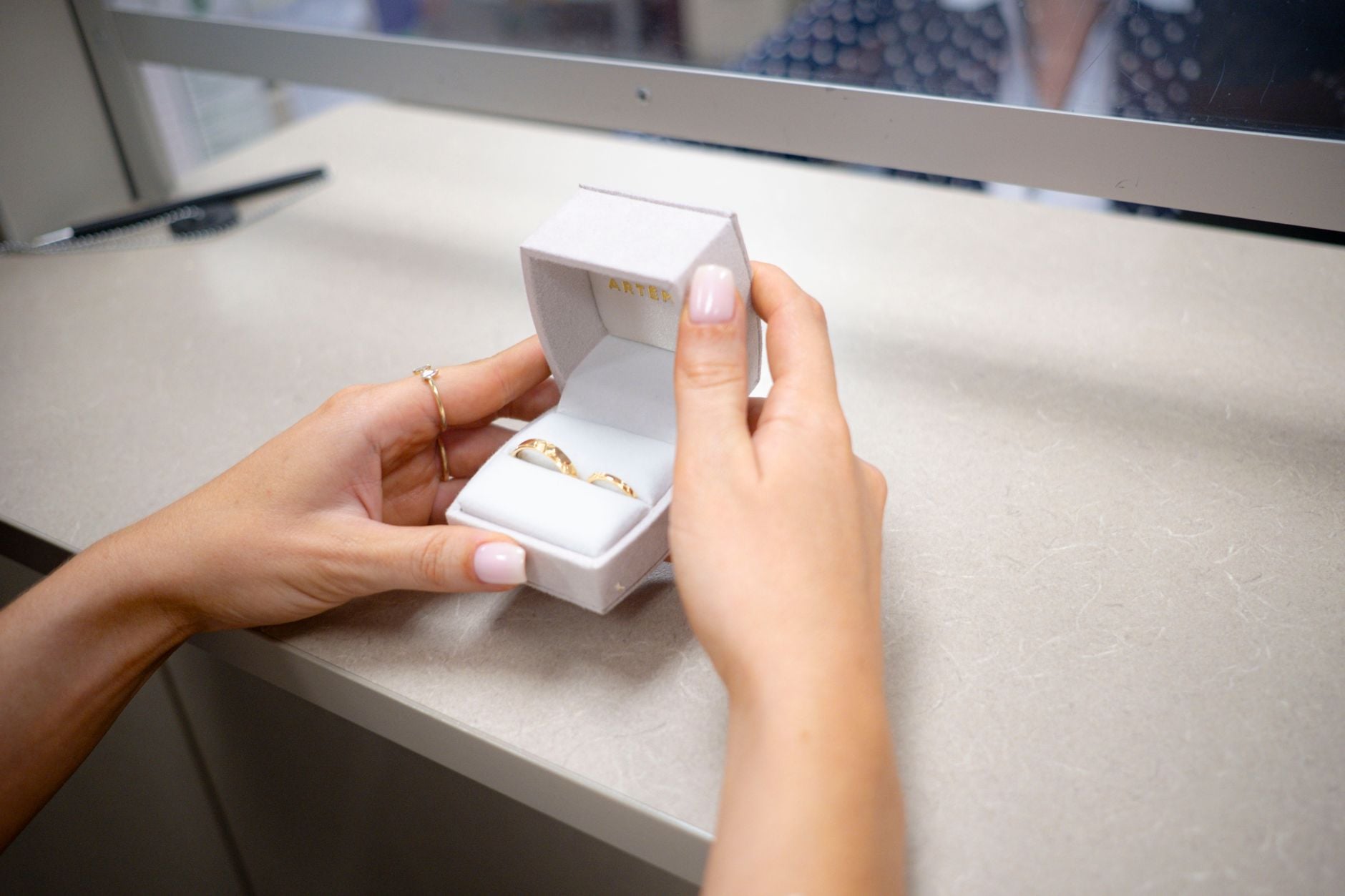
The Ring That Paid for Her Nights
Gary
The bell on the door was a real bell, brass, on a curl of spring steel. The shop smelled like gun oil and old coffee and the dust that collects on things nobody has wanted in a while.
There were deer rifles on the wall behind the counter, chained through the trigger guards. There were guitars hanging in a row with paper tags on strings. There was a whole aisle of power tools and a shelf of outboard props, and glass cases full of watches and rings and class rings and somebody’s high school letter jacket pins.
The man behind the counter was maybe seventy. He had a full white beard, trimmed short, and reading glasses pushed up on his head, and a flannel shirt with the sleeves rolled. He was eating a sandwich off wax paper.
“Afternoon,” he said, folding the wax paper over. “What can I do for you ladies?”
His name tag said Gary. Just Gary, in marker on masking tape.
I took the ring off. It stuck at the knuckle, and I had to ask if I could use his bathroom. I ran it under the cold water with a little hand soap until it came over the knuckle and left a white dent in my finger.
Fourteen years that ring had been mine. I dried it on my scrubs and came back out and set it on the glass.
Then I slid it across to him. He picked it up and turned it under the lamp. He set his glasses down onto his nose and looked at the stamp inside. He weighed it on a little digital scale and wrote the number on a pad.
“Eighteen karat,” he said. “Nice heavy band. Good gold.” He did some arithmetic on the pad. “At today’s spot, I can give you about nine hundred for it. That’s a fair price. You’ll get maybe a little more in Des Moines, not much.”
“I need seventeen hundred,” I said.
He looked up at me over the glasses.
“Exactly seventeen hundred,” I said. “Not more. Not less.”
I knew how that sounded. I knew he had heard every story in the world across that glass. I stood there in my scrubs with my hair in a clip and two years of no sleep on my face, and I waited for him to tell me no.
He did not say anything. His eyes went to Emma, who was standing right at my hip. Then they went down to the little gray box clipped to her jeans, and the tube that ran under the hem of her shirt.
“What’s the seventeen hundred for, hon?” he asked me. His voice was not unkind. It was just a question.
Before I could answer, Emma did.
“His half,” she said. “My dad’s half. Of my pump.”
Gary looked at her for a long time.
“That’s a pump right there?”
“It’s a practice one,” Emma said. “It’s salt water. His name is Gus. The real one has insulin and it talks to my sensor so I don’t go low at night. But it costs three thousand four hundred dollars and my dad won’t pay his half because he says I need to eat better.”
She said it all in one breath, the way kids do, with no idea what she was handing a stranger.