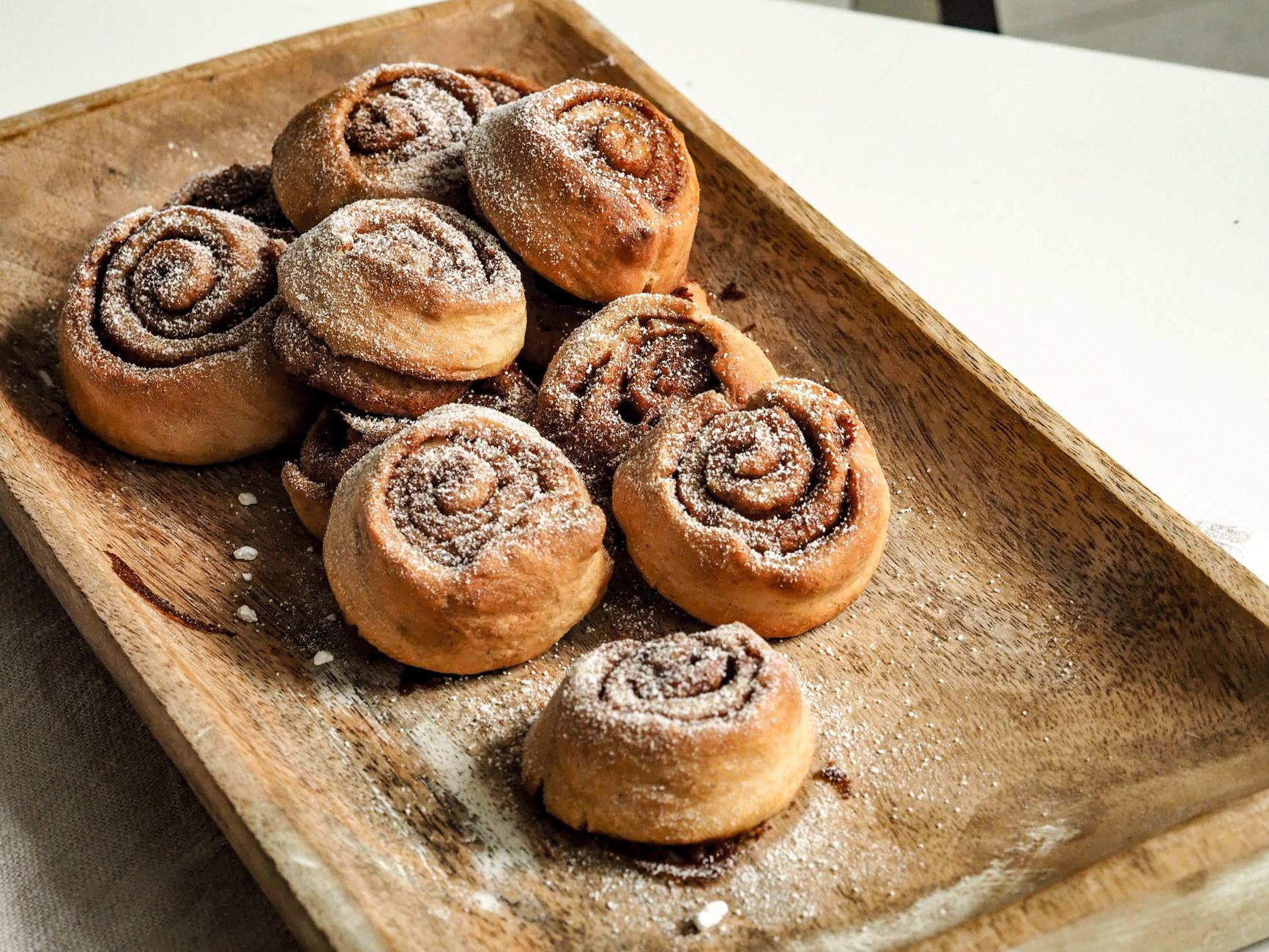
The Recipe Card at the Bake Sale
Bernice
Then I heard the walker.
It has tennis balls on the front legs, and it makes a soft thump and a slide on the linoleum. Every woman in that church knows the sound. It meant Bernice Ahlquist had arrived.
Bernice is ninety-four. She has been a member of our church since before my mother was born. She taught Sunday school for forty-one years and she taught me to say the books of the Bible in order, Genesis right through Revelation, in a basement classroom with a radiator that knocked.
Kim was helping her down the last stair. Bernice was in a red wool coat that she has worn to every fall event for as long as I can remember, and a clear plastic rain bonnet, even though it was not raining.
Usually she goes straight to the pie table to inspect her pies. That morning she did not.
She came across the floor slowly, thump and slide, thump and slide, past the pie table, past Janet standing there with her lemon bars, and she came straight to my table and stopped.
She was looking at the card.
“Grandma Bernice,” Kim said. “The pies are over there.”
“I know where the pies are,” Bernice said.
Her hands shake now. They have for a few years. She let go of the walker with one hand and reached out and picked up the card in its plastic sleeve, and her fingers shook so the plastic crinkled.
She brought it close to her face. She ran her thumb over the coffee ring, slowly, one way and then the other, like she was smoothing a child’s hair.
Janet was standing ten feet away. I could see her in the corner of my eye, holding the lemon bars.
The whole hall had gone quiet now. Even the toddlers. Even the urn seemed to click more quietly.
Bernice looked up at me, and then over at Janet, and then back down at the card.
“I know this hand,” she said.
What Bernice Said
She read it out loud. Her voice is thin now, but it carries, the way a Sunday school teacher’s voice always carries.
“Cinnamon Rolls for the 60th, October 1961,” she read. “Makes three dozen.”
She read the whole card. The scalded milk. The cardamom. Twice risen. Powdered sugar icing, not too thick. And at the bottom she read, “Let them rise twice. Don’t rush good things. H.L.”
Then she lowered the card and held it against the front of her red coat, with both shaking hands.
“Hazel Lindquist wrote this at her kitchen table,” Bernice said. “October of 1961. This church was sixty years old, and we were having the anniversary supper, and the circle asked Hazel to do the rolls because hers were the best in the county.”
She looked around the room. She was not talking to me anymore. She was talking to everybody.
“I was twenty-nine years old,” Bernice said. “I had a baby on my hip. Hazel and I sat at her table and she wrote this out so I could help her bake for the supper. She spilled her coffee on it. Right there.” She touched the ring with one finger. “She said, Well, now it’s official.”
Somebody laughed, a soft laugh, the kind that is close to crying.
“We made fifteen dozen in her kitchen over two days,” Bernice said. “I burned the first pan. She never told a soul.” She looked at me. “Did she ever tell you that, Missy?”
“No, ma’am,” I said. My voice did not work very well.
“Well,” Bernice said. “She was like that.”
She handed the card back to me. Her hands were shaking so hard I took them in mine for a second, card and all, and her fingers were cold and soft and thin as paper, and she held on.
“You make them just like she did,” she said. “I can smell it from the stairs. I’d know them anywhere.”
Then she let go, and took her walker, and said to Kim, “Now let’s go see about those pies,” as if nothing had happened at all.