The Name in the Thursday Paper
“I sewed that in the winter of 1962,” Grandma Ruth said. “At my kitchen table on the farm, by the oil stove, at night after your grandpa went to bed. Every stitch by hand. My eyes were good then.”
“It’s beautiful, Grandma.”
“Your father wore it. Your aunt Carol wore it. You wore it. Eleven babies in all, counting cousins.” She touched the lace with one finger. “I thought he should wear it for his picture. His real picture.”
I looked at her. She looked back at me with her pale blue eyes that do not miss anything.
“Gail told Marlene at the beauty shop you’re running your own,” she said. “Marlene told me. You know how it is.”
“I know how it is.”
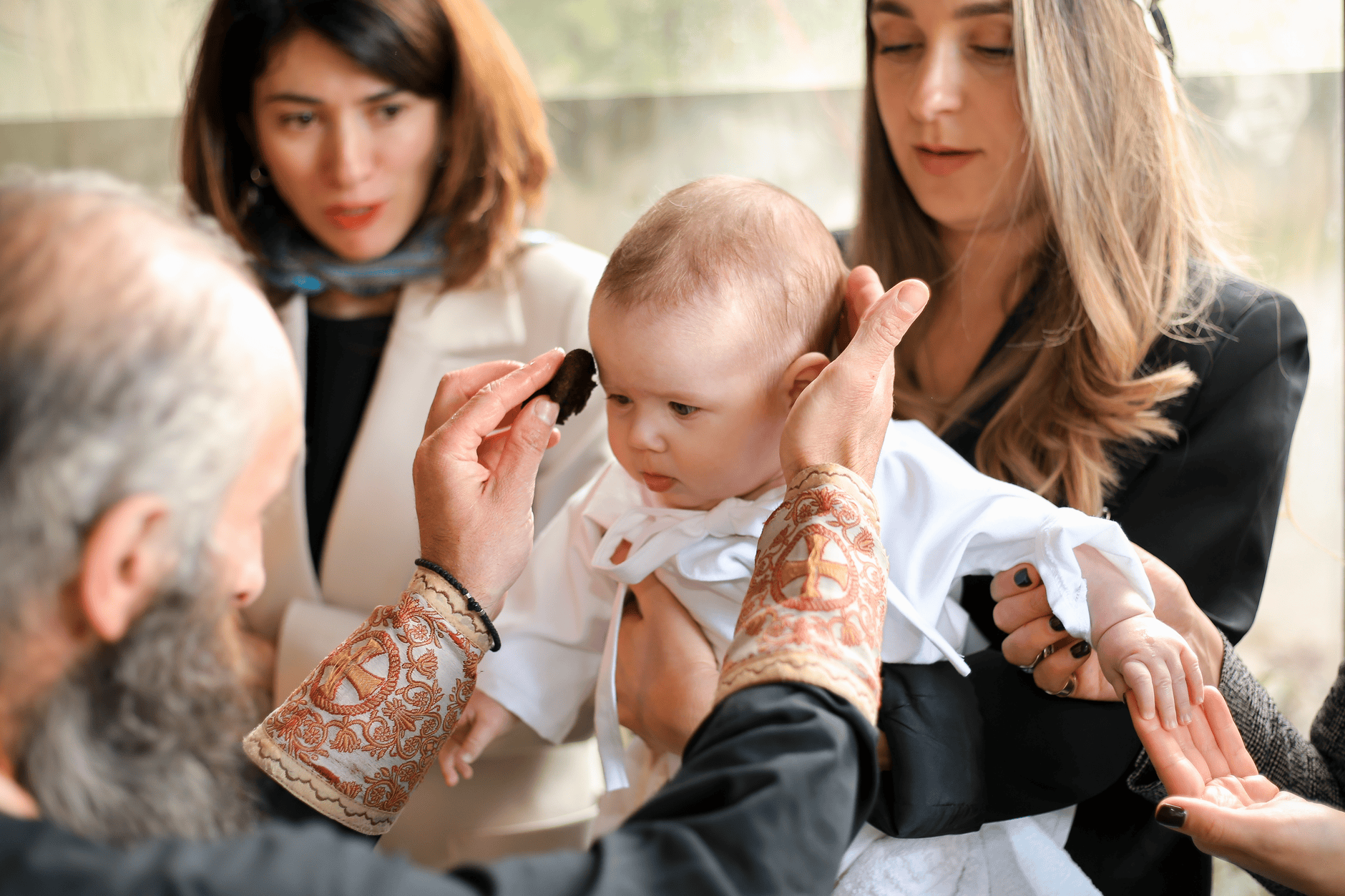
We put the gown on him together, the two of us, working his little fists through the sleeves. It went past his feet by a foot. The lace lay across his chest like frost on a window. He frowned at the whole business and then fell back asleep, which is what babies do with dignity.
Josh came in from the barn about then for an early lunch. He stopped in the kitchen doorway in his work jacket and his seed cap, and he stood there looking at his son in that gown, and he did not say a word for a full minute.
Then he cleared his throat.
“Mom’s going to see this,” he said quietly.
“I know,” I said. “So is everybody else.”
He looked at me, and I was afraid for one second he was going to ask me not to. He is her only son. Since his dad died, he has been the one who checks her furnace filter and changes her oil and sits with her on Harold’s birthday.
“Good,” he said. “He looks like Wyatt.”
Then he came and stood behind my chair with his hand on my shoulder, and Grandma Ruth smiled at him over her coffee like he had passed something.
I took the picture myself with my phone, there at the table, in the gray light from the window over the sink. A March morning in Iowa is the color of dishwater, but it was soft on his face. You could see every tuck in that hem. I sent it to Gail before noon.
The second Thursday
The second announcement ran on page six, the same page as the first, in the same size box. Gail had put a thin line around it, which she did not have to do. I noticed and was grateful.
By noon the whole town had both papers side by side.
I know that because I went to Casey’s for milk, and Donna at the counter had both issues folded under the register. She looked at me, and then at Wyatt in his car seat, and then back at me.
“Which one’s right?” she asked. She was not being nosy. She really wanted to know.
“Wyatt,” I said. “His grandma just loves him.”
She rang up my milk and did not charge me for the donut she put in the bag.
All week, two different women from church sent cards addressed to Baby Wyatt, underlined.
Josh said the guys at the elevator were talking about it too, in the way men talk about things, which is to say they mentioned it once and then talked about the price of beans.
One of them asked Josh if he was in trouble at home or at his mother’s. Josh said, “Neither. I’m with my wife.” And that was the end of that.
Gail called me Friday. She said she had three people call to ask if it was a mistake, and she told every one of them the same thing: “There’s no mistake. There’s two announcements. The second one’s from his mother.”
I did not hear from Sharon.
She did not call that week. She did not come by. She did not text Josh a picture of the cardinal at her feeder, which she had done every single morning since his dad died. On Sunday she sat in her pew and left during the last hymn.
“She’s embarrassed,” Josh said that night, in bed, in the dark.
“I didn’t do it to embarrass her.”
“I know you didn’t.” He was quiet. “I think she’s embarrassed anyway.”