The Man at the Hired Help Table
He had told me that morning it was nothing. I remembered it now, standing in front of everyone. Deel had texted me at seven, “small electrical hiccup, handling it, don’t worry.” And I had called my father from Nina’s parents’ farmhouse, with my hair in half a haircut, and said, “Dad, you heard about the barn?” And he said, “I’m out at Deel’s already, giving him a hand. You stay with Nina’s folks and enjoy it.” He sounded so calm. I thought a hiccup was a tripped breaker. I thought “give him a hand” meant holding a flashlight.
He had spent his whole morning in a trench so that I could get married in a barn with the lights on.
Then he had washed in the equipment shed, with the first cold water the pump had pushed, and put on his best pressed work clothes out of a bag in the cab of his truck, and walked into my wedding, at the last minute and with clay still under his nails. He had stood at the back, behind the last chair, so the dirt on his boots wouldn’t get on anyone’s good shoes.
And a woman with a clipboard had sent him to the kitchen door.
I looked around the room. The old men sat very still with their mouths pressed flat. Dale had his hand over his eyes.
Then someone started to clap.
It was not who I would have guessed. It was Nina’s grandmother, in her church hat. She put her two small hands together slowly, one clap and then another, in that silent barn, and then Nina’s father stood up, and then the whole room. Not in a loud way. A lot of them did not even clap. They just stood, the way people stand in church when something holy comes down the aisle. Chairs went back. Men took off their hats, the ones who still had them on.
Gene, up at the microphone, put his hand over his heart. Then he turned to the band and said, quietly, “Boys.” And the band, without a single word between them, began to play something low and slow on the pedal steel that I had never heard before and have never been able to find since.
My father sat there with his hands flat on his knees. He looked terrified.
“Dad,” I said.
“I’m all right.”
“Dad.”
“I just didn’t want a fuss.” His voice cracked on the last word. “That’s all I wanted. Just wanted your day to go right.”
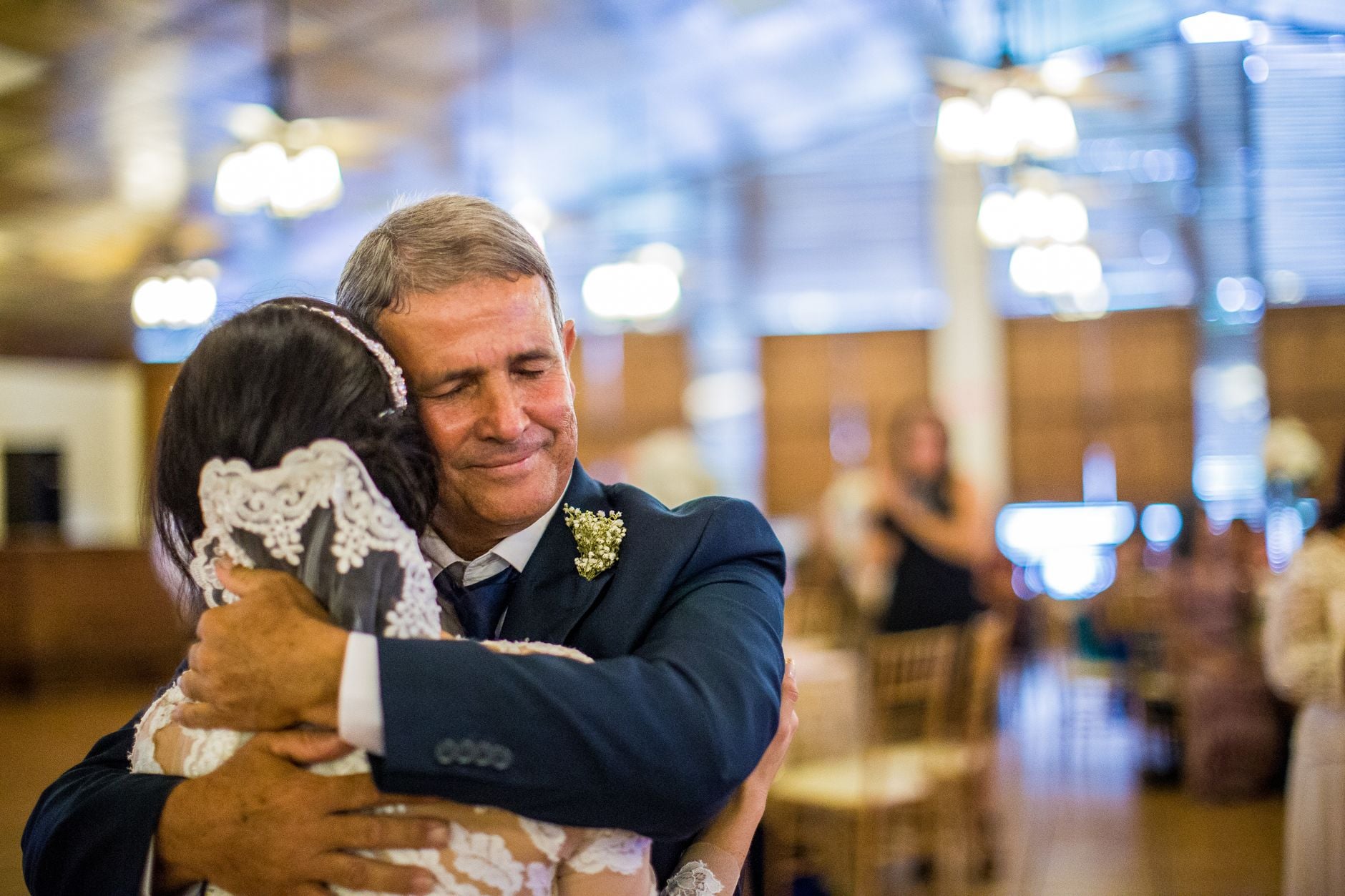
I got down on one knee in my good pants beside his chair, in front of a hundred and forty people, and put my arms around him. He smelled like soap and starch and, under it, the sharp raw smell of cut clay.
Ms. Vance had not moved.
She was standing where she had been, with her clipboard hanging by her leg and the headset pushed back off one ear. She looked like someone who had gotten a very bad phone call and could not decide whether to sit down.
When the room settled and Mr. Deel put a hand on my shoulder and told me he would see to it the food came out, she walked to our table. She did it slowly. She stood at my father’s elbow. She was shaking.
“Mr. Trombley.”
“Ma’am.”
“I brought you a bottle of water this morning,” she said.
My father looked up at her, and I saw it hit him a second after it hit her.
“It was about noon. I came out to the lane. You were down in the lane shoveling clay back into the trench, and you had it all over your face, and I handed you a bottle of water from the cooler, and you said, ‘Thank you, ma’am.’ And I told you to move your truck.” She pressed her lips together. “I never looked at your face. I’m sorry. I’ve been doing this nine years and I have never once…”