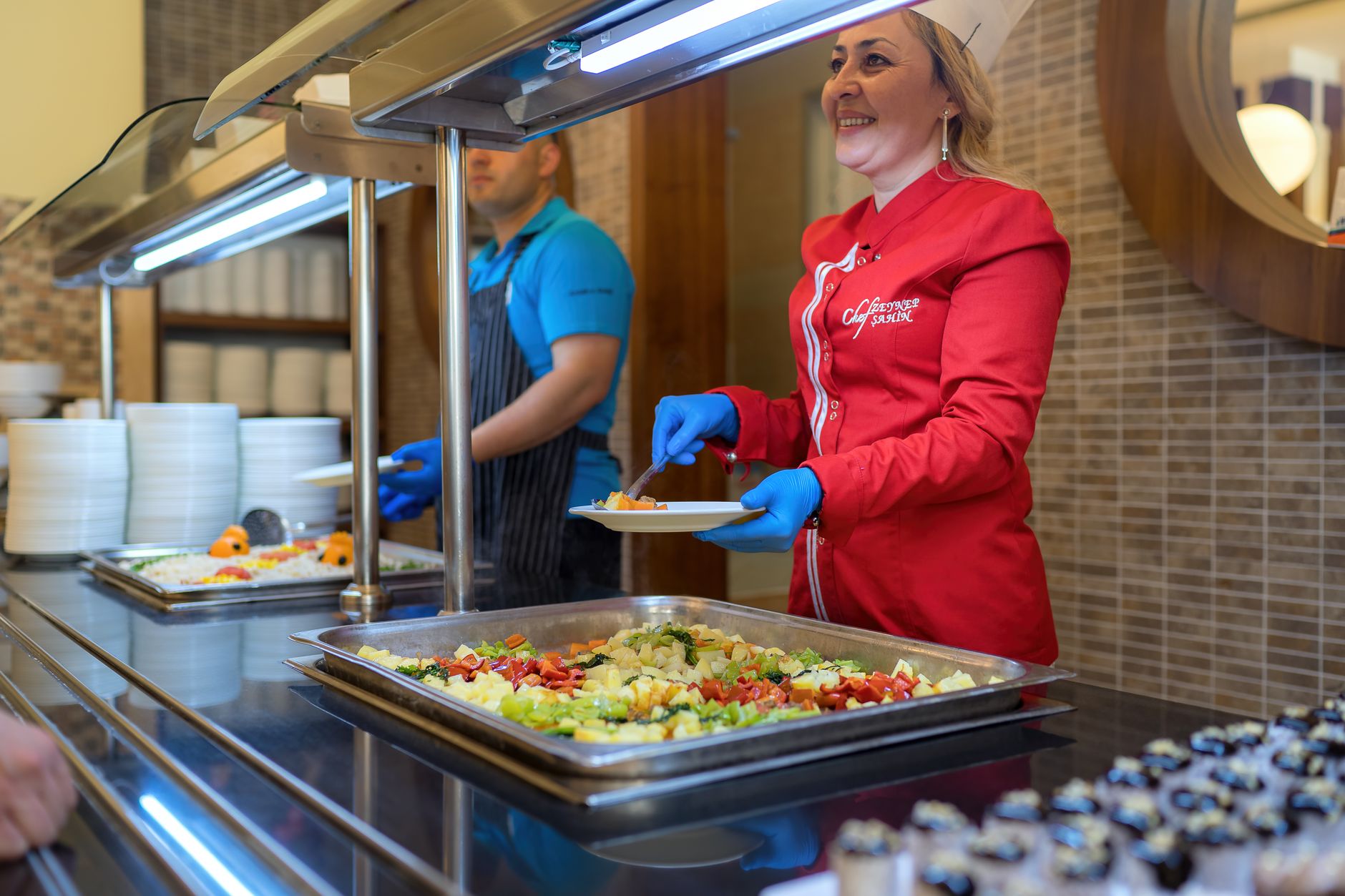
The Lunch Lady at the Engagement Dinner
The drive home
Dave did not say anything until we were past the Adel exit. The wipers were going and the farm report had turned into a call-in show about seed corn, which he usually yells at.
“You told him,” he said finally.
“I told Tom. I didn’t tell him anything.”
“You know what I mean.” He drove a while. “Nick asked you to say something else. In the doorway. That’s what was wrong.”
I did not ask how he knew. Thirty years of listening to engines will teach a man to hear the one thing that is off.
“Yes,” I said.
He nodded at the road. His jaw worked. I waited for the forty words.
“I’d have said something,” he said. “In the doorway. I’d have said it wrong.”
“I know. That’s why I didn’t tell you.”
“Good,” he said. And then, a mile later, in the dark, with the snow coming at the windshield like stars: “You were something, Bren. Three hundred and forty. You were really something.”
That was all. That was the whole speech. I have kept every word of it.
The note
He came that Monday. He took a personal day, which he told me later he had never done in four years at the firm.
He signed in at the front office with Marcy, who has been the school secretary as long as I have been the cook, and she gave him a visitor badge on a lanyard and looked at me over her glasses like I had brought her a puppy.
He came back to the kitchen at ten-fifteen, when the pizza was in.
It was pizza day. I had not planned that. It was just Monday, and Monday is pizza in February, the rectangle kind, sheet pans of it, with the crust I make from the commodity flour that everybody says cannot make a decent crust.
“You have to wear one,” I said, and held out a hairnet.
He looked at it. Then he took it and put it on, and he looked so ridiculous that Pam and Sheila, my two cooks, had to turn around and face the dish machine.
I reached into my apron pocket. I keep the same thing in every apron I own. When an apron wears out, it moves to the next one.
It is a piece of wide-ruled paper folded in fourths, soft as cloth by now, with clear packing tape over both sides to keep it from falling apart. I unfolded it and handed it to him.
In purple crayon, in second-grade letters, it said: “Mom makes the best pizza day.” There was a drawing of a rectangle with circles on it, and a stick lady in a hairnet, and a little stick boy waving with his whole arm.
He had given it to me on a Friday in October, twenty years ago, in the line. He had handed it over the sneeze guard with his tray in his other hand, and then he had gone to sit down without saying anything, because he was seven and that was as much as he could do.
“You kept this,” Nick said.
“I’ve had it in my pocket every school day for twenty years,” I said. “Some days are hard in a kitchen. Somebody’s crying in the line, or the freezer goes down, or the state comes for an inspection. I put my hand in my pocket and it’s there.”
He held it a long time. He turned it over, and on the back, in my handwriting, it said the date. October 2006.
“I forgot I ever wrote this,” he said.
“I know. That’s why I kept it.”
He handed it back, carefully, like it was a check he was depositing. I folded it into fourths and put it back where it goes.
At eleven-ten the kindergartners came down the hall in their line, holding the wall rope, and Nick stood at the end of the serving line in his hairnet and his visitor badge and said hi to every single one of them.
A little girl asked him if he was my boy. He said yes. He said it right away.