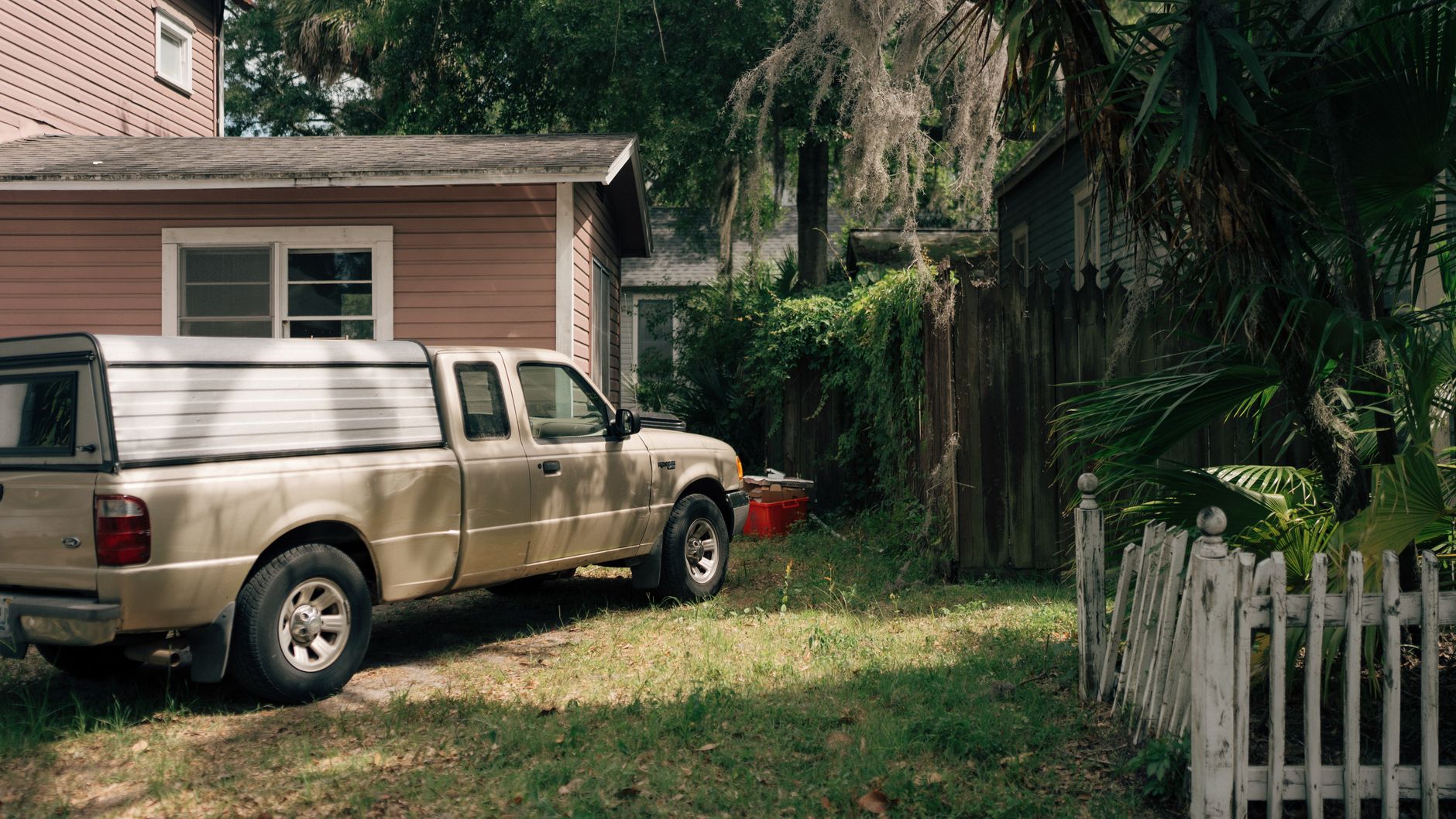
The Game Day I Towed Them All
“Denny,” I said that night at supper. “Are you charging people to park here.”
He got a little color in his face but he kept eating. “It’s just game days, Ma. Everybody around here does it. The Dolans do it. It’s forty a car and these lots by the stadium want fifty, so it’s a deal, really.”
“It is my driveway.”
“I’m not charging you,” he said, and he laughed, like that was the funny part, and I let it go, because he laughed and because he is my son and because I did not yet understand what it would turn into.
Here is what it turned into.
By the end of September it was seven cars a Saturday. By the middle of October it was nine. Driveway, then the lawn, then the strip along the fence where my peonies are.
He put the dry-erase sign out, the one Tuck Mahan had lettered for him. He started telling his buddies to come early and help him “run it,” and they would stand around in their sweatshirts and direct traffic and drink in the open garage, my garage, with Dale’s tools still on the pegboard behind them.
Tuck was the main one, the way he has been the main one since the ninth grade. He and Denny have been best friends for twenty-four years, the two of them lettering that sign together and running the driveway every home Saturday, and neither one of them has ever been the steadying influence.
There was a cooler in my garage that was not mine. There was a second cooler. There was a Bluetooth speaker playing a kind of music at a volume that brought Jolene Pruitt out onto her porch next door with her arms crossed.
There was a Saturday a stranger used my front hedge for a bathroom because the line at the stadium was long, and when I said something, Denny said the man did not know any better and to let it go.
There was a Saturday somebody backed into my mailbox, Dale’s mailbox, on the cedar post he set in concrete, and knocked it crooked, and nobody said sorry, and my son straightened it with his boot and kept making change.
There was the Saturday I found a paper plate of nacho cheese ground into Dale’s grass by the fence, and I got down on my knees at sixty-three years old and cleaned it up with a rag so it would not kill the lawn he loved, while nine strangers watched a game three blocks away.
I did not tell Denny about that one. I did not have the words for it that would not come out as crying, and I did not want to cry in front of all those cars.
And the thing that I could not get past, the thing that sat in my chest, was how I had stopped being a person in it.