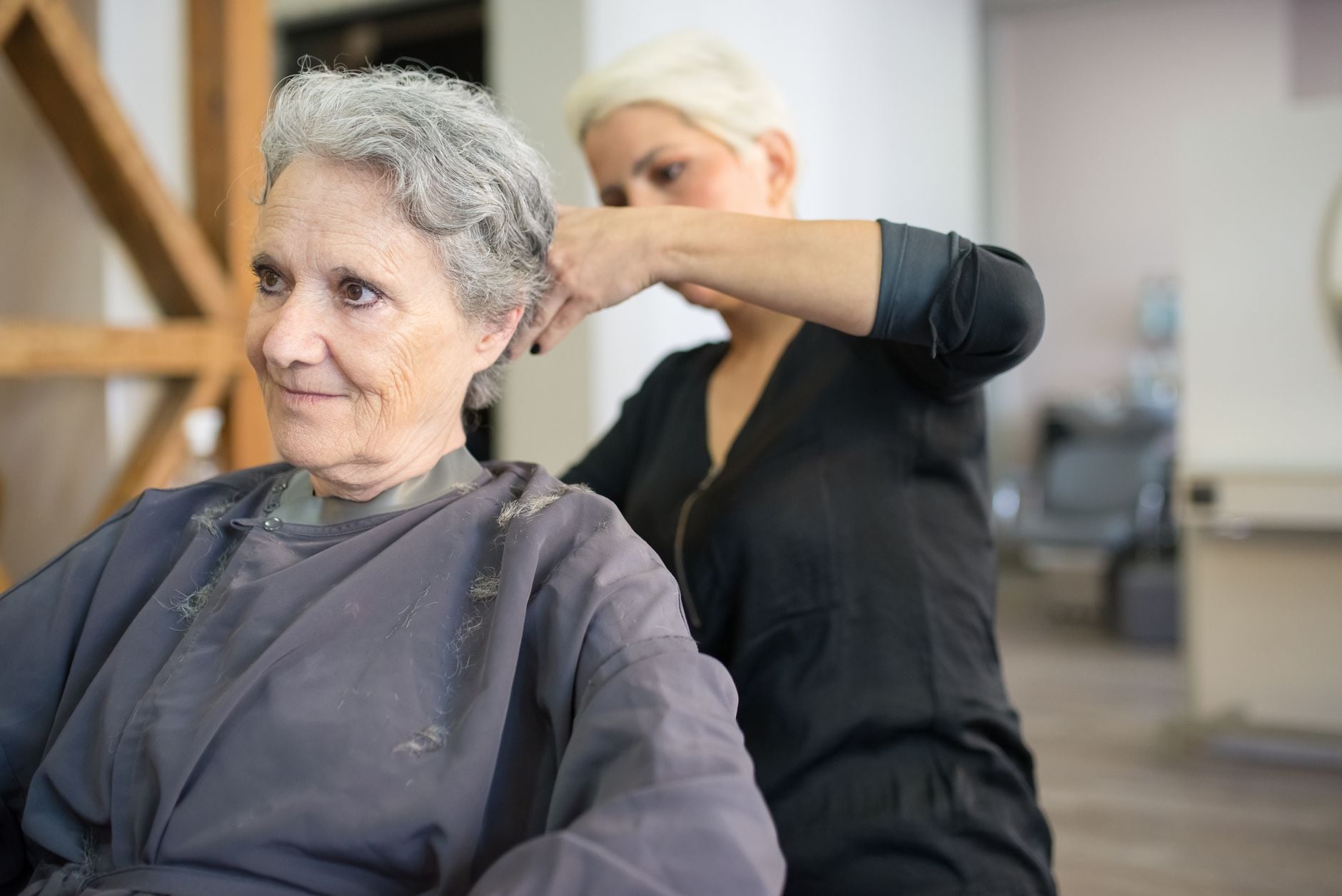
The Chair on My Mother’s Sun Porch
The Ladies Find Me
I worked my last day at station three on the thirtieth of September. I did eleven heads that day. I did not tell one of them where I was going, and when they asked, I said I was not sure yet, which by then was a lie, and I felt bad about it.
Kendra did not come out of the back to say goodbye. Kaylee did.
Kaylee is twenty, Kendra’s sister’s girl, fresh out of the beauty school in Watertown with her license in a plastic sleeve. She is a sweet, nervous thing who apologizes when she bumps into a chair.
She stood by the door while I packed my shears into my kit.
“I’m sorry,” she said. “I didn’t ask for your Saturdays. My mom asked Aunt Kendra.”
“I know, honey,” I said. “It isn’t your fault.”
“I don’t know how to do half of what you do.”
“You’ll learn,” I said, and I meant it, and I left.
I did not tell anyone. I did not have to. My mother did.
Mom went to circle at First Lutheran that Wednesday, the women’s Bible study that meets in the church basement the second Wednesday of the month. She brought her bars. And when Ardis Johnson said she did not know who was going to do her hair now that Shelly had quit, my mother set down her coffee cup and told the whole table.
“She didn’t quit,” Mom said. “She’s on my porch. Tuesdays through Saturdays, nine to five. Bring your own coffee cup if you’re particular.”
By Friday I had thirty calls on my cell phone.
I did not ask for one of them. I want that understood, because people in a small town keep track of that kind of thing. I never called a single client. I never mailed a card. Every lady who came up Dan’s ramp that first month came because her sister, or her friend from circle, or her daughter, or my mother, told her where I was.
In the first month, forty-one of my regular ladies came to the porch.
Forty-one. I counted them in the appointment book, the paper one, the same kind I had kept at station three for nineteen years. Mom watched me count and then went into the kitchen and put on another pot.
What the Porch Became
The sun came in low and gold through all those windows in the mornings. The geraniums bloomed red against the glass. I had my one black chair facing the mirror, my sink on the wall where Dan had put it, and a dryer chair I bought off an estate sale in Clear Lake set up in the corner by the radiator.
My mother made coffee. Every day.
She would come out through the inside door at about ten, with a tray and the good cups, the ones with the little blue flowers, and she would give one to whoever was sitting under the dryer. Then she would sit down in the wicker chair next to her and visit.
She knew everybody. Some days I would look up from a cut and there would be three old women in a row out there, one under the dryer and two waiting, all talking over each other about the price of eggs and whose grandson was getting married.
It was not a salon so much as a front porch with a sink.
Mrs. Gertie Lund came on Tuesdays.
Gertie is ninety-one. She has come to me every week since 2007 for a wash and set, rollers and the dryer and a light comb-out, the same way her hair has been done since Eisenhower. She is a farm widow from out past the Big Stone road, and her grandson drives her into town every Tuesday morning and does his errands while she sits.
She had not been able to do the steps at Mane Street for two years without somebody on each elbow. The first time her grandson pushed her up Dan’s ramp in her wheelchair, she put her hand on the rail and patted it.
“Now who did this?”
“My husband.”
“The lineman?”
“Yes, ma’am.”
“Well,” Gertie said. “Tell him Gertie Lund says he’s all right.”
Dan pretended it was nothing when I told him that night. He went out to the garage for a while afterward, though.