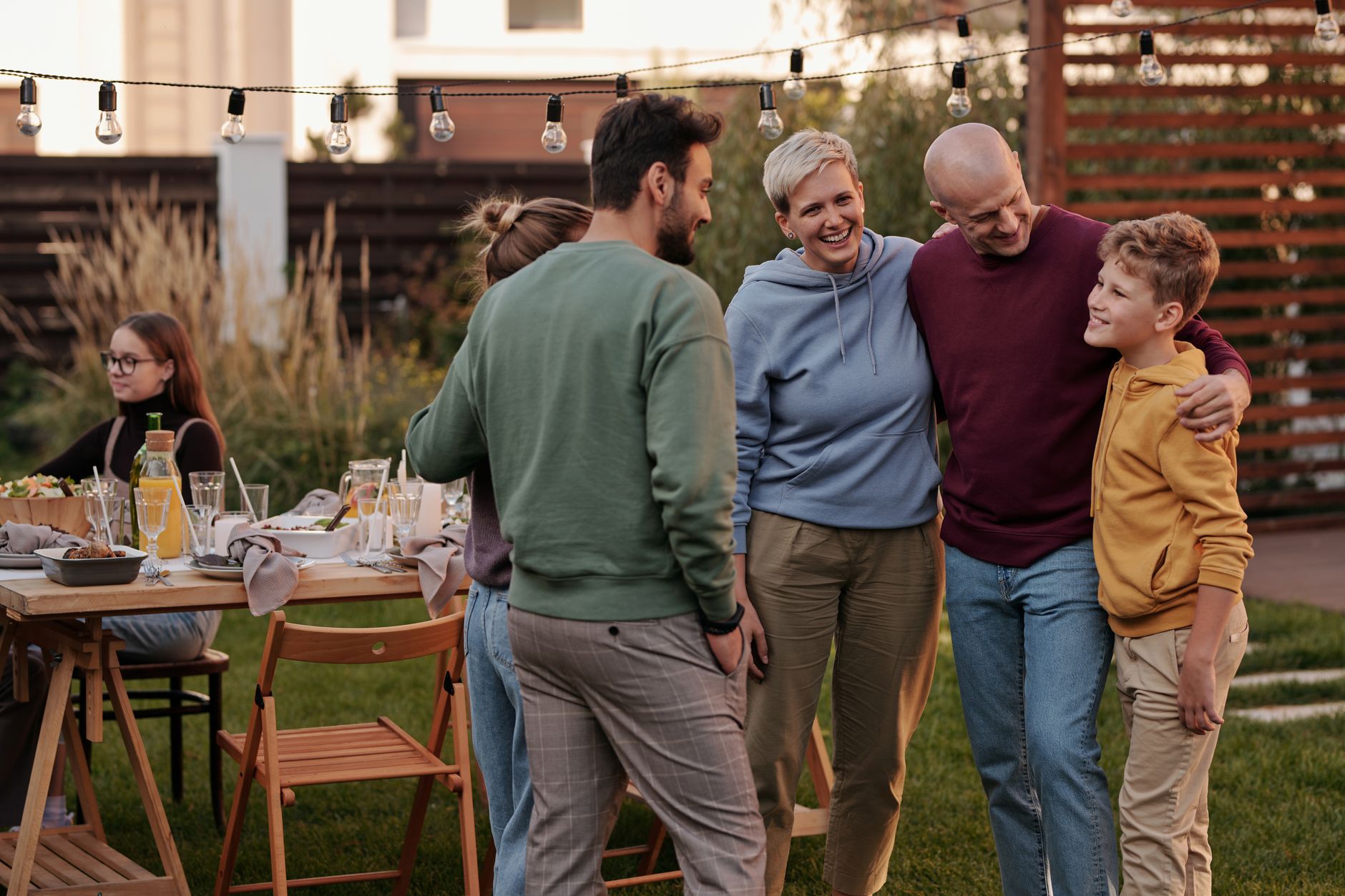
The Backyard Wedding Under the Cottonwood
I told him the truth. “Because she came out here when you missed things. She’d swing until dark, then come in and tell me she was fine. I didn’t want to take away the place where she went to be fine.”
Greg didn’t say anything for a long time. The lights hummed. Over by the tent, somebody’s toddler was laughing at nothing.
“I was a coward, Lori,” he said finally. “Not when I left. Every year after. I didn’t know how to say sorry to her, so I kept sending money, and every year the money got bigger and the sorry got further away.”
He let out a breath. “Then this spring Brittany asked me for one thing, and I couldn’t tell her no either. I thought if I paid for the whole wedding, nobody would notice I didn’t know how to do anything else.”
He let go of the rope.
“I’m sorry,” he said. “To you, too. I should have said it seventeen years ago.”
I stood there in my blue dress in my own backyard. I had waited a very long time to hear that sentence, and I thought it would feel like winning. It didn’t. It felt like setting something heavy down after carrying it so long you forgot it was in your arms.
“Go tell her,” I said. “Before she walks. She’s upstairs.”
He looked at me then. His eyes were wet, which I had seen exactly twice in our whole marriage: the day Abby was born, and the day we signed the divorce papers.
“Will you come with me?” he said.
“No,” I said. “This one’s yours.”
The aisle
I don’t know what he said to her upstairs. She has never told me, and I have never asked. I know that he was up there eleven minutes, because I was watching the clock on the microwave through the kitchen window. I know that when the bridesmaids came down, all three of them had redone their mascara.
At six twenty-five, I went upstairs to fix her veil. It was plain, fingertip length, bought on clearance. The dress was simple and white with little cap sleeves. She had come back to it three times at the shop, and the third time, the woman there handed me a tissue without a word.
Abby stood still while I pinned the comb into her hair. Her face was blotchy and happy.
“Dad cried,” she said.
“I know.”
“He said sorry, Mom. He said it like four times. He was really bad at it.”
“Everybody’s bad at it the first time,” I said. I tucked a loose piece of hair behind her ear. My hands were shaking, and I held still until they stopped. “You ready?”
“Yeah.” She took my hand. “Mom. You’re in the front row. Right on the end, on the aisle. Where I can see you.”
“I know where I’m sitting, honey.”
“I just wanted to say it out loud.”
I went down first, alone, along that strip of mowed grass between the church chairs, with Pastor Dahl under the cottonwood and Tanner beside him, straight as a fence post. I sat in the front row on the aisle.
Mike sat down next to me smelling like hickory smoke and put his big hand over mine.
Then Marlys Olson started the music on a little speaker on the patio, and Abby came out the back door on her father’s arm.
He walked her down the grass very slowly. I don’t think it was for the show. I think he did not want it to be over. Every few steps he looked down at her, and she kept her eyes straight ahead at Tanner, and she was smiling so hard I thought her face would split.
At the end, Pastor Dahl asked who gives this woman. Greg said, “Her mother and I do,” in a voice that cracked on “mother.” Then he kissed Abby on the cheek, put her hand in Tanner’s, and turned around.
There was an empty seat in the front row next to me. We had left it there for him. Abby and I had talked about it, and we both wanted it there.
Greg looked at it. He looked at me. Then he walked past it, all the way back to the third row, and sat down on the end, between Dale Olson and a woman from the church choir.
After the service, I asked him about it. I said, “There was room up front.”
“I know,” he said. “I sat where I put you. Seemed like the least I could do.” He shrugged. “Third row’s got a good view. I never knew that.”