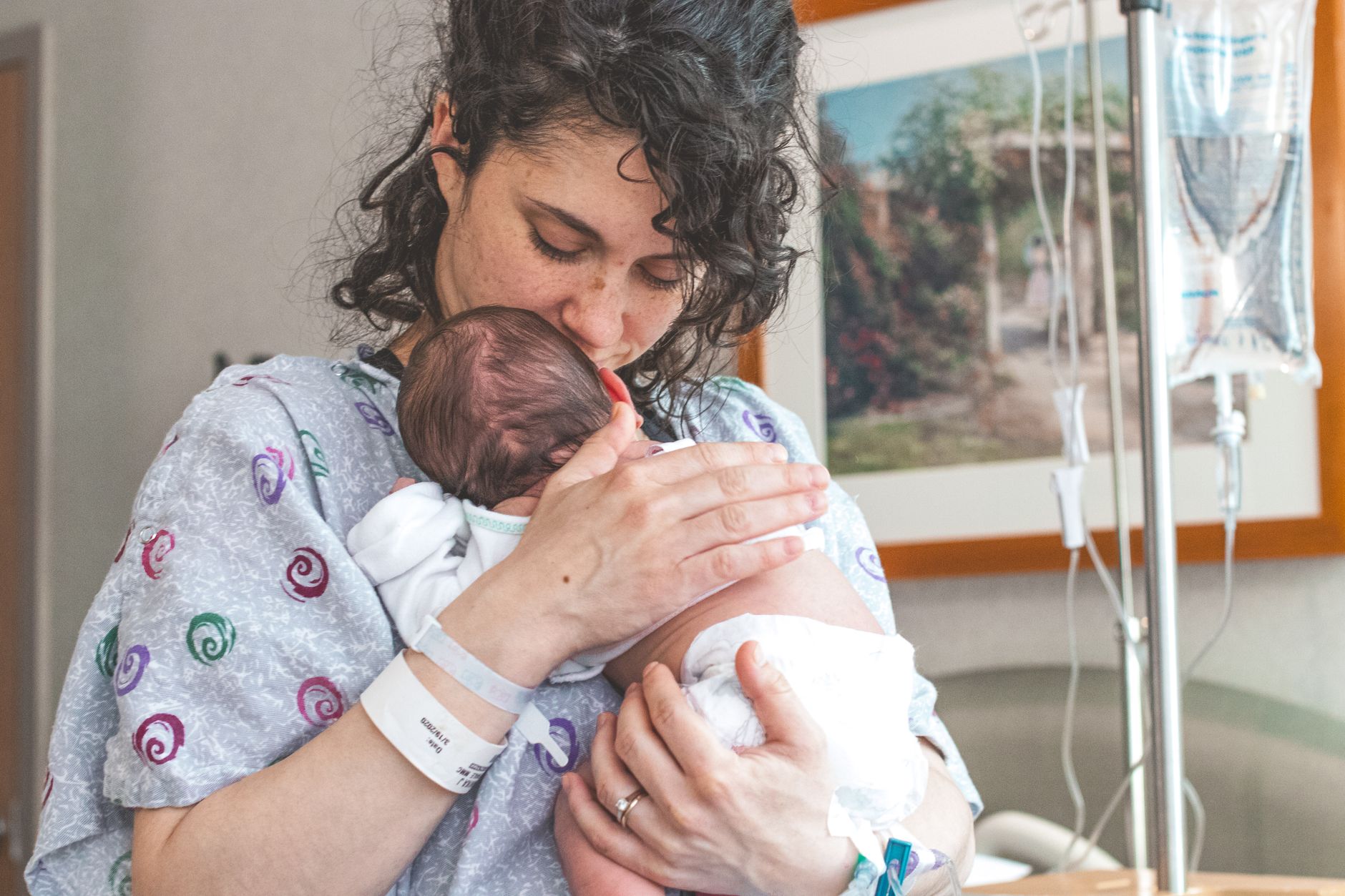
The Photo That Left The New Mother Out
My mother Gail made it in an hour later, towed car and all, smelling like the inside of a wrecker cab, and the first thing she did was put her palm flat on my forehead the way she had done every single time I was sick as a child, checking for a fever that had nothing to do with a thermometer. She held her granddaughter like she had been doing it her whole life, which in a way she had, four children of her own before me, and she did not ask to take a single picture. She just looked, and cried a little, and told me I had done good.
Then she pulled the other chair up close and told me about her own C-section with my oldest brother back in 1991, how different it had been, how they kept her flat on her back for a full day and did not let her try to nurse until the second morning, how nobody back then thought to ask a new mother what she wanted in her own room. “We’ve gotten better about some things,” she said, “and worse about others. Seems like everybody’s got an opinion on how a baby ought to be welcomed in except the one who just birthed her.” I laughed for the first time since the surgery, a real laugh, and it pulled at the incision just enough to remind me it was there, and I did not care.
Lynette came back around nine that night, alone, after the lounge had cleared out and the hallway had gone quiet the way hospitals do late. She knocked, actually knocked, which she had not done all day, and waited for Tanner to say come in.
She did not apologize right away. She sat in the recliner, finally in its proper spot by the window, and asked quietly if she could hold the baby, just for a minute, just sitting down, no camera.
I let her. I want that understood clearly, because it was my choice and not anybody doing it for me. I had gotten my strength back enough by then to make my own calls about my own room, and the choice I made was to let a grieving, lonely, imperfect woman hold her first grandchild in a quiet room with no audience.
She held her for a long time without saying much. Then she said, very low, that when Wade died, she had gone from being somebody’s wife to being nobody’s anything in the space of one phone call, and that she had spent four years scared that if she did not make herself useful and visible in Tanner’s life, she would just keep disappearing a little more every year. The picture had never really been about the picture. It had been about proof that she still mattered to somebody.
I did not have a clever answer for that. I just told her she had always mattered, long before there was a baby to prove it, and that she did not need eleven people and a tripod to be part of this family, she only needed to ask.