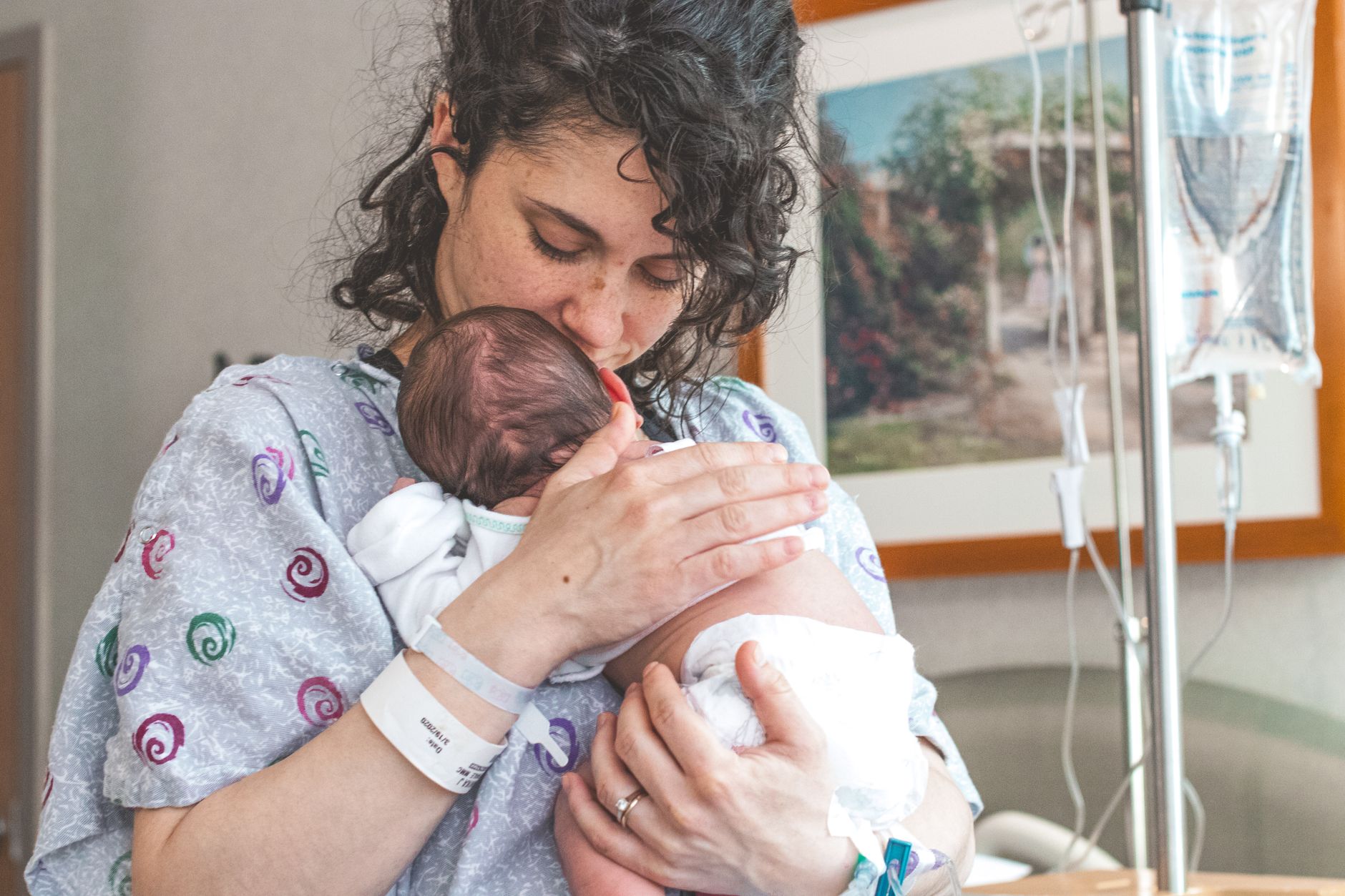
The Photo That Left The New Mother Out
The nurse who helped me that first hour was named Rosa. Older than me by maybe fifteen years, steady hands, the kind of voice that did not change pitch no matter what was happening in the room. She was the one who taught me how to hold my own weight when I finally tried to shift in the bed, how a fundal check feels like somebody leaning a forearm into a bruise, why the compression sleeves mattered even though they buzzed like angry bees every half minute. She told me, straight out, not to let anybody rush me into being on my feet before I was ready, and not to let anybody tell me a C-section heals faster than it does.
“You had major surgery today,” she said. “Everybody’s going to forget that by Thursday. I won’t.”
I did not know yet how much that one sentence of hers would matter before the day was out.
By early afternoon, word had spread the way it does in a small family, and Lynette arrived first, alone, which I remember being grateful for. She held the baby carefully, counted her fingers out loud, cried a little, and for about twenty minutes I thought the day was going to be a good one despite everything.
Then she started making calls. By the time Tanner’s cousins and the great aunt and the sister in law with the tripod were filing in two hours later, I understood that Lynette had decided this was not a quiet family visit anymore. It was an event, and she was the one running it, and she had been planning the photograph in her head since she found out she had a granddaughter.
I want to say something fair about Lynette here, because it is true and because it matters for how this ends. She had lost her husband, Tanner’s father Wade, four years before, to a heart attack at the co-op where he and Tanner both worked. She had one child, one son, and up until nine hours earlier she had exactly zero grandchildren. She had spent four years being the widow everybody checked on at Thanksgiving and then went home from. This baby was not just a baby to her. This baby was the first new person to belong to her family since she had lost the last one. She was not trying to hurt me. She was trying, in the only clumsy way she knew, to plant her flag on a day that felt like it belonged to everyone but her, and she had never learned how to want something without also managing everybody around her to get it.
None of that made it right. It only made it human.
Which brings us back to that room, eleven people deep, Lynette’s hand half extended for my daughter, me holding on, and the call button under my thumb.