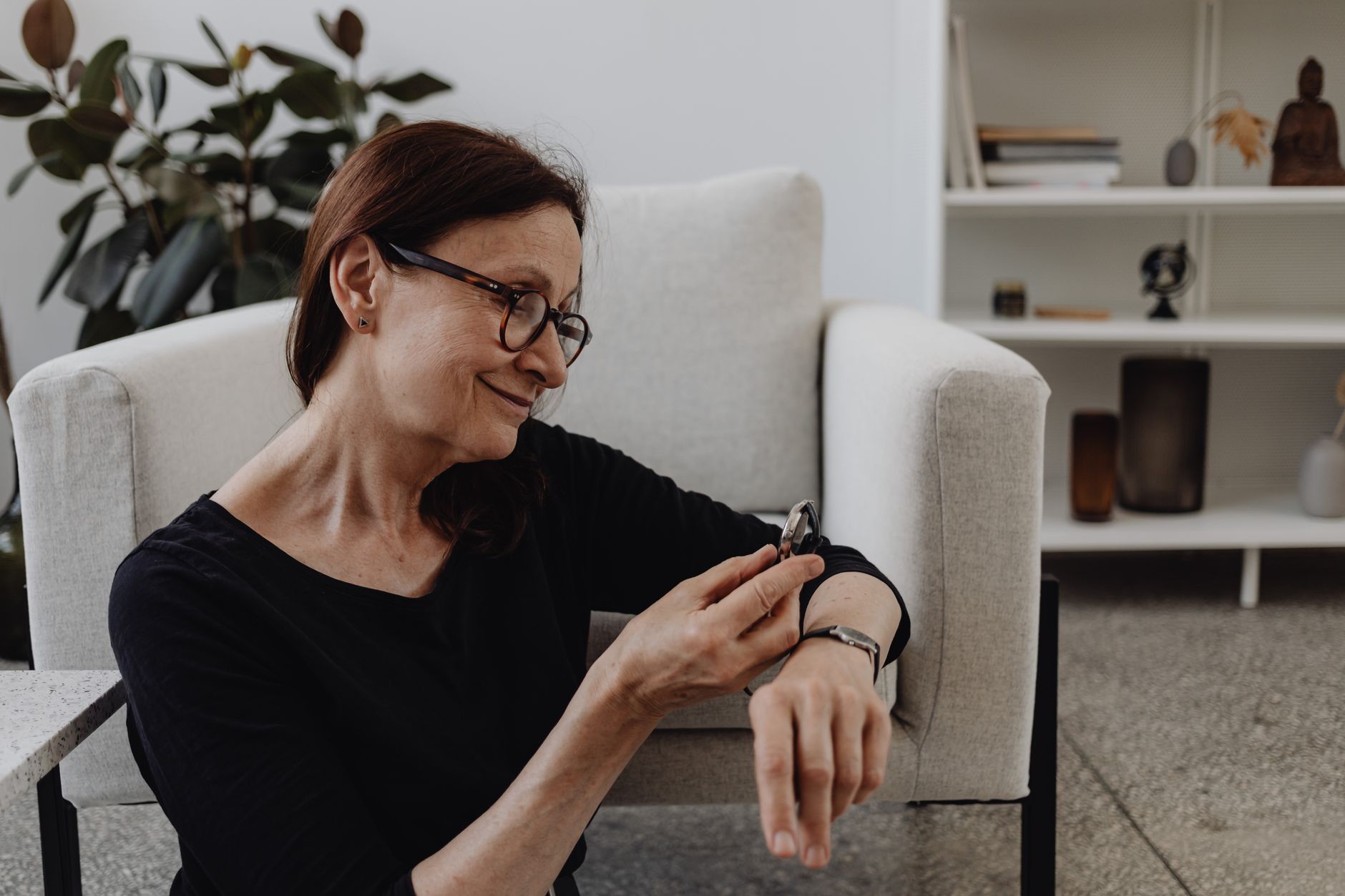
The Watch From the Ones at Home
They called eleven names at the Eagles hall that night, and I counted every one of them, because somewhere around the sixth I began to understand that my husband’s was not coming.
The watches sat on a folding table beside the podium, each in a dark blue box with the lid propped open. Mr. Fisk, the plant manager, read from a sheet of paper. He would say a name and a number of years, and a man in his good shirt would get up from one of the round tables, walk to the front, shake hands, and carry a blue box back to his wife.
“Larry Combs, thirty-one years.”
“Jim Hostetler, twenty-six years.”
Dennis clapped for every one. He clapped the way he does everything, steady and all the way through. He had worked beside most of those men longer than our children have been alive.
I watched the table. Four boxes left. Then three. Then two.
“Ron Stuckey, twenty-nine years.”
One box.
“And Paul Dietrich, forty years, our senior man tonight.”
Everybody stood for Paul, and they should have. Dennis stood too, slowly, with one hand flat on the table, the way he has had to stand since the surgery.
Then the folding table was empty, and Mr. Fisk folded his paper in half and said, “Let’s give all our retirees one more hand, and then I believe there is pie.”
I did not move. I do not think I breathed.
Thirty-eight years. My husband gave that plant thirty-eight years on the line, and the only man in that room with more was Paul Dietrich.
Let me tell you what thirty-eight years is. It is a lunch pail I packed nine thousand times, give or take. It is the alarm going off at 4:20 and the back door closing at 5:00 on the dot, in the dark for most of the year, so he could be in the break room with his coffee before first shift started at 6:00. It is two discs in his lower back that gave out a year ago last March while he was doing a job he had done ten thousand times.
He had the fusion surgery in April. He was on sick and accident pay through the summer. In September the doctor told him flat out that he was not going back to that floor, not at sixty, not ever, and the pension office put him out on a disability retirement.
That was the word that did it, though I did not know it yet. Disability.
The invitation to the banquet had come in the mail like everybody else’s. He had read it standing at the counter and said, “Well. I guess we are going to a banquet,” and I could tell he was pleased, because he went and got his good shoes out of the closet three weeks early to see if they needed polish.
Now I sat at a round table in the Eagles hall with a paper tablecloth under my elbows, and I looked at my husband’s hands.
They were folded on the table. Big hands, scarred across the knuckles, the left thumbnail gone black years ago and never quite right since. They were perfectly still.
“Dennis,” I said.
“I know,” he said.
“They did not call you.”
“I know it, Brenda Kay.”
Across the table Larry Combs’s wife had her husband’s blue box open and was turning the watch to catch the light. She looked up at me, and then at Dennis, and I watched her figure it out. She closed the lid and put the box in her lap, under the tablecloth, where we would not have to look at it. I have thought about that kindness many times since.