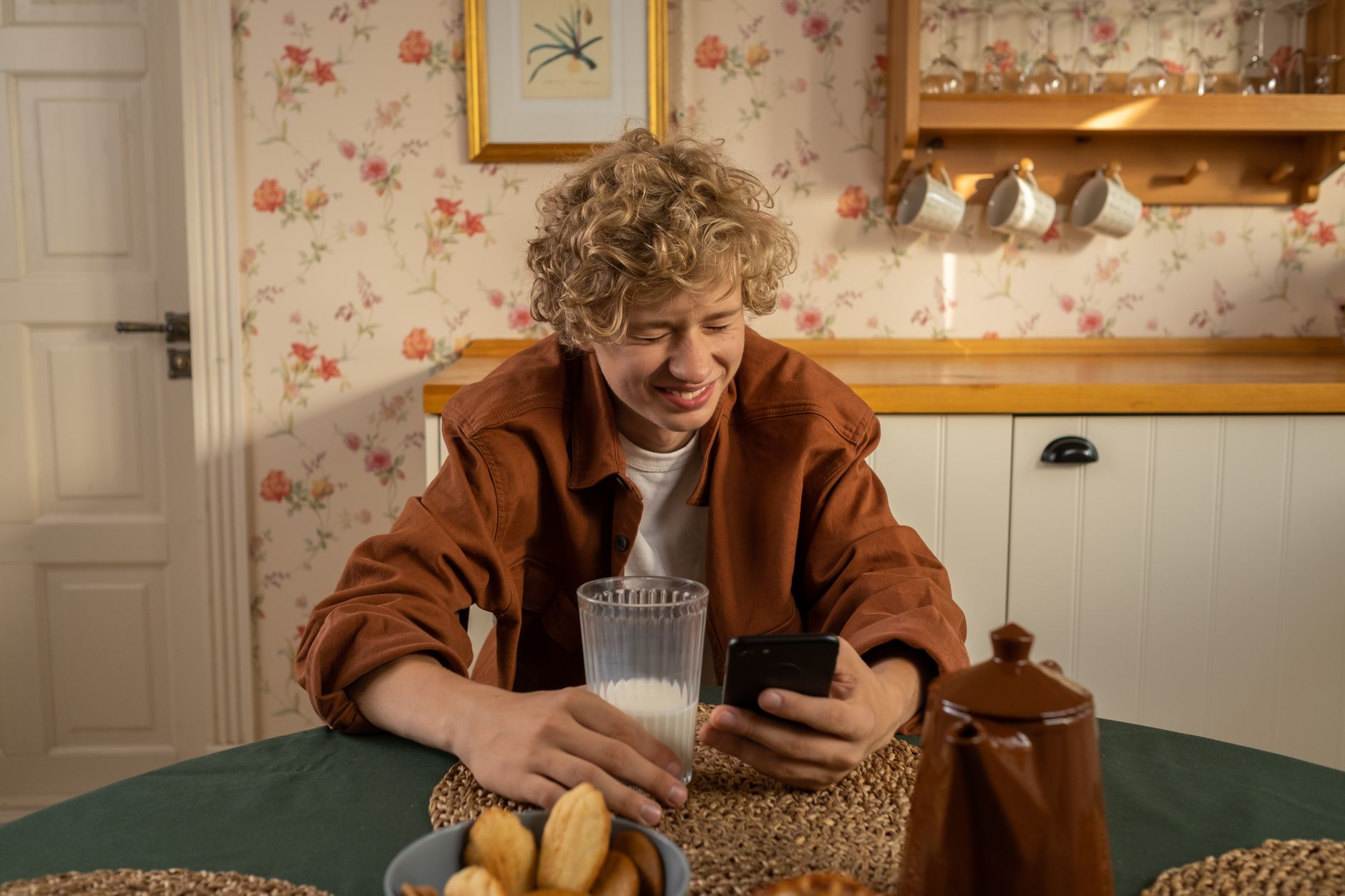
The Boy Nobody Else Would Keep
Micah came on March the ninth.
He came in Brenda’s car with everything he owned in that one duffel bag and a plastic grocery sack, and he stood on my porch in a coat that was too small at the wrists, and when I opened the door he did not look at me. He looked past me, into the house, the way you look into a room you are already planning how to leave.
“Thank you for having me, ma’am,” he said.
Four homes worth of practice in that one sentence.
I had cooked. I had cooked like a fool, like he was coming home from a war, pot roast and the good biscuits and a pie, and I watched him eat and I watched him catch himself eating too fast and slow down and apologize, and I thought my heart would come out of my chest. He ate like somebody who had learned that food was not a promise, that there might not be any tomorrow, so you took what was in front of you quick and quiet before it could be taken back.
After supper I showed him his room. It had been the sewing room. I had put a real bed in it, and a dresser, Ray’s dresser, cleaned out and lined with fresh paper, four empty drawers waiting.
He set the duffel down by the door. Not on the bed. By the door.
And it stayed there.
I want to be careful telling you about the months that followed, because the easy way to tell it would be to make it sound like a montage, like it got better a little at a time in a straight line, and that is not how it went. It went in fits. It went backward as much as forward. There were nights I lay awake certain Darlene was right. Not because he did anything wrong. Because he did nothing at all. He was so careful, so quiet, so determined not to take up room, that some evenings I would have given anything for him to slam a door, to be a normal rotten teenager, to need something out loud.
He never left his dishes in the sink. He washed them before I could, every time, like he was erasing the evidence that he had eaten. He made his bed so tight you could bounce a quarter. He said sorry when I bumped into him. He said sorry when it rained. For the first three weeks he asked me, every single morning, if there was anything he needed to do to be allowed to stay another day, and the way he asked it, so matter of fact, like rent, broke something in me every time.
And the bag stayed by the door.
I did not touch it. Brenda had told me not to, and I would not have anyway. I understood that bag. That bag was the only thing in the world that belonged to him and only him, the one thing no family had ever been able to take, because he never let it out of reach. As long as it was packed, he could not be surprised. He would never again be the boy standing in a doorway while strangers decided his life, with his things still in somebody else’s drawers.