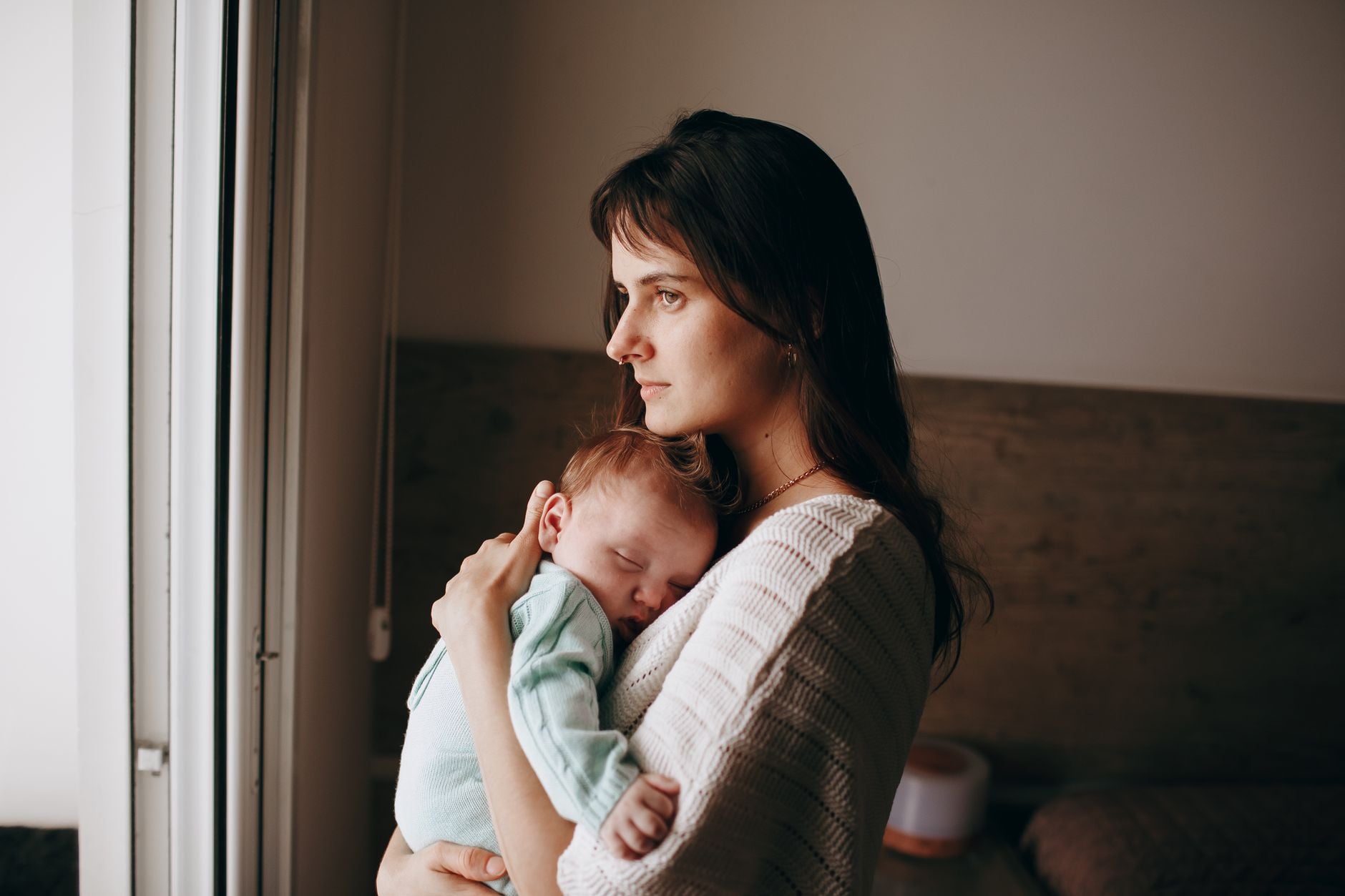
The Baby Who Looked Like Hers
I did not move. But I knew. I had kissed that mark on my own daughter a hundred times. A little crescent, dark, behind her left ear, where her hair swirled. The pediatrician had called it a birthmark and said it would likely fade. I had thought it was the prettiest thing, like somebody had touched her there and left a thumbprint.
“When you turned that baby to me in the hospital,” Loretta said, “and she had that hair, and those eyes, and then I saw the mark.” She shook her head slowly, over and over. “I thought the Lord had sent her back to me. I thought I had lost my mind. I had to get out of that room or I was going to fall down on the floor.”
I asked her, as gently as I have ever asked anything, what happened to Faye.
She told me. It was 1983. Faye was not quite two. There had been a fever, the kind that comes on a baby in the night, and they did what people did out here then, which was wait and pray and give her a cool cloth and tell themselves it would break by morning. By the time they understood it was not an ordinary fever, the hospital was forty minutes up a highway that was not much more than a logging road in those days, in the dark, in the fall rain, and Earl drove it with his hand on the horn the whole way and Loretta in the back holding her baby, and it was already too late when they got there. Meningitis, the doctor said. There was nothing anyone could have done, the doctor said. By the next afternoon Faye was gone.
“They told me there wasn’t anything we could have done,” Loretta said. “Everybody told me that. The doctor, the preacher, my own mother. And I nodded and I said thank you and I have not believed one word of it for forty two years. I was her mama. I was supposed to know. I laid her down in her crib that night and she was warm and fretting and I thought, it’s just a fever, and I went to sleep in the next room. I went to sleep.” She looked at me then, straight at me, and her face was a ruin. “You do not sleep again right, after that. Not ever. You learn to live without the whole half of your heart that knows how.”
And then she told me the part that broke me, the part I think about still.
“I put her away,” she said. “Not her things. Her. I put her away in myself where I couldn’t get to her, because I could not live and carry her at the same time, I had to pick, and I had Wade coming two years on and I had to be a mother to the living. So I put Faye away. I never said her name. Earl and I never once said her name to each other in forty years, did you know that? We loved her and we buried her and then we never said her name again because saying it would have taken the lid off, and neither one of us could afford to have the lid off. His people, my people, the whole town, they all just let it close over. That’s what we did back then. We closed over things.”