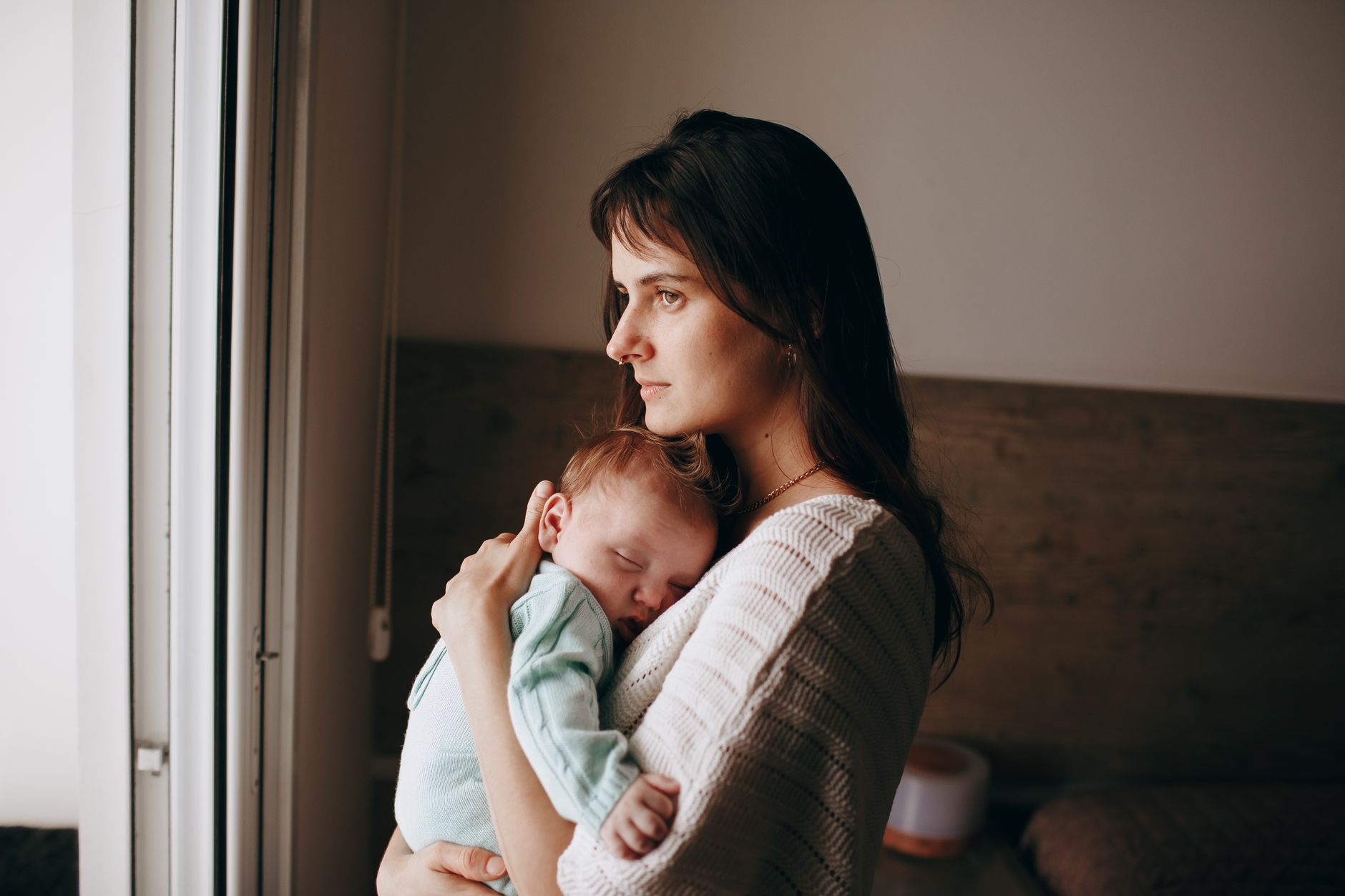
The Baby He Would Not Take Home
I want to be careful here, because the law of it was complicated and I am not going to pretend it was simple, and I am not going to turn it into a courtroom story, because it was never about papers. What happened is that Brynn, in the end, could not sign June over to strangers. But she also could not take her. She was twenty-three and broke and alone and she knew it, she knew what she could give a baby and what she could not, and she looked at me across that hospital room on the fourth day, with Cole already gone back to Des Moines, and she said the bravest thing I ever heard a scared person say. She said, I think you already love her more than I know how to. Will you take her.
Not give her away. Take her. There is a world of difference and I have thought about it every day since.
I took June home to Lindell in my mother’s parka, buckled into a car seat I bought myself at the Walmart in Winterset on the drive back, because Cole’s was still in the box in the corner and I would not touch it. I was thirty-four, single, living alone in the little two-bedroom on Oak Street that I had grown up in and inherited when Marlene died. I had a job at the co-op and about nine hundred dollars in savings and no idea on God’s earth how to raise a baby. I had her home by suppertime.
That first night I sat on the floor of the second bedroom, which had been my mother’s sewing room and still had her pins in a magnet dish, and I held this tiny girl and I said out loud, to her and to Mom and to anybody, I do not know what I am doing. I just know I am not putting you down.
Here is the thing nobody tells you about a town like Lindell. It can be small and mean, and it can be small and merciful, and sometimes it is both inside the same hour. I did not know which one I was going to get.
I found out fast.
I had not told a soul. I had been home two days, running on no sleep and powdered formula samples, when Faye Dermott showed up at my door. Faye runs the Blue Spoon, the diner on the square, and she has run it for forty years and she knows everything in Lindell before it finishes happening. She had a casserole in one hand and a paper sack in the other. She did not ask me a single question. She walked past me into the kitchen, set down the casserole, and started pulling things out of the sack. Diapers. Wipes. A little stack of onesies that smelled like somebody else’s dryer sheets, hand-me-downs from her granddaughter.
I started to explain and she held up one hand. She said, honey, I have known your family since before you were a thought. I know whose that baby is and I know who left. You do not owe me the story. You owe that child a nap and yourself a shower, so give her here and go lie down for twenty minutes. I will not drop her.