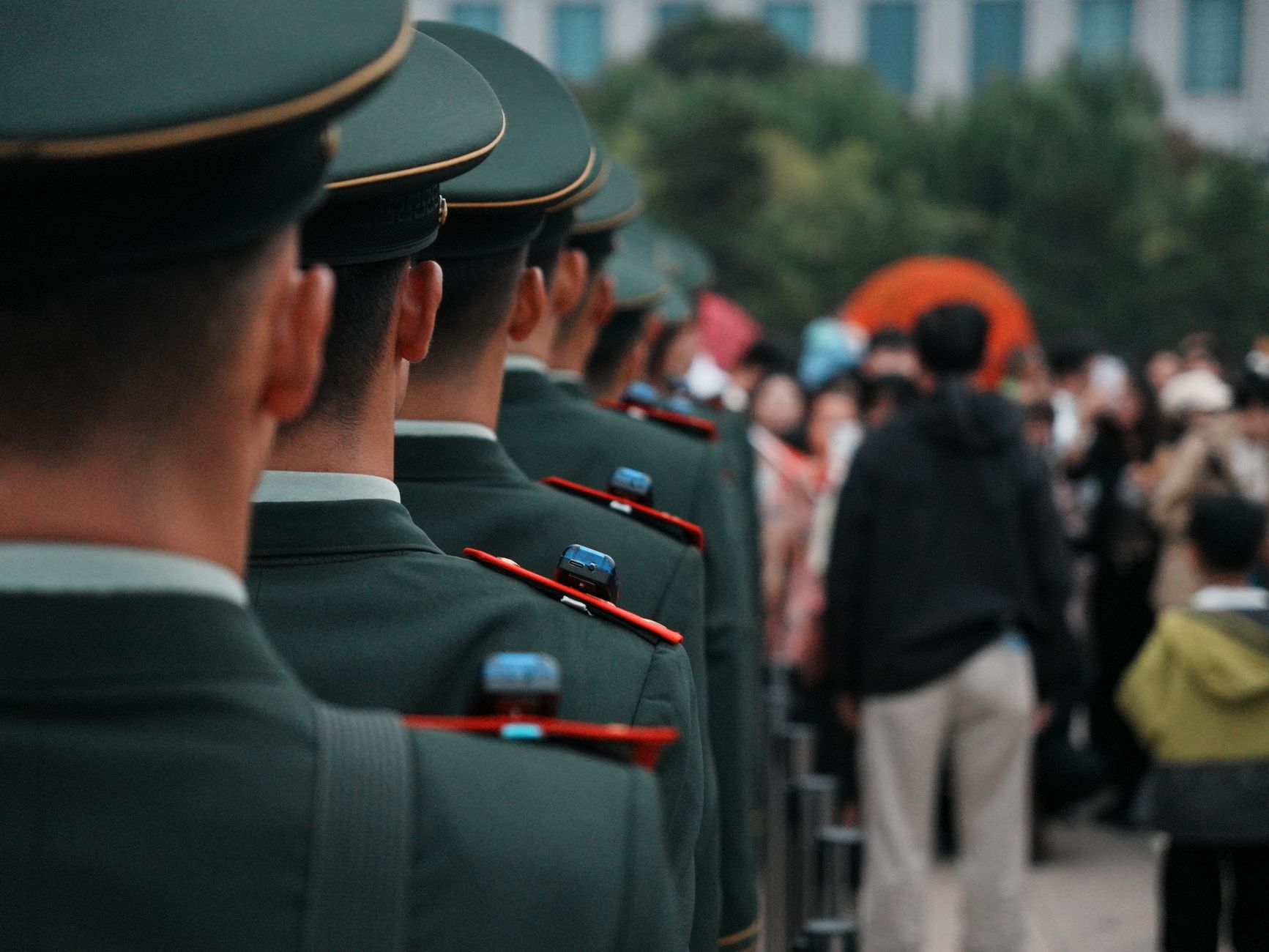
The Soldier They Seated By The Kitchen
There is one ribbon I had noticed, though, because it was set a little apart and above the others, and once, early on, I had reached out to touch it and Aaron had gently moved my hand and said, “Not that one, Mom.” Just that. Not that one. And I had let it go, because I let his doors stay closed, but I had wondered about it since, a small red ribbon with a blue stripe down the center and a little bronze letter on it, sitting quiet on my son’s chest like it was holding its breath. I had looked it up one night on the computer, the way a mother does when she cannot ask, and I had found a page that said what it was and what it was for, and I had closed the computer and not slept, because a mother is not supposed to have to guess what her son ran into to earn a thing like that. I did not know that night in the kitchen that within a few hours a stranger in a wheelchair would tell me and three hundred other people exactly what it was for, and that the telling would be the thing that finally opened the door my son had kept shut for eleven weeks.
We drove the forty minutes. Aaron did not say much. I did enough talking for both of us, the way I do when I am nervous and happy at the same time.
The ballroom was beautiful. I will give them that. Round tables with white cloths and low candles, a stage at the front with a podium and a color guard already posting the flags, big banners, a slideshow of soldiers’ faces cycling on a screen, a bar, waiters in vests moving through with trays. There must have been three hundred people. And it was loud and bright and it smelled like flowers and warm bread, and for one minute, standing in the doorway with my son’s arm under my hand, I thought, this is exactly what I wanted.
Then we found Priscilla.
You could tell she was the one in charge because she was the one not enjoying it. She had a clipboard and a headset earpiece and a way of scanning a room like a rancher counting cattle, and she was standing near the entrance directing people to their tables, and I walked us up and gave her our name. Vale. Aaron and Donna Vale.
She looked at the clipboard. She looked at it again. She looked at my son, up and down, the uniform, and I watched something small and dismissive happen behind her eyes, the exact look a certain kind of person gives you when they have decided in half a second that you are not worth the seconds it would take to be kind.
“Vale,” she said. “I’m not seeing you at any of the sponsor tables.” She said sponsor tables like it explained itself.
“We were invited,” I said. “The foundation sent it. For service members who came home.”
“Oh,” she said. “The general invitation.” And she smiled the way you smile at a child who has wandered somewhere they should not be. “Of course. Let me find you a spot.”