The Garage My Father Made Them Open
He grew up and went into selling. First cars, then farm equipment, and by his forties he had worked his way up to managing the implement dealership over in Frankfort, the one with the green tractors lined up along the highway. He wore pressed shirts and a good watch and he had a way of walking into a room like the room had been waiting for him. People in town were proud of Roy. He was proof that a kid from out past the county road could make something of himself.
I made something of myself too, but the quiet way, which in a family like mine is the same as invisible. I kept the books for the elevator co-op for twenty-six years. I raised two kids mostly on my own after their father left, and I put both of them through Purdue on a bookkeeper’s salary and a lot of coupons. And when our mother died and then our father started slowing down, I was the one who moved back into the little house on the county road to take care of him.
I do not say that to make myself sound like a saint. I say it because it is the plain fact of it, and because the plain fact of it is exactly what Roy spent the last two years of Dad’s life quietly rewriting.
I did Dad’s cooking and his laundry and his medications. I drove him to the VA clinic and to the cardiologist in Indianapolis and to church on the Sundays he felt up to it. I sat with him in the evenings while he watched the same westerns over and over, and I listened to the same stories about Korea and about the flood of 1958 and about the time he dropped a transmission on his own foot and drove himself to the hospital anyway because he was too stubborn to wait for help.
What I did not do, because it never occurred to me, was watch the garage.
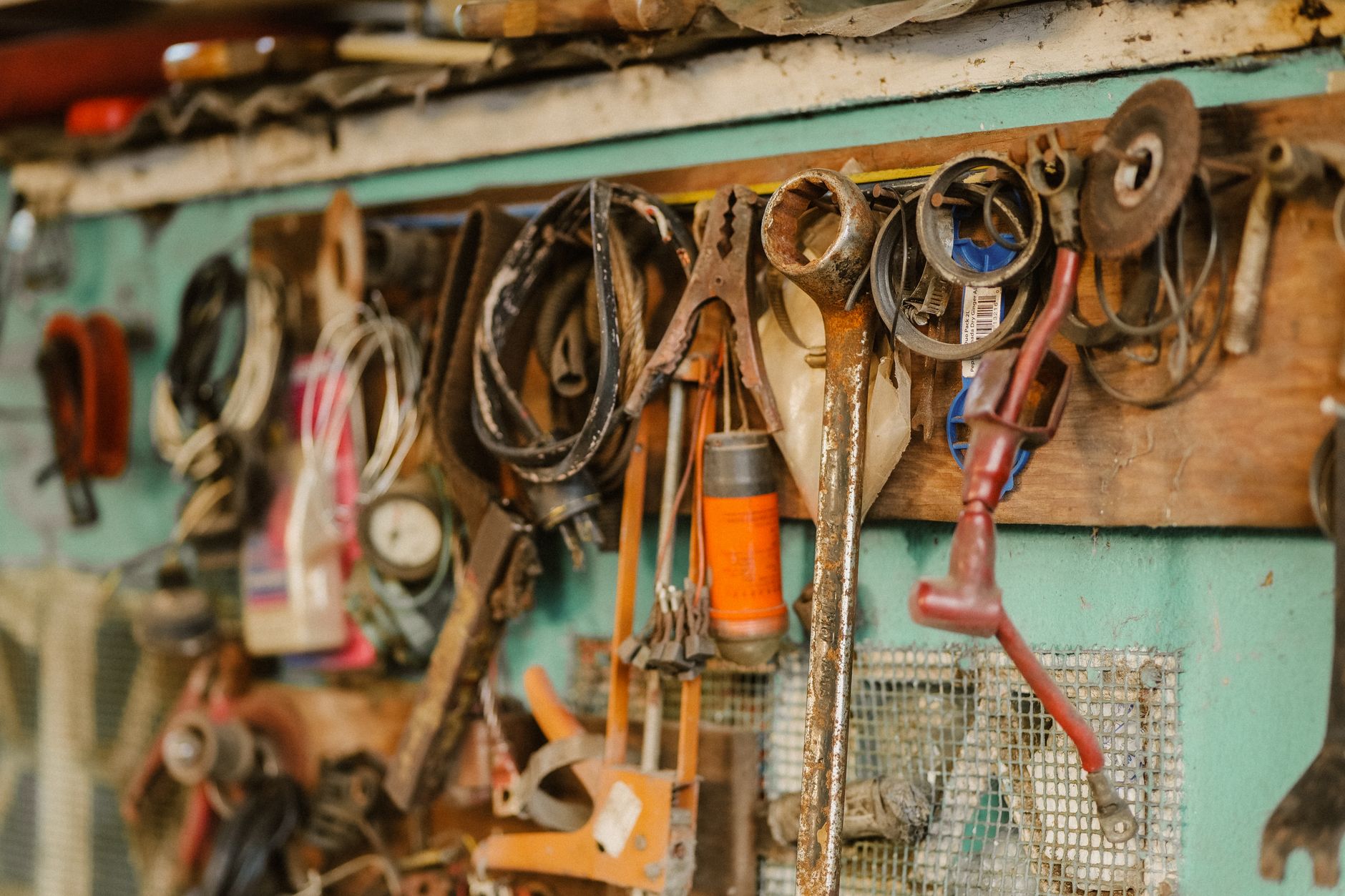
The garage sat detached from the house, out past the clothesline, a two-bay building my father had put up himself in the seventies out of block and corrugated steel. It was his whole life out there. His tools, his workbench worn smooth as a river stone, the pegboard where every wrench had its own painted outline so he would know at a glance if one was missing. And the tractor. A 1949 Farmall Cub he had bought as a rusted hulk the year I was born and restored over four decades into a machine so clean and so red it looked like it had rolled off the line that morning. He used to drive it in the town’s Fourth of July parade, and children would wave at it like it was a fire truck.