The Coach Who Benched My Son
And you heard Lyle Trask say, “I don’t care if he’s Jim Brown. I didn’t put up sixty grand in lights and a field house line item so some widow’s kid can take my son’s carries his senior year. You want the extension, you want your name on that field house, Colton’s the back. That’s the deal. That was always the deal.”
And you heard Coach Rusk say, “Okay. Okay, Lyle. He starts.”
That was it. That was the whole thing, plain as a receipt. Sixty grand in lights, a contract extension, a name on a building, in exchange for my son’s spot. And a throwaway line where the man who did it admitted my boy was better, which is somehow the part that still makes me sit down when I think about it.
I could have taken that recording to the school board. I thought about it all Thursday night. But I kept coming back to Mr. Alcott and his golf and his advice to a scared child, and I understood that if I handed the recording to the people in charge, the people in charge were the ones with the most reason to make it disappear. A recording that goes into a closed session meeting has a way of coming out watered down, mishandled, “inconclusive,” and by the time anyone hears about it, it is a rumor and I am the bitter widow again.
No. If it was going to be heard, it was going to be heard by everyone at once, in a place where it could not be buried, from a source no one could accuse of being me.
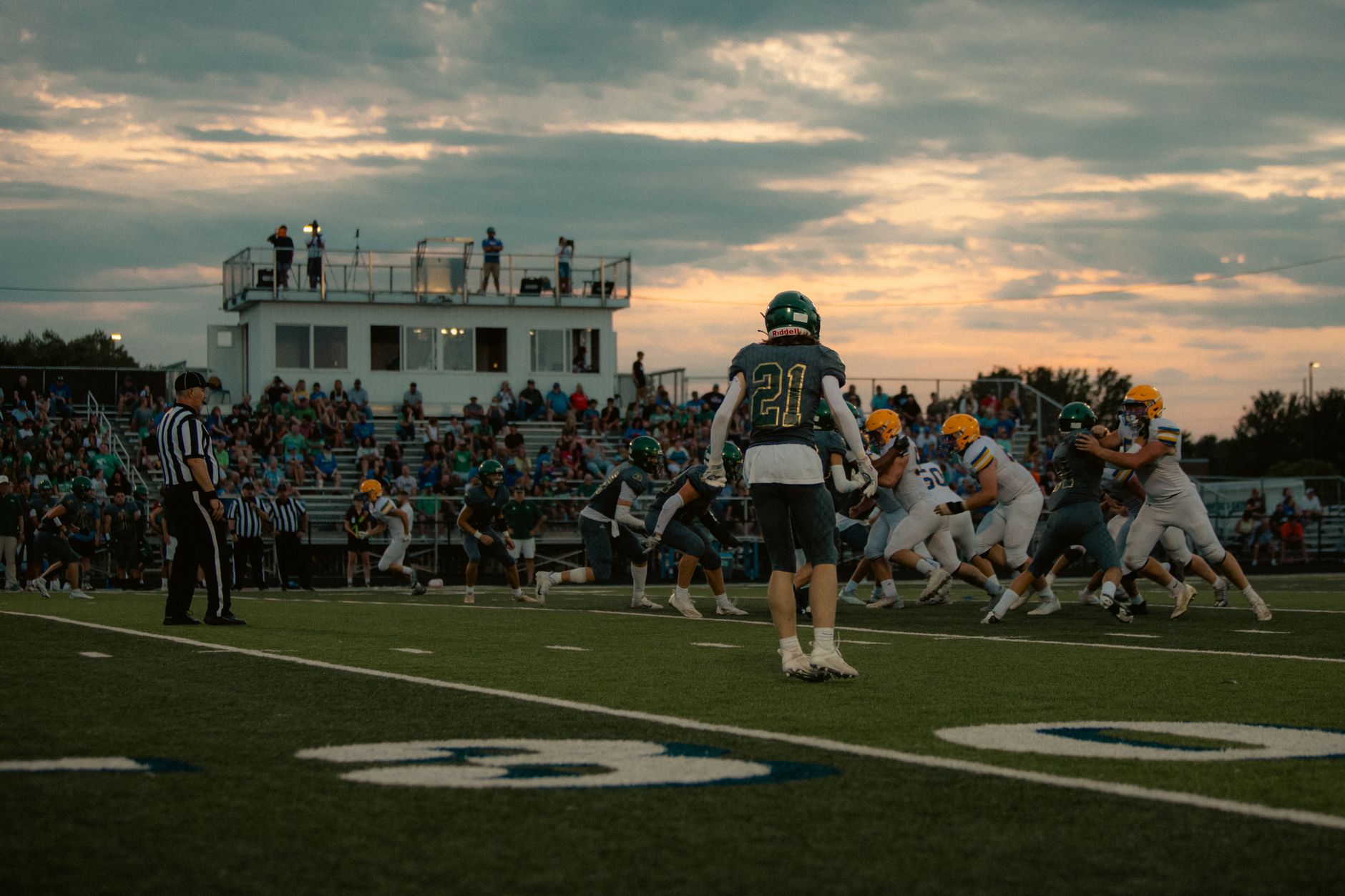
And the town had, without knowing it, planned the perfect place. Homecoming. Halftime. Four thousand people in the stands. A microphone at midfield. A ceremony to honor Lyle Trask.
I made two phone calls that night. The first was to Denny’s mother, because I was not about to use a fourteen-year-old boy without his mother in the room, and I told her everything, and God bless that woman, she came over at ten at night in her work scrubs and listened to the recording with her hand over her mouth and then looked at her son and said, “You did the right thing telling somebody. You keep doing the right thing.” She was in it with us after that.
The second call was to Coach Danner.
Coach Danner had been an assistant on that staff for eleven years, defensive backs, a quiet man who had coached Travis and had cried at Travis’s funeral in the back pew where he thought no one could see him. He had quit the staff three weeks earlier, mid-season, which nobody quits, and everybody assumed it was health. It was not health. Coach Danner had figured out what was happening with the carries, had said something to Rusk about it, and had been told to mind his own position group. So he walked. He would not tell me why at the time, but when I called him that Thursday and told him what Denny had, there was a long silence on the line and then he said, “I always wondered if that boy’s phone was back there.” He had seen Denny’s charger in the cage. He knew.