The Widow Who Made Him Kneel
Friday Lights
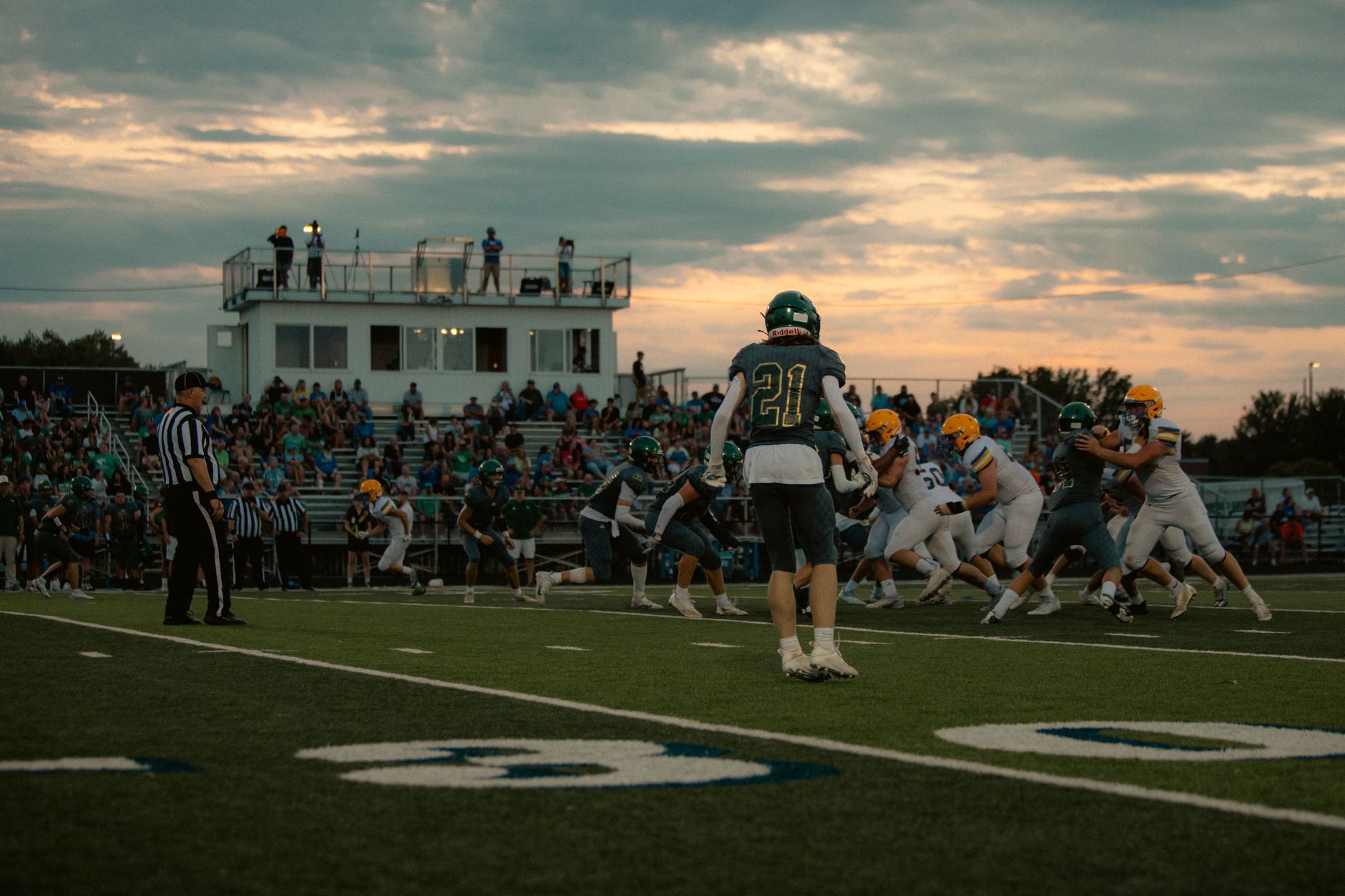
Larkspur on a home game Friday smells like cut grass, fry oil from the booster club’s concession stand, and diesel exhaust from the trucks lined up three deep in the gravel lot. The band was already warming up when we came through the gate, that same off key brass fanfare they play every single week, and my son heard it before he even saw the field.
“Mom, listen to the band.”
We came up the ramp toward the accessible section, and he smelled the grass and went quiet in the particular way he goes quiet when something matters too much for him to talk over it. Whitlow Field has always been the beating heart of this town on a Friday night, lit up gold under those tall stadium lights against a sky just starting to go purple at the edges, and I will admit that even I, a woman who has watched a hundred home games from these same bleachers, felt something catch in my chest seeing it through his eyes again.
There is a plaque bolted to the low wall near the accessible section, the kind you walk past a hundred times without reading. I have walked past it my whole life. It reads simply: In loving memory of the Whitlow family, whose gift made this field, and this section, possible for every child in Larkspur. I had never once stopped to wonder who the Whitlows actually were, or whether any of them still came to games.
I would find out inside the hour.
We reached our row, and for one long second neither of us said anything at all, because a man was already sitting in our seats.
The Seats That Weren’t Ours Anymore
He was maybe mid-forties, wearing a quarter zip pullover with an embroidered logo I recognized from every billboard on the highway into town: Kessler Ford, the truck dealership that sponsors half the youth leagues in this county and has its name stitched onto the Wildcats’ own scoreboard. His wife sat beside him with a purse the size of a diaper bag set square in the middle of the wheelchair space, like it had always belonged there.
“Excuse me,” I said, and showed him the tickets on my phone. “I’m Gladys Renner, and I think these are our seats.”
He barely glanced at the screen before his eyes moved to my son instead, and something in his face changed, not toward kindness.
“I’m Vaughn Kessler. My name’s on that scoreboard right there, and I sponsor the boosters that paid for half this section to begin with. I’ll sit wherever I decide to sit on a Friday night.”
“My son can’t sit anywhere else, Mr. Kessler. This is the accessible row. There isn’t another one.”
His eyes dropped to the wheelchair for exactly as long as it takes to dismiss something.
“Not my problem, is it. The view’s better from up here anyway. He can watch from the concourse with the other kids who don’t have tickets. I doubt he even follows the rules of the game close enough to care where he’s sitting.”