The Debt Gordon Left Sara’s Son
What Was In the Envelope
We did not open it in the church. Greg asked if we could step outside, and Pruitt walked with us to a bench under an oak tree at the edge of the parking lot, patient in a way that told me this was not the first difficult envelope he had ever delivered.
Inside were two things. A set of legal papers, which Pruitt explained in plain terms while Greg held them without really reading them. And a letter, handwritten, four pages, folded twice.
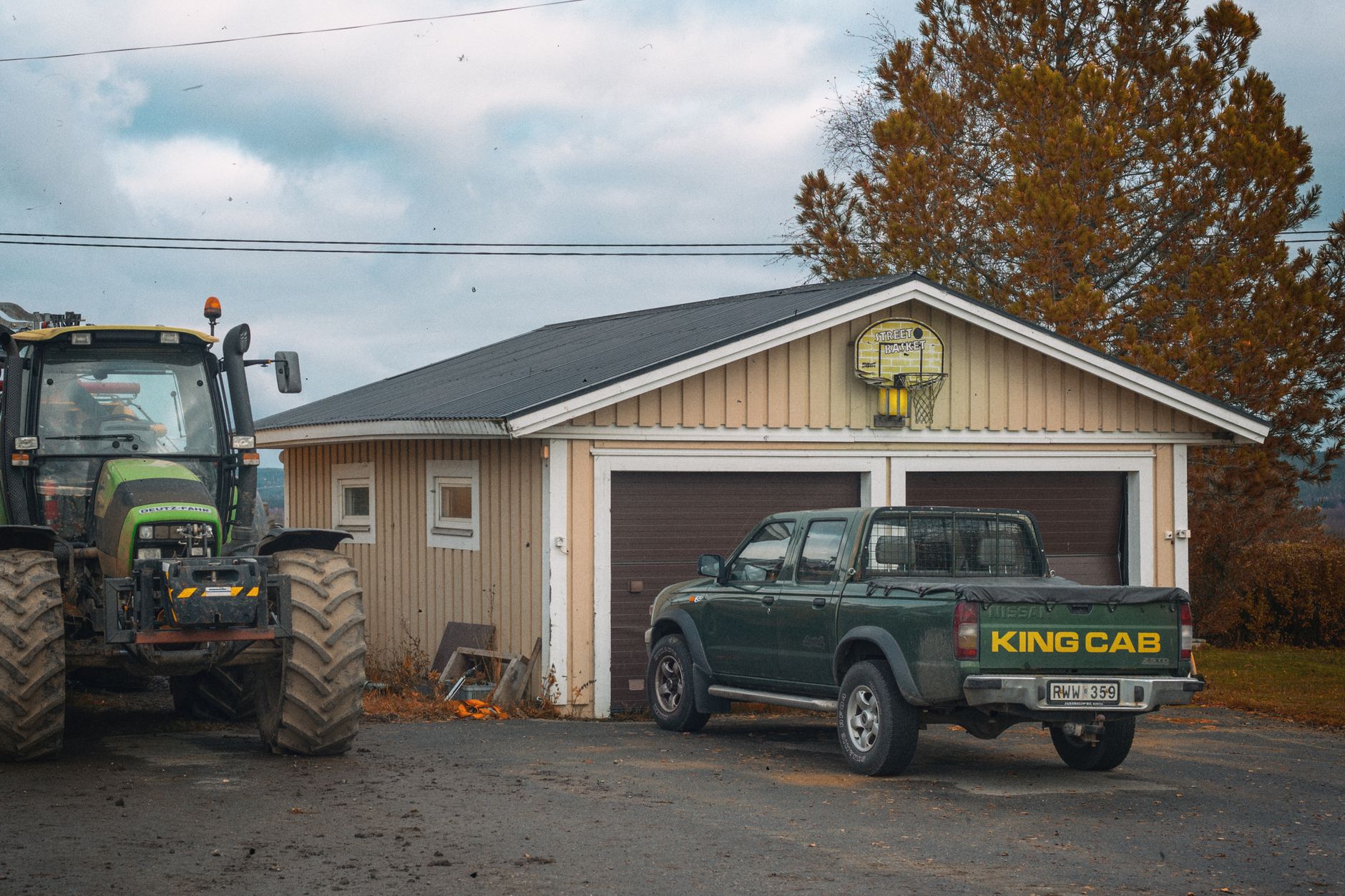
The legal papers said that Gordon Hausner had left the full contents of his garage workshop to Greg by name, tools, equipment, and the restored 1962 John Deere tractor included, along with a trust of thirty eight thousand dollars, to be released for tuition, tools, or certification fees at any accredited trade or technical program Greg chose to attend, diesel mechanics or otherwise, administered by Pruitt’s office until Greg turned twenty one. The house itself, and the land it sat on, went to Shannon and her brother, split evenly, exactly as you would expect a man’s estate to go to his own children.
It was the letter that Greg read out loud to me, sitting on that bench, his voice going thin about halfway through.
Gordon wrote that when he was twelve years old, his own father had died on a job site two counties over, leaving his mother with four children and a farm they could not run alone. A neighbor, a man Gordon only ever called Mr. Colby in the letter, had shown up that spring without being asked and plowed their fields for three years running, refusing every dollar Gordon’s mother tried to press on him. When young Gordon finally asked him why, Mr. Colby told him that some debts aren’t between two people. Some debts get paid to whoever needs it next, whenever your turn comes around to be the one with something to give.
“I never got to pay Mr. Colby back,” Gordon wrote. “He passed before I was old enough to have anything worth offering him. I have carried that unpaid debt for sixty nine years, Greg, and I want you to understand something before you spend one more day feeling like you owe me anything for this. You already paid it. Every Saturday, for four years, you paid a debt that was never yours to begin with, and you did it without knowing that’s what you were doing, which is the only way it ever really counts.”
He went on to say that the money was not charity and was not payment for the mowing, which no amount of money could properly cover anyway, in his opinion, and that Greg was not to feel one ounce of guilt about the tractor or the tools or any of it. He wrote that he hoped Greg would finish the tractor without him, sell it if he needed the money more than the tractor, and that either choice would be the right one.
The last page of the letter was shorter than the rest, and different in tone, like Gordon had set the pen down and picked it back up on another day entirely.
“There is one more thing I am asking of you,” he wrote, “and it is harder than the rest, and I would not ask it if I had anybody else left who could do it for me.”