The Wall My Neighbor Wanted Gone
What Held The Hill Together
My husband and I bought the place on Catbird Ridge in the spring of 2004. It was the only lot in our price range with enough flat ground for a workshop and enough bedrooms for the two kids we were planning on, and it sat on a shelf of land above a hollow that ran down toward Bull Shoals Lake, with a view in the fall that made every dollar of the mortgage feel worth it.
Nobody told us, because nobody thought to, that the shelf was clay and loose fill over limestone bedrock, the kind of ground that behaves fine right up until it does not. That first spring, after the snowmelt came off the ridge and the March rains started stacking on top of it, our back fence began leaning a little more every week. Cracks opened up across the yard in long crooked lines, like the earth itself was working something loose.
My husband had grown up on a farm outside Yellville and had an instinct for land that I never had until he taught it to me. He walked the slope with a level and a shovel one Saturday morning and came back inside looking more serious than I had seen him in years.
“That whole hillside wants to go,” he told me. “We build something now, or we watch it take the back of the house with it in five years.”
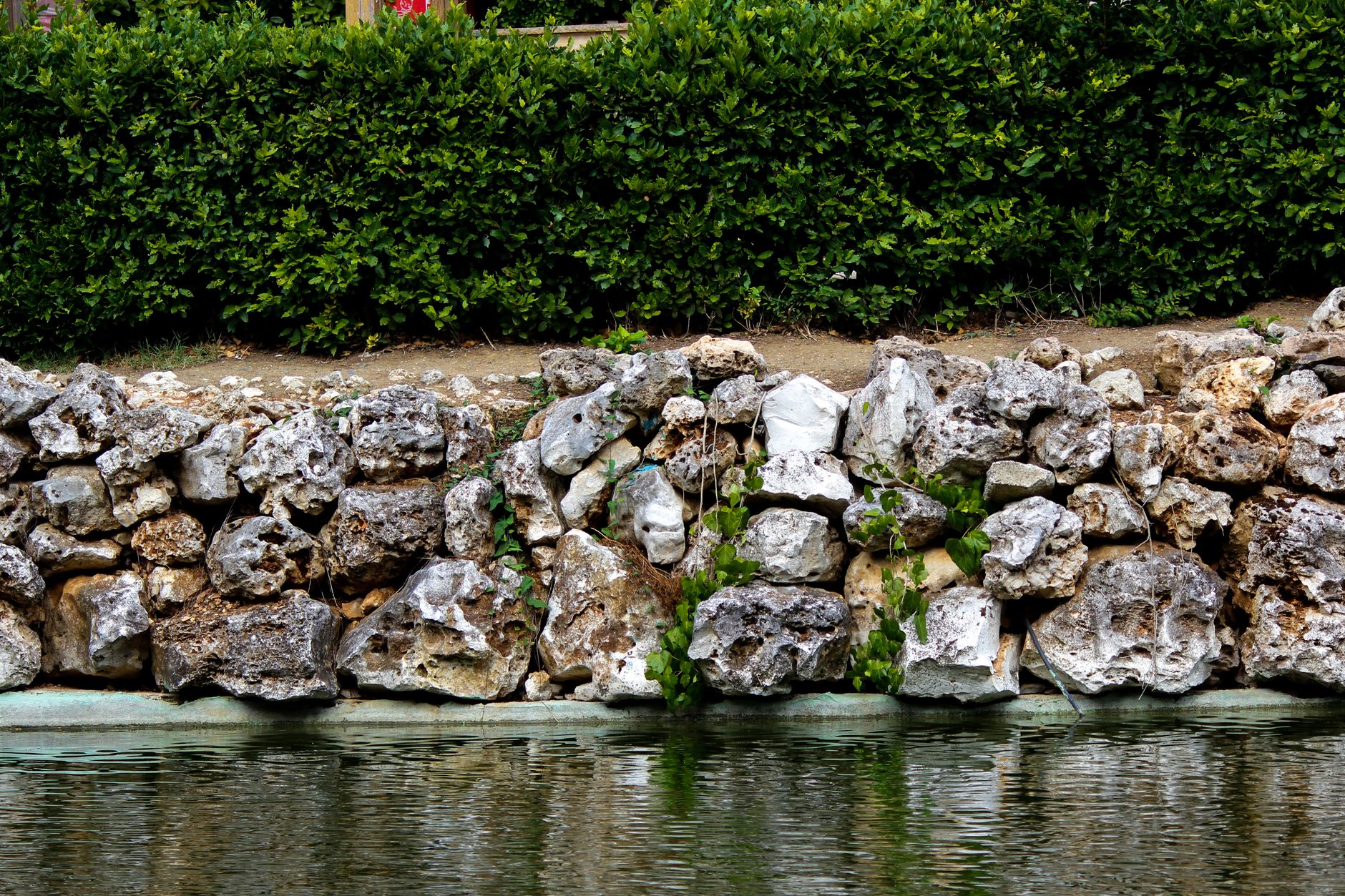
So we built. We hauled limestone up from a quarry outside town, ton by ton, on weekends and after work, because we could not afford to hire it out and would not have trusted anybody else to do it right anyway. Sixty feet across, ten feet at the tallest point, reinforced block core behind the stone face, steel rod driven deep into the hill, gravel drains we bled by hand every few feet so the water would have somewhere to go besides straight through our foundation.
It took us the better part of a season. When it was done, the change was immediate. Our yard leveled out. The three houses sitting downhill of us got dry basements and flat backyards for the first time since anybody could remember, and behind that wall sat close to two hundred cubic yards of hillside that would otherwise have been theirs to deal with, one bad spring at a time.
Norm And The Wall That Never Asked For Thanks
The house directly downhill from ours belonged to a man named Norm. Retired postal carrier, deacon at the little church out on Route 5, the sort of man who dropped a sack of tomatoes on your porch in August and drove off before you could catch him to say thank you. Norm and his wife had lived in that house since before Catbird Ridge even had a name, back when it was just four families and a dirt road.
Norm used to tell anybody who would listen that my wall was the best insurance policy he never had to write a check for. Every flood season for close to two decades, his basement stayed dry while half the county was pumping water out of theirs, and he never let me forget that he knew exactly why. He brought us a pie the year the wall went in and another one every spring after that, like an anniversary he kept better than most people keep their own.
The other two houses downhill changed hands a couple of times over the years, but nobody ever raised an issue with that wall. Everybody who lived behind it understood the same simple thing Norm did. It was not pretty, but it worked, and out here, working matters more than pretty ever will.
His wife passed two winters ago, quietly, in her sleep, and Norm held on in that house alone for almost a year before his daughter in Springfield finally talked him into moving closer to her and the grandkids. He stopped by my shop the week before the closing, stood in the doorway with his hat in his hands, and told me the hardest part of leaving was not the house at all. It was leaving that wall behind, not knowing who would understand what it meant.
Turned out that was a fair worry.