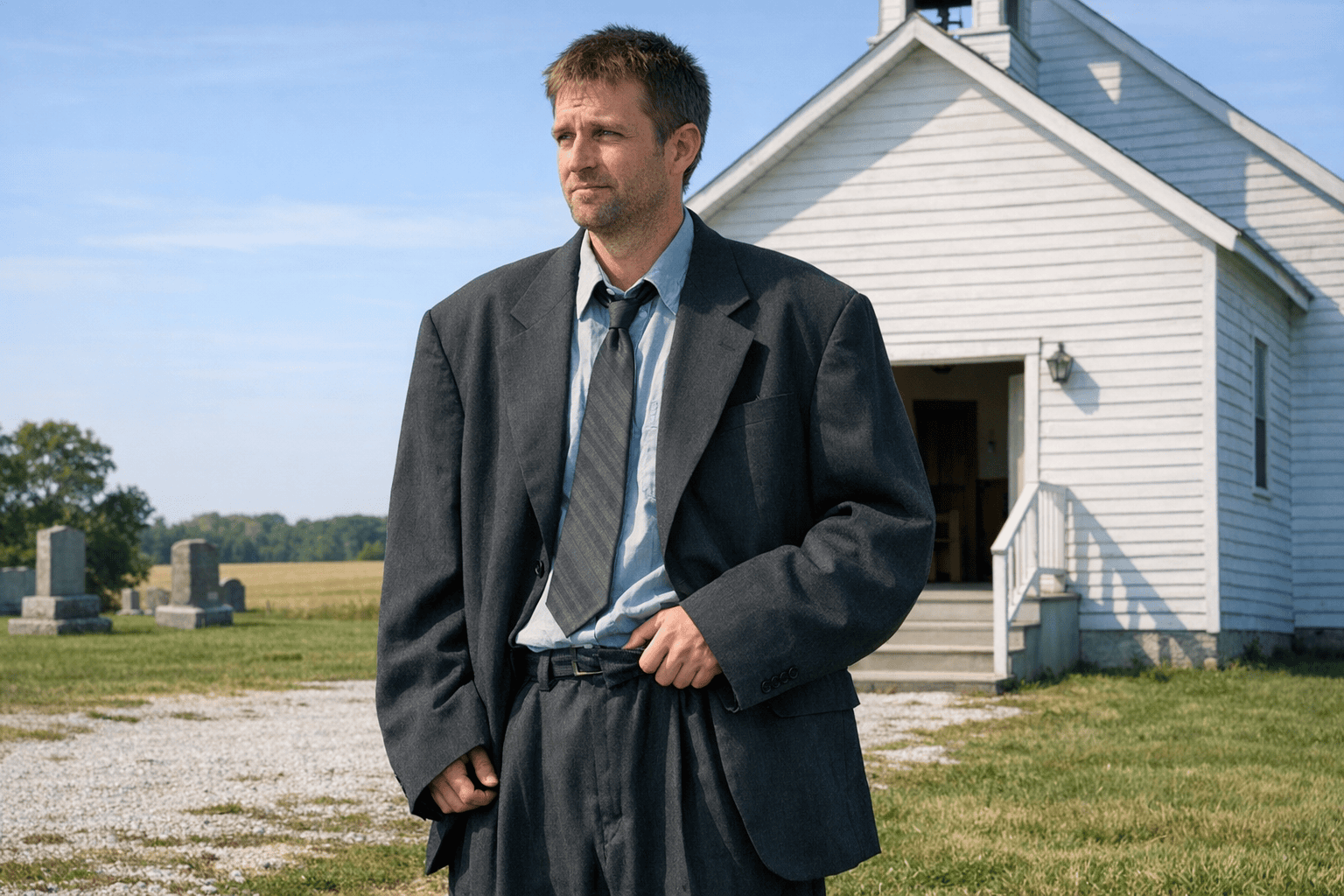
The Suit My Brother Left Behind
Cornerstone
Now I was sitting in that corner chair on the third floor, feeling every mile of that morning pressing on my ribs.
The pin stung. The suit sagged. The two polished candidates murmured to each other across the room and did not look at me.
Then a heavy office door opened along the back wall, and Diane Kessler walked in.
I knew her the second I saw her. Everybody in three states knew her.
Diane Kessler had started Cornerstone Mutual out of a storefront in a town smaller than mine, back when she was younger than I was now, writing hail and windstorm policies for farmers nobody else would cover. She had built it into the biggest thing for sixty miles, the company whose name was on that water tower, the company that insured half the barns and homes and combines in the whole river valley. People told stories about her the way they tell stories about weather. She did not walk into a room so much as take it over without asking.
Every candidate sat up straighter. Every person with a clipboard shifted their weight.
Diane said a few quiet words to the hiring team by the door, then turned and let her eyes move slow around the waiting room.
Her gaze passed over the shined shoes. Over the well-cut suits. Over the practiced, easy smiles.
Then it stopped on me.
My stomach dropped through the floor and kept going.
She crossed halfway to the window, then paused. Turned. And looked, not at my face, not at the folder in my lap, but straight at my shoulders.
The sagging seams. The swallowing sleeves. The bunched, pinned waist I was still trying to cover with one hand.
The room went dead quiet.
“You,” she said.
I froze in the chair.
“Yes, ma’am?”
She took a step closer.
“Did somebody put you in that suit?”
Every set of eyes in that waiting room landed on me at once.
Heat climbed up my neck and into my ears. And then the old instinct took over, the one I had learned at my own kitchen table before I learned to ride a bike.
Protect them. Excuse them. Make it smaller than it is. Never let the shame land where it belongs.
“It’s fine,” I said quick. “I just, it’s, it’s fine, really, I didn’t have time to.”
“No,” Diane said. Soft. Almost gentle.
And she looked at me in a way not one single person in my family ever had.
Not with pity.
With recognition.
“I know what that looks like,” she said. “I have worn that.”
Then she did the thing nobody in that room saw coming.
She slipped off her own blazer. A dark gray one, cut perfect, the kind of jacket that fit her the way money fits people who earned it slow. And she held it out to me across the quiet room.
“Here,” she said. “Put this on.”
I stared at her.
“Ma’am, I can’t take your jacket.”
“You’re not taking it. You’re borrowing it. There’s a difference, and I’d know.”
Nobody moved. Nobody breathed.
The whole room watched as I stood up, worked my way out of Trent’s awful swallowing jacket, and slid my arms into the CEO’s blazer.
It fit.
Not perfect, because it was not built for me either. But it fit. The shoulders sat where shoulders go. The sleeves stopped at my wrists. It covered the pins. It covered the shame at my waist. It gave me back one square inch of dignity to stand on before I walked into the most important room of my life.
Diane nodded once, like a deal had been struck.
Then she turned to the hiring team by the door.
“He goes next,” she said.
The tall candidate with the shined shoes shifted, uncomfortable, beside me.
I picked up my folder. The pin still stung at my side.
But the shame was gone out of me, clean as a rag pulled off a fence.