The Apartment My Sons Wife Offered Me
The toast that was really a verdict
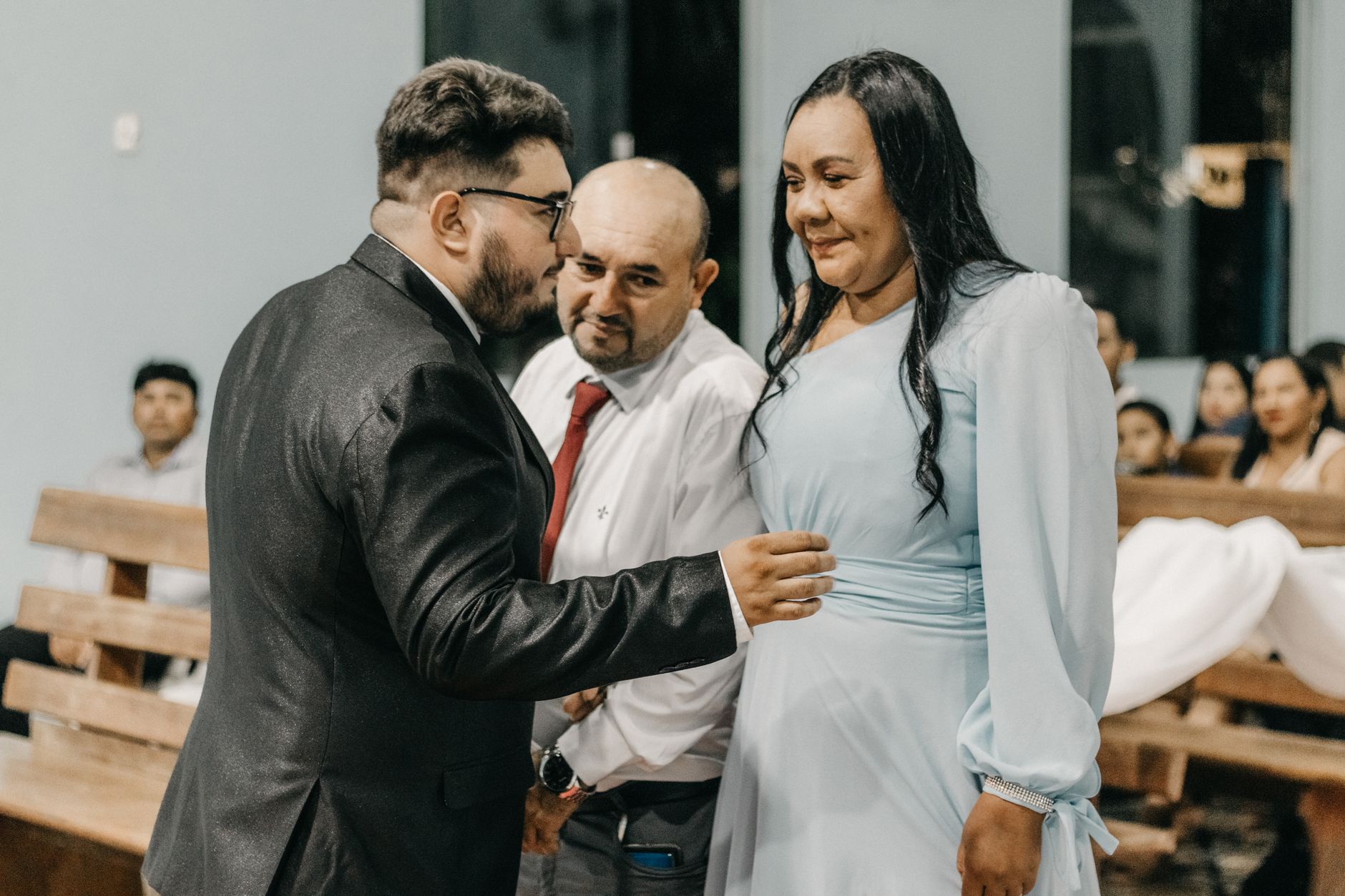
The band had just finished a slow one, the kind that gets the older couples up out of their folding chairs, when my new daughter-in-law tapped her fork against a champagne flute and decided to hand me my future in front of two hundred people.
We were in the rented barn out on County Road 9, the one the Fletchers fixed up with string lights and a poured concrete floor so folks around here would have somewhere to hold weddings that wasn’t the Grange hall or the fellowship room at First Baptist. It smelled like cut hay and warm brisket and the lilacs somebody had crammed into Mason jars down the center of every table. My son Caleb had married Brooke Dunbar that afternoon under an arch of white ribbon, and I had cried the way a mother is supposed to cry, dabbing at my eyes with the handkerchief that used to be my Earl’s.
I was sixty-three years old. I had buried a husband, raised a boy alone through the hard years after, and kept four hundred acres of Cedar County soil in the family when half the farms on our road went to the bank or the big outfit down in the valley. I thought I knew what it felt like to be humiliated. I found out that night I had only been rehearsing.
Brooke stood up in her wedding dress with her flute held high, and she smiled the way a person smiles when they believe kindness is something they own and can dole out in small careful spoonfuls to the less fortunate.
“I just want to say something,” she said, and the tables near us went quiet the way a field goes quiet before weather. “Caleb’s mama, Loretta, she’s on her own out there on that big farm, and I know it’s a lot for a widow. So as my wedding gift to this family, I’ve decided I’m going to let Loretta come live in my old apartment in town. The one over on Ash Street. It’s small, but it’s plenty for one person, and she won’t have to worry about all that land anymore.”
She said let. She said allow in every part of the sentence that mattered, even the parts where the word wasn’t in it.
For one second the fiddle and the laughter and the clink of forks all dropped away behind the sound of my own pulse in my ears. I was standing next to the sweetheart table in the navy dress I’d bought at Kohl’s two towns over, holding a plastic cup of the sweet tea because I don’t drink, and I felt every eye in that barn slide over to see what the old widow would do.
Sixty-three years of learning to let people keep talking
Here is the thing Brooke did not know about me, because she had never once asked me a single question about my life that wasn’t really a question about my land.
I learned a long time ago that a public scene is a tool, and that the person who stays calm is the person holding it. My mother taught me that at a church potluck in 1971 when a deacon’s wife tried to shame her over a store-bought pie, and my mother just smiled and complimented the woman’s dress and let her keep on talking until the whole table understood who the small person was. You never have to raise your voice to win. You only have to wait, and let the arrogant keep supplying the rope.
So I did not gasp. I did not set my jaw. I smiled at Brooke the way you smile at a child who has said something they think is very grown up.
“Well, that’s thoughtful of you, honey,” I said, and I made sure my voice carried, warm and easy. “But I already live very happily right where I am.”
A few people chuckled, soft and knowing, because these were my neighbors. These were people who had eaten at my table. The Prathers and the Kellys and old Wendell Boyd from the feed store all knew the Hartley place. They knew my Earl and I had bought it back an acre at a time after his daddy lost most of it, that we’d re-roofed the farmhouse ourselves the summer Caleb was six, that I still ran a garden that fed half the road come August. The idea of me rattling around a one-bedroom over the insurance office on Ash Street, grateful for the charity of a girl who’d been in this county eighteen months, was funny to everyone who actually knew me.
Brooke’s smile went a little stiff at the edges. She was not used to being laughed at, even gently. She lifted her chin.
“I just think,” she said, “that a woman your age has more house than she needs.”
And I was about to let that go too, to smile and sit down and let her have her wedding, because a mother swallows a great deal for the sake of her son. But then Caleb stood up.
The moment my boy stepped between us
My son. Thirty-one years old, in a rented gray suit with a boutonniere pinned crooked because I hadn’t been allowed close enough to fix it. He had Earl’s shoulders and Earl’s hands and, I had always believed, Earl’s heart. He put himself between me and his new wife, and he would not look me in the eye, and that was the first cold finger of dread down my spine, because Caleb had always looked me in the eye, even when he was lying, especially when he was lying.
“Mom,” he said, low, but not low enough. “I didn’t want to tell you like this. But Brooke’s folks, and Kayla, they’re gonna be staying out at the farm for a while. In the old part. It just makes sense.”
I heard the words. It took a second for them to land, the way it takes a second to feel the cut after the knife is already through.
“Staying,” I repeated.
“Moving in,” he said. “Just the guest side. Dad’s old side.”
The photographer, a nice young man from over in the county seat, quietly lowered his camera. Even he could feel it.
Dad’s old side. He meant the original farmhouse, the four rooms my Earl was born in, the part we’d restored last of all because it was the part that mattered most. Earl’s father’s rolltop desk was in there. Earl’s Bible, the one with three generations of Hartleys written in the front, was in there. My deed box was in there, in the closet under the stairs, behind the quilts. The room where Earl passed, in the bed he was born in, because he asked me to let him die at home and I did, was in there.
Nobody went in there without me. Nobody.
The empty chairs told me everything
I did what my mother taught me. I stopped listening to the words coming out of my son’s mouth, and I started looking at the room instead. Because words lie, and rooms don’t.
Twenty minutes ago Brooke’s mother, Pam Dunbar, had been at the dessert table loading a plate. Her husband Gary had been out by the drink coolers in his good boots telling anyone who’d hold still about the deer he shot last fall. Kayla, the younger sister, nineteen and always on her phone, had been doing the electric slide with the bridesmaids. And there had been two cousins from the Dunbar side, big quiet men, one of whom drove a flatbed.
I looked at the table where the Dunbars had been sitting. Empty. Plates half finished. A cardigan over the back of a chair. Purses gone.
I turned and looked toward the parking lot doors, and Gary’s flatbed and Pam’s Buick were both gone from where they’d parked that afternoon.
They were not off getting air. They were not in the restroom line.
They were forty minutes down County Road 9, at my farm, right now, in the dark, and I understood in that instant that Brooke’s little toast had not been an offer. It had been a distraction. Keep the widow in the barn, embarrass her into confusion, make her feel small and old and grateful, while the family carried boxes into a house whose owner was standing in a rented barn holding a cup of sweet tea.
That absence told me more than Caleb’s confession ever could. They hadn’t asked. They hadn’t planned to ask. They had planned to be already in before I ever knew, because they believed possession was the whole of the law and that an old woman would not have the fight in her to put them out once they were settled.
Brooke lifted her flute again, reading the look on my face as shock, mistaking it for surrender.
“My family needs the space, Loretta,” she said. “And honestly, you’ve got more room than any one widow could ever use. We’re doing you a kindness.”
What she did not know about the deed
I want to tell you what was true, the thing none of them had bothered to learn, because they had spent a year and a half looking at my land and never once at me.
The Hartley farm was not, and had never been, some sad oversized inheritance a confused widow was clinging to. When Earl got his diagnosis, the two of us spent six months with Dale Mercer, the lawyer whose office sits above the drugstore on the square, and we put every acre and every board of that place into a living trust. I was the sole trustee. On my passing it would go to Caleb, in trust, with terms, because Earl and I had watched enough farms get carved up and sold off by in-laws and second wives and creditors to know that love is not a plan and a handshake is not a fence.
Not one square foot of that farm was Caleb’s yet. Not one. It was mine, wholly and legally, down to the last fence post and the old iron pump by the barn. Brooke had married a man who owned a truck, a fishing boat, and a third of a soybean crop he farmed on my ground under an arrangement we redid every January. She had, in her mind, married four hundred acres. She had married a lease.
And her family was, at that moment, unloading a flatbed onto property they had no more right to occupy than they had to occupy the county courthouse.
I set my cup down on the sweetheart table, next to the little bride and groom, and I felt Earl’s handkerchief in my other hand, and I felt something in me go very still and very clear, the way the air goes right before you make a decision you will not take back.
The sentence I said loud enough for the whole barn to hear
Caleb saw it in my face. He reached out and put his hand on my arm, gentle, the way you’d gentle a nervous horse.
“Mom,” he said. “Let’s just talk about this at home. Don’t make a thing of it. Please.”
At home. He said it like the farm was already theirs to gather in.
I looked at my son, and I waited. I waited for shame, or regret, or some flicker of the little boy who cried for an hour after he knocked my mother’s milk-glass bowl off the shelf and swept up every piece himself so I wouldn’t cut my feet. I waited to see Earl in him.
What I saw instead was a man who had decided it was easier to manage his mother than to stand up to his wife. And that is its own kind of grief, one they don’t have a casserole for.
So I pulled my arm out of his hand, and I stepped up onto the little riser where the band was set up, and I asked the fiddle player if I could borrow his microphone for one minute. He was a Kelly. He handed it right over.
The barn had already gone quiet, two hundred people pretending to talk while they watched. My voice came out steady and it filled the room.
“I want to thank you all for coming out to celebrate Caleb and Brooke today,” I said. “You’ve known this family a long time, most of you. So I know you’ll understand when I step out for a bit. It seems some folks who are not on my guest list are, as we speak, moving furniture into my house forty miles from here without my knowledge or my permission.”
You could have heard a pin land on that concrete floor.
I looked right at Brooke, and I kept my voice as kind as a hymn.
“Honey, that’s a generous offer, that apartment. But I won’t be needing it. I’ve got a home, and it’s got a door, and that door has a lock, and tonight I’m going to go remind some people what a lock is for.”
Then I took out the flip phone I still carry because I don’t trust the smart kind, and while the whole barn watched, I called a number I knew by heart, because Del Hutchins the sheriff and I have sat on the Cedar County fair board together for eleven years.
“Del,” I said into the phone, plenty loud. “It’s Loretta Hartley. I’m sorry to bother you on a Saturday night. I’ve got trespassers out at my place on Road 9. Several of them, with a truck, moving belongings into my home while I’m not there. No, they do not have my permission. No one has my permission. I’m the sole owner and I’ll meet your deputy at the gate with the papers to prove it. Thank you, Del. Tell Sharon I said hello.”
The bride’s smile came apart
I have thought a great deal, since, about the look on Brooke’s face in that second, because it told the whole truth of what she’d thought she was doing.
Her perfect bridal smile did not just fade. It came apart, piece by piece, the way ice goes off a windshield. First the eyes, when the word sheriff registered. Then the mouth, when she understood that two hundred of her new neighbors had just watched her hand out my house as a wedding favor only to learn it was never hers or her husband’s to give. Then the color, all of it, draining out until she looked nineteen and scared instead of twenty-six and certain.
“Caleb,” she hissed. “Do something. She’s embarrassing us.”
But there was nothing to do. That is the thing about letting the arrogant keep talking. By the time they understand the trap, they built the whole thing themselves, and every witness saw them do it.
Gary Dunbar’s brother, one of the cousins I’d thought had left, turned out to still be there after all, over by the bar, and he had his phone to his ear now, and I watched his face fall as whoever was on the other end, out at my farm, got whatever news a person gets when a deputy’s headlights come up a long gravel driveway. He grabbed his jacket and left without a word to anybody. That answered my last question. They were already caught.
I handed the microphone back to the Kelly boy and I said thank you. I found my purse. Wendell Boyd from the feed store, eighty if he’s a day, stood up as I passed and said, quiet, “Give ’em hell, Loretta,” and squeezed my hand, and I loved him for it.
The drive out to my own front gate
I drove myself. Forty minutes down County Road 9 in the dark, past the Prather place and the grain elevator lit up white against the sky and the little white church where Earl and I got married in 1979, my headlights cutting through the June bugs. I did not cry. I was past crying and I had not yet come around to it on the other side. I just drove, with Earl’s handkerchief on the seat beside me, and I talked to him a little, the way I still do.
“You’d have hated this,” I told him. “You’d have hated that it was Caleb.”
The county deputy, a young man named Ortiz, was already there when I pulled up to my own gate. His cruiser was parked crossways in the drive with the light bar turning slow and blue over the front of the house, over the porch Earl and I built, over the lilac bushes I planted the spring after we lost him.
And there in the yard, in the wash of those blue lights, was the whole tableau of it. Gary Dunbar’s flatbed backed up to the porch. The tailgate down. A recliner sitting in my flower bed. Boxes on my steps. Pam Dunbar standing on my porch with a lamp in her hands, of all things, one of my lamps, that she’d carried out and now didn’t know what to do with. Kayla on the swing, on her phone, because of course. And the front door to Earl’s side, the original house, standing wide open into the dark, where somebody had gone in through a window and unlocked it from the inside.
That was the part that finally reached me. Not the recliner in my petunias. The open door.
Standing in my own yard with the papers in my hand
I got out of my car with the deed folder, the one from the closet under the stairs, except of course it wasn’t in the closet anymore because I’d started carrying the copies in my car after the first time Brooke asked me a too-casual question about “the paperwork” over Sunday dinner. Some part of me had known. A mother always half knows.
Deputy Ortiz came over, polite, and I gave him my name and my ID and the trust documents with the county recorder’s stamp on them, and he read enough to understand, and then his whole manner changed, because now he knew exactly whose yard he was standing in and exactly who did not belong there.
Pam Dunbar started in on me from the porch, still holding my lamp.
“Loretta, now, this is a family matter, and there’s no call to bring the law into a family matter. Brooke said this was all settled. She said you’d offered.”
“I offered you nothing, Pam,” I said. “I’ve barely spoken forty words to you in a year and a half, and not one of them was move in.“
“Well, Caleb said.”
“Caleb doesn’t own this farm. I do. He will someday, when I’m in the ground next to his father, and not one day before, and there are terms in that trust about exactly this, about people trying to move in and take over, because Earl and I saw it coming a mile off. Just not from our own boy.”
She set the lamp down then. She had the decency, at least, to look ashamed, which is more than her daughter ever managed.
Gary came around the flatbed, red in the face, and started up about how they’d already given up their rental in town, already put down deposits, how I couldn’t just put them out on the street, how what kind of Christian woman does that. And I let him talk, because I have found that men like Gary always hang themselves if you give them enough line, and Deputy Ortiz was standing right there hearing every word about how they had knowingly given up their own housing to occupy mine without asking.
When Gary ran out of breath, I spoke to the deputy instead of to him.
“I’d like them off my property tonight,” I said. “They can take what they carried in. The lamp stays, that’s mine. If they need somewhere to sleep, the Motel 6 out by the interstate had its light on when I passed it. I’m not pressing anything tonight. But I want my door locked and my house empty before I go to bed.”
What I found on Earl’s side of the house
While Ortiz and his partner stood in the yard making the Dunbars load their recliner back onto the flatbed, I went up my own porch steps and through my own front door into Earl’s side of the house, and I turned on the lights, and I saw what they’d already done in the two hours they’d had.
They’d taken the quilts off the rack in the hall, the ones my mother-in-law made, and piled them on the floor to clear the rack for their coats. They’d carried Earl’s rolltop desk out to the mudroom to make room for a television. They’d stacked his books, three generations of them, in a cardboard box marked FREE in black marker, the way you’d mark a box for the church rummage sale. The Bible with all the Hartley names was on top.
And they’d opened the closet under the stairs, the one with the deed box, and gone through my quilts, and left them heaped on the floor.
I stood in that room, in the house where my husband was born and died, and I did not fall apart, because falling apart is a thing you do later, in private, and I still had people to put off my land. But I picked up Earl’s Bible off the top of that FREE box and I held it against my chest, and I said, out loud, to the empty room, “It’s all right. I’ve got it. They’re leaving.”
Then I carried the Bible outside and I stood on my porch and I watched Brooke Dunbar’s family load their lives back onto a flatbed by the light of a sheriff’s cruiser, on her wedding night, and not one of them would look at me.
My son came at midnight
Caleb came out around midnight. He’d left his own reception. Brooke wasn’t with him. He pulled up the drive after the Dunbars had finally gone, and he came up the steps still in his gray suit with his tie off, and he stood there on the porch he’d learned to walk on, and for a minute neither of us said anything.
“Mom,” he finally said. “You didn’t have to do all that. In front of everybody. You humiliated her.”
I looked at my son for a long time.
“Caleb,” I said. “She stood up at her own wedding and handed out my house like a party favor. She sent her family here in the dark to break into your father’s side of this house while she kept me talking forty miles away. They went through my closet. They boxed up your granddaddy’s Bible to give away. And you knew. You stood between me and her and you asked me not to make a thing of it. Now you want to talk to me about who humiliated who.”
He didn’t have anything for that. He sat down on the top step, the way he did when he was a boy in trouble, and he put his face in his hands.
“I didn’t think it’d go like this,” he said. “She just kept saying it made sense. That it was a lot of house. That you were alone out here and it was practical. And her folks lost their rental, and it snowballed, and I just, I didn’t want to fight about it on my wedding week.”
“So you decided it was easier to run over your mother than to disappoint your wife.”
He didn’t answer. That was the answer.
What I told him on the porch steps
I sat down next to my son on the steps my husband built, and I did not yell, because I have never had to yell to be heard, and I told him the truth, all of it, the way Earl would have wanted.
“I love you,” I said. “I will always love you. There is nothing you can do to lose that. But I want you to hear me clearly, because I only mean to say it once. This is my home. It was your father’s home and his father’s before him, and it will be yours when I’m gone, on the terms your father and I set, terms that exist precisely to keep what happened tonight from ever happening. Until then, no one lives in it, no one moves into it, and no one goes through my closets who I did not invite. Not your wife. Not her people. Not you.”
“Mom, I know.”
“I don’t think you did, until tonight. I think you and Brooke both thought I was a soft old woman with more land than sense, and that if you all just moved in and got comfortable, I’d be too tired and too grateful for company to fight it. You mistook my kindness for weakness. People do that. It is the single most expensive mistake a person can make with me, and your father could have warned them, God rest him.”
Caleb was crying then, quiet, the way grown men cry, and part of me wanted to gather him up like I did when he was six. But I have learned that the kindest thing is not always the softest thing.
“Here is what happens now,” I said. “You go home to your wife. It’s your wedding night, such as it is. And in the morning, when the two of you have slept, you sit down together and you decide what kind of marriage you’re going to have. One where she hands out things that aren’t hers and you go along with it to keep the peace. Or one where you’re an honest man who tells his wife no when no is the right answer. I can’t make that choice for you. But I can tell you that you’ll only ever have this farm the honest way, and you’ll only ever have me the honest way, and there is no version of either where you take it from me by moving in behind my back.”
The winter it took
I would like to tell you it all healed up clean by Christmas. It didn’t. Real things don’t.
Brooke did not speak to me for the better part of a year. She was, I heard around town, humiliated, and she blamed me for the humiliation rather than herself for the thing that caused it, which is the most common mistake proud people make. Her family did move into the Motel 6 for a spell and then found a rental over in the county seat, and Gary told anyone who’d listen at the co-op that I was a hard, cold woman who’d thrown her own family into the street on a wedding night. Some folks believed him for a while. Most didn’t. This is a small county. People had watched Brooke stand up and offer them my house. Wendell Boyd made sure the feed store version stayed accurate, bless him.
Caleb and I were careful with each other through that first winter. He’d come out to help me with the stock when the weather turned, the way a farm son does, and we’d work side by side and not say much, and slowly the not-saying-much stopped being angry and started being the comfortable kind again. He never once brought up moving in. Neither did she.
And then in March, on a gray Tuesday, Brooke drove out to the farm by herself.
The daughter-in-law who came back alone
I heard her car and looked out and did not, I’ll confess, feel warm about it. I met her on the porch, because I was not sure yet whether to let her in the door she’d tried to have broken.
She stood at the bottom of the steps in a coat too thin for March and she looked up at me and she said, “Mrs. Hartley. Loretta. I came to apologize, and I’d like to do it right, so I’m going to say the whole thing even though it’s hard.”
I didn’t help her. I just waited, the way my mother taught me.
“I grew up with not much,” she said. “And I met your son, and I saw this farm, and I think somewhere in my head I decided it was going to be the answer to everything I never had. And I never once thought about you as the person it belonged to. I thought about you as the thing in the way. And that toast, that awful toast, I told myself I was being generous, offering you my apartment, when the truth is I was trying to move you out of your own house and dress it up as a favor so I wouldn’t have to feel bad. And then I sent my family here behind your back and I let my husband take the blame. It was a wicked thing to do and I did it on my own wedding day and I’ve had to live with everybody in this county knowing it. I’m not asking you to forget it. I’m asking you to let me start being better.”
It was, I’ll tell you, a real apology. There’s a difference, and I’ve heard enough false ones to know it. She didn’t blame the snowball. She didn’t say her family pushed her. She named the ugly thing she’d done and called it by its name.
I looked at this girl standing in the cold in the wrong coat, and I thought about my Earl, and about what he’d say, which was always some version of nobody’s past saving, Retta, you least of all.
“Come in out of the cold,” I said. “I’ve got coffee on. And there’s a right way to be part of this family and a wrong way, and you’ve had a real thorough education in the wrong way, so we may as well start on the other.”
What we built after
She cried at my kitchen table. I let her. Then we drank coffee and I showed her the front of Earl’s Bible, all the Hartley names going back to 1911, and I told her that a name in that book is not a thing you take, it’s a thing you earn by how you treat the people already in it, and that the offer to earn hers was still open if she wanted it.
She wanted it. And to her credit, she did the work, which is the only part that counts. It was slow. Trust that gets broken that way comes back an inch at a time or not at all. But she started coming out on Saturdays to learn to can tomatoes with me, badly at first, and she’d sit with me at First Baptist, and when her mother tried one time the following fall to make a comment about the farm, I heard from three separate people that Brooke shut it down flat at the co-op, in public, and said, “That’s Loretta’s home and we don’t talk about it that way.” That was the day I knew.
Caleb changed too, or maybe he just grew up, which is what it was. He learned to tell his wife no, and it turned out she respected him more for it and not less, the way people always do. They bought a little place of their own eight miles down the road with a proper down payment they saved themselves, and they did not so much as hint at moving in with me, and that, that right there, was how I knew they finally understood.
The chair I keep on the porch
I am sixty-six now. I still run the garden and I still keep a few head of cattle for the freezer and I still drive myself the forty minutes to town in my own truck. The farm is still in the trust, still mine while I’m above ground, still Caleb’s after, on the terms his father and I set, and no one has ever again suggested otherwise.
There’s a grandbaby now, a little girl named Ruth after my own mother, and she toddles around Earl’s side of the house, the side they tried to take, and she pulls his books off the low shelf and I let her, because they’re going to be hers someday and a child should grow up knowing the smell of her people’s books. Brooke sits on the porch with me in the evenings when they come out, in the second chair I bought special, and we shell peas and don’t talk much, the comfortable kind of not talking, and sometimes I catch her looking out over that land with a look on her face that is not hunger anymore. It’s belonging. There’s a world of difference, and it took us both a hard road to learn it.
People ask me sometimes, the older women at church who heard the story, whether I regret making a scene at that wedding. Whether it was worth the year of cold and the talk at the co-op.
I tell them the truth. I did not make the scene. Brooke made the scene when she stood up with that champagne flute. I just stopped pretending I couldn’t see it. There is a difference between keeping the peace and keeping silent while someone robs you, and a great many good women go to their graves never learning it, handing over their homes and their dignity a spoonful at a time to people who called it kindness.
My Earl used to say the land remembers who worked it. I believe that. And I believe a house knows whose it is. That night, when I stood in my own yard in the blue light and held my husband’s Bible against my chest and watched them load their recliner back onto a flatbed, I felt Earl right there with me, steady as a fence post, and I felt the house settle back down around what was true.
I never did need that apartment on Ash Street. I told her so, kindly, in front of everyone. I already lived quite happily on my own, on my own ground, under my own roof, with my own door and my own lock and my own name on the deed.
I still do. And when the time comes, the little girl named Ruth will grow up knowing that her grandmother did not hand over one single acre of what was hers, not for anyone, not even for love, because the deepest love of all is the kind that refuses to let itself be treated as a weakness. That is the inheritance I mean to leave her, more than the land. The land is just where I’ll write it down.