
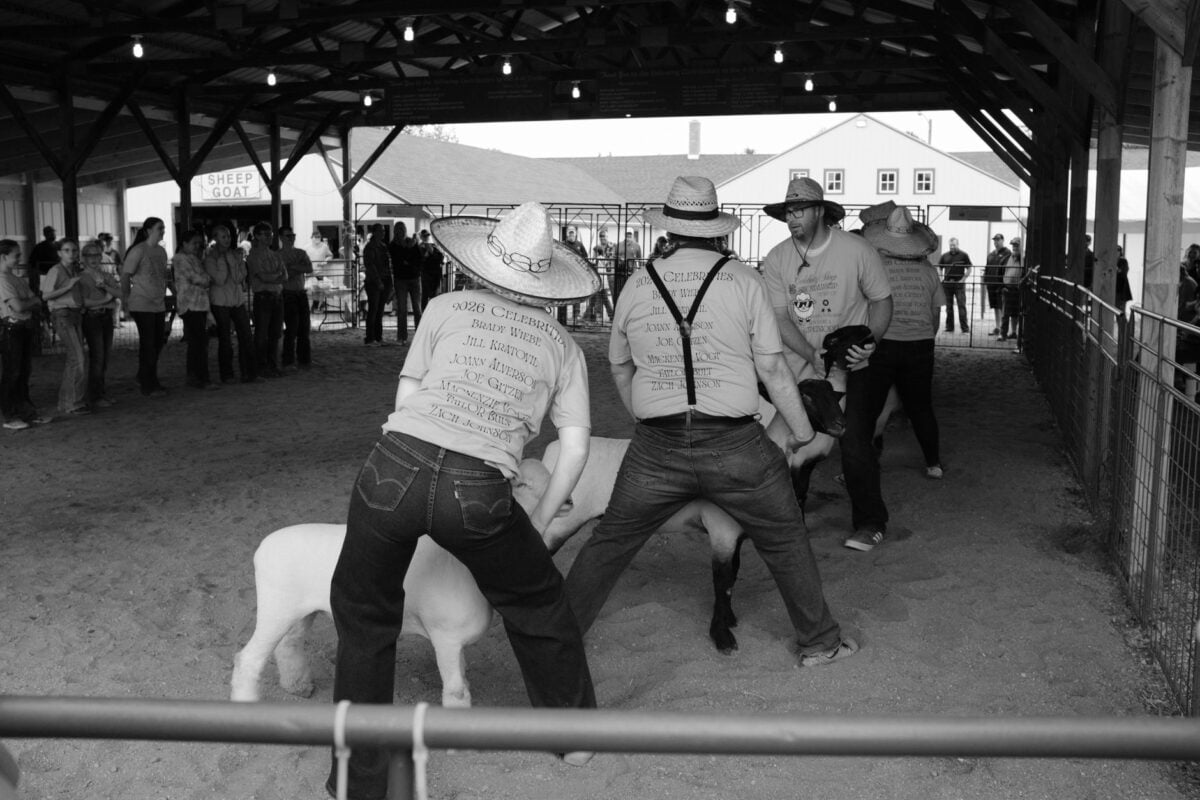
“That steer ate my grass all year, Sonja,” my sister said into the phone, and I could hear her truck idling behind her voice.
“Feed isn’t free. You know what hay went for this summer. Don’t make this into something it isn’t.”
I was standing in the hallway of the billing office at the hospital in town, holding a stack of explanation of benefits forms against my chest.
I had my back to the wall so nobody could see my face.
“Shawna,” I said, “those people paid $9,400 for that steer. Nobody pays $9,400 for a steer. They paid it because of Toby.”
My voice came out smaller than I meant it to, the way it always did with her.
“The check was made out to Ohlde Cattle,” she said. “It’s my farm. It was my pasture and my water and my mineral. I already deposited it. I’ve got the hay man coming Friday and I’m not going to apologize for paying him.”
Get a new story in your inbox every morning.
Facebook doesn’t show you every story we post. Our free newsletter does. Join 2,500+ readers.
Then she hung up. I stood there long enough that one of the nurses from the second floor walked past me twice and the second time she touched my elbow and asked if I was all right.
I told her I was fine. I worked in hospital billing. I knew exactly what a lie sounded like when it came out of a person’s mouth on a Wednesday morning, and I told it anyway.
My name is Sonja Lammers. I was 38 that summer. I live in a small house on the north side of Chillicothe, Missouri, with my husband Ray, who works for the county road crew, and our son Toby, who was 12.
In March, Toby had come home from school with a lump on the side of his neck that he said did not hurt.
By April we were at Children’s Mercy in Kansas City, ninety miles down the highway, and a doctor named Hughes was showing us the scans.
Hodgkin lymphoma. She said the word gently, and then she said the odds, which were good, and then she said the plan, which was long.
I wrote it all down on the back of a parking stub because my hands needed something to do.
The first round of chemo took his hair in three weeks. He let Ray buzz the rest of it off in the backyard with the dog clippers, sitting on an overturned bucket, and he laughed about it so I would not cry. I cried anyway, later, in the laundry room.
The thing that kept him going was a black baldy steer he called Rooster.
He had picked him out the fall before from a neighbor’s pen, a black calf with a white face, and he had saved his own lawn mowing money to buy him.
We live in town on a lot about the size of a church parking lot, so Rooster lived out at my sister’s place, eight miles west on a gravel road.
Shawna and her husband Lonnie run about forty cows out there on rented ground and their own.
Shawna is four years older than me. Growing up she was the one who could back a trailer and pull a calf and talk to the sale barn men like she was one of them.
I was the one who did homework at the kitchen table and got carsick in the truck.
When Toby asked if Rooster could stay in her bottom pasture, she said yes before he finished asking.