The Man Who Married Grandma
I drove up to my grandmother’s house on a Saturday in April with a casserole dish balanced on the passenger seat and a mind that was already made up before I ever set my brakes. Ruth lived at the dead end of Mill Church Road, in the same white clapboard house she had lived in for fifty years, out past the feed store and the Baptist church and the little cinderblock diner where the county-road men drink their coffee black and argue about rain. I knew that house. I knew the gardenia bush by the porch steps that my grandfather planted, the screen door that never quite latched, the porch swing with the one squeaky chain. I thought I knew everything that mattered about that little corner of Georgia, and about the woman who lived at the end of it.
Then I saw the man.
He was standing on the porch beside her, and he had his arm around her shoulders like it belonged there. He was young. Not middle-aged, not a nephew home from somewhere, young. Broad through the shoulders, sandy hair, maybe thirty-five, in a plain gray T-shirt and work jeans. And my grandmother, seventy-eight years old and no taller than my chest, was leaning into him and smiling up at me like the sun had just come out.
I almost dropped the casserole in the gravel.
“Sweetheart,” she said, and her voice had a lift in it I had not heard in years. “This is Sam. We love each other, and we are getting married.”
The younger man on the porch
For a good five seconds I stood there in the yard and honestly believed I had heard her wrong.
I need you to understand who my grandmother was, so you understand why the ground moved under me. Ruth was not a wealthy woman. She had raised her family on my grandfather’s pension from the mill and whatever she could grow in the side yard, and after he passed she had lived careful and quiet, giving half of what little she had to the church anyway. My grandfather, Walt, had died fifteen years back. In all the time since, I had never once seen her so much as have coffee with a man. She said she had loved Walt and that was that, one to a customer, and the subject was closed.
And now there was Sam, with his arm around her, on her porch, in the April light.
My mind went straight to the worst thing it could find. It did not even stop to consider anything gentler. A man that age does not marry a woman that age for love, I told myself. That is not a thing that happens on Mill Church Road or anywhere else. He wants something. And the only thing my grandmother had that anybody could want was the house. The house and the four acres it sat on, which was not much money to the world but was the whole of what she owned.
I smiled the way you smile when your face has forgotten how, and I shook his hand, and his grip was warm and steady and he looked me right in the eye when he said he was glad to finally meet me. I did not care what he said. I had already tried and convicted him in the length of a handshake.
We ate the casserole at her little kitchen table with the yellow oilcloth, the three of us, and I watched him the whole time. I watched him get up without being asked and refill her tea glass. I watched him cut her chicken into small pieces because her hands shook now, something I had not even known until I saw him do it. I watched him laugh at a story she told, one I had heard a hundred times, and I told myself the laugh was fake, that a man does not laugh like that at an old woman’s old story unless he is working an angle.
She walked me out to my car after. The cicadas were starting up in the pecan trees. She took my hand in both of hers, and her hands were cool and thin as paper.
“I know what you are thinking,” she said. “You have got your grandfather’s face when you are worried. But I need you to trust me on this one. Everything is going to work out. You will see.”
“Grandma, you barely know him.”
“I know him better than you think I do,” she said, and she patted my hand and went back inside before I could say another word.
That night I lay awake in my apartment forty miles away and I made a decision. I was going to protect her, whether she wanted it or not. I was going to find out what Sam wanted, and I was going to stop it.
What I was sure I knew
I started with the phone calls. I called her twice a day for a week, and every call I steered toward the same thing. Where did she meet him. How long had she known him. Did he have a job, a family, a reason to be forty miles up a county road courting a woman old enough to be his grandmother.
Her answers were maddening. She met him at church, she said, which told me nothing except that a smart man knows to hunt where the lonely widows are. He did handyman work, odd jobs, a little of everything. He did not have family close by, she said, and I pounced on that as proof. No family meant no one to answer to. No family meant a drifter. No family meant a man looking to attach himself to somebody else’s.
“You are not listening to the good part,” she kept saying. “You are only listening for the bad.”
She was right, though I would not have admitted it if you had held my feet to the fire. I was not listening. I had a story in my head and I was collecting evidence for it.
So I drove up unannounced. That was the trip that hardened me. I pulled into the gravel and there was Sam, backing my grandmother’s old car out of the carport, alone, no Ruth in it. I sat in my car and watched him drive off toward town, and every suspicion I owned stood up and cheered. Where was he going in her car, by himself. What was he doing. I went inside and found her napping in her chair with the fan going, and I did not wake her, but I noticed the mail on the counter, and I am not proud of what I did next. I looked at it. Bills. A stack of them. Medical bills, from the county hospital and from a clinic two towns over, with amounts on them that made my stomach drop. And underneath, a bank statement.
I did not read the statement. I want that on the record, because I have thought about it every day since. I saw the corner of it and I saw the word DEBIT and a number, and I put the story together the way I always did, fast and ugly. He was draining her. Of course he was. The medical bills were mounting and the money was going out and here was a young stranger driving her car around the county, and I had all the proof I would ever need, which is to say I had a handful of things I did not understand and a certainty that filled in all the gaps.
I confronted him the next weekend. I asked him to step out to the porch so she would not hear, and I told him flat that I knew what he was doing, that I saw the bills and the bank statement, and that if he thought he was going to marry my grandmother and walk off with her house, he had picked the wrong family.
I expected him to get loud. I wanted him to. A guilty man argues.
He did not argue. He stood there against the porch rail with the gardenia bush behind him and let me say every hard thing I had, and when I ran out of breath he was quiet a moment, looking out at the pecan trees.
“I understand why you do not trust me,” he said finally. His voice was low and even. “If I were you, standing where you are standing, seeing what you can see, I would think the same thing. I would probably do worse than you are doing. But I am going to tell you one time, and then I am going to let you believe whatever you need to believe. What I feel for Ruth is real. I am not here for anything. I promise you that.”
“Men always say that,” I told him.
“They do,” he agreed, and that was all. He did not defend himself past that one time. He never did, not once in all the months that followed, and at the time I read his calm as the calm of a con man who knows the mark is already his. I know now it was something else entirely. It was a man who had decided that my grandmother’s peace was worth more than his own good name.
They married in June, in the front room of the house, with the preacher from the Baptist church and maybe a dozen people. I came. I stood in the back with my arms crossed. She wore a pale blue dress and she cried when she said her vows, and he held both her shaking hands in his and said his so softly that I could not hear them, and everybody in the room but me thought it was the sweetest thing they had ever seen. I thought it was theater. I drove home that night already dreading the phone call that would come someday, the one where I would find out he had taken everything and vanished.
The year I refused to see
Here is the thing that should have broken my story open, and did not, because I would not let it.
Nothing bad happened.
Month after month, nothing bad happened. Sam did not vanish. He did not sell the house out from under her. He was there every single time I came, and I came a lot, waiting to catch him, and every time the house was in better shape than the last. He fixed the screen door that had never latched in my whole life. He got up on the roof in the July heat and patched the leak over her bedroom that she had been putting a bucket under for six years. He built a rail along the back steps because her balance had gotten bad, low and sturdy at exactly the height her hand fell.
He learned how she took her coffee, half a spoon of sugar and a splash of the canned milk. He learned which of her stories to ask for. He drove her to church on Sunday and to the doctor on Tuesday and to the diner on the county road on Friday nights, where the men who had known Walt for forty years slowly, grudgingly, started nodding at Sam when he came in, the way that town nods at a man once it has decided he is all right.
She laughed. That is the part I cannot get past now. My grandmother laughed more in that one year than in the fifteen years since Walt died. Her color came back. She started wearing the good earrings again. One evening I came up and the two of them were on the porch swing snapping green beans and singing along to a gospel station, off-key, both of them, and she looked up at me and her face was so lit up and so young that for one single second I almost let myself see it. I almost let myself believe a good thing was happening on that porch.
Then I remembered the bank statement, and the bills, and the car driving off toward town, and I shut the door on it. He is patient, I told myself. That is all this is. He is a patient man playing a long game, and the longer he plays it the more he stands to get.
I did notice things I could not explain, and I filed them all under suspicion. I noticed the medical bills on the counter stopped stacking up. I noticed my grandmother, who had counted every penny her whole life, seemed to have stopped worrying about money entirely. I told myself he had gotten into her accounts, which was a sinister way to describe a man paying the light bill on time. I noticed he looked tired sometimes, gray around the eyes, and once I saw him sitting alone in her car with his head down like a man carrying something heavy, and I thought, guilt, and drove away pleased with myself.
I noticed, most of all, that he never asked me for anything and never asked her for anything. In a whole year. Not a dime, not a favor, not a kind word from me, which he had earned and which I never once gave him. I would come in sharp and leave sharper and he would just say, quiet, “Drive safe, now,” every time, and mean it.
Then, in the spring, a year after that April porch, my grandmother got sick fast and did not get better.
It was pneumonia on top of everything else her body had been quietly losing. She went into the county hospital on a Thursday and she was gone by the following Wednesday. I was there at the end. So was Sam. He sat on one side of her bed and I sat on the other, and in the last two days, when she drifted in and out, it was his hand she reached for. Both times. She would surface out of the fog and her eyes would find him and her hand would come up off the blanket, and he would take it in both of his, the way he had held her hands at the wedding, and she would settle. I sat on my side and watched my grandmother reach past me for the man I had spent a year hating, and I told myself it was the medicine.
She died on a Wednesday morning with the light coming through the hospital blinds in stripes across the bed. Sam was holding her hand. He did not make a sound. He just lowered his head onto the back of her hand and stayed there, and his shoulders shook, and even then a small cold voice in me said: he is thinking about the will.
The reading of the will
We buried her on a Saturday in the churchyard next to Walt, under a pecan tree, with half the county there. Sam stood at the graveside a little apart from the family, which is where I had put him with a year of cold shoulders, and he did not try to come closer. He wept quietly and he shook every hand that was offered to him, which was more than were offered, because the town had made up its mind about him even if I had not, and then he drove her old car home alone.
The following week, the attorney called the family in to read the will. His office was on the courthouse square, up a flight of wooden stairs over the pharmacy, a small room with a window unit dripping and a wall of law books nobody had opened in twenty years. My mother was there, and my aunt, and two cousins, and me. Sam was not there. I noticed that. I noticed it and I thought, he does not want to look us in the eye when he takes it.
I walked into that office already certain I knew what I was about to hear. She had left him the house. Of course she had. That was the whole point of the year, the whole point of Sam, the thing I had seen coming from the first handshake on the porch. I had my speech half ready. I was going to contest it. I was going to make his life difficult if it was the last thing I did for her.
The attorney, an older man named Coy who had done Walt’s affairs too, put on his glasses and read it out plain. And what he read was not what I had spent a year and a half bracing for.
My grandmother had left the house and the four acres to me.
To me. The whole of it, free and clear, along with a short line she had asked to be read aloud, that it was to stay in the family and be a place where the family could always come home to, and that she trusted me to see to it.
I sat there and I could not make the words fit. I actually asked him to read it again, and he did, patient, and it said the same thing.
“And Sam?” my aunt asked, because somebody had to. “Her husband?”
Coy turned the page over and looked at the back of it and turned it back. “Nothing is left to Mr. Sam,” he said. “There is no provision for him. No property, no money, no bequest of any kind.”
Nothing.
No house. No money. Not so much as a keepsake, not Walt’s pocket watch, not the wedding china, not a chair. Nothing at all. The man I had been certain, dead certain, for a year and a half, was in it only for what he would inherit, had inherited exactly nothing, and had not even shown up to hear it.
It made no sense. It made no sense at all. My whole understanding of the last two years had just been read out of a legal document and it did not fit a single thing I believed. I sat in that little dripping office and the certainty I had carried so long went soft and strange in my chest, and for the first time I felt something underneath it, something I did not want to feel, which was the cold beginning of the suspicion that I had been terribly, unforgivably wrong.
The letter
The family filed out, murmuring, my mother squeezing my shoulder, everyone half in shock and half already talking about what I would do with the house. I got up to go with them.
“Not you,” Coy said. “Your grandmother asked that you stay a moment.”
He waited until the door shut behind the last of them. Then he opened a drawer in his desk and took out a sealed envelope, cream colored, my grandmother’s handwriting on the front, my name in her careful looping hand. He set it on the desk in front of me and slid it across the wood.
“She left this for you,” he said. “She was very particular about it. It was to go to you and only you, and you were to read it alone. She said you would need to sit down for it.” He stood and picked up his hat. “I will give you the room. Lock it behind you when you are done, the latch catches on its own.”
And then he left me there, alone, in that small hot room with the window unit dripping and my grandmother’s handwriting in my hands.
My hands were shaking. I turned the envelope over. She had sealed it herself and pressed her thumb into the flap the way she did, I could see the little crescent of it. I worked my finger under and tore it open, and I unfolded three pages covered front and back in her hand, and I began to read.
My dear, it began. If you are reading this, then I am gone, and Coy has done what I asked, and you are sitting in that stuffy little office of his wondering what in the world your foolish old grandmother was thinking. I am going to tell you. It is finally time for you to understand who Sam really is. This was my plan, start to finish, and you were never meant to know until now.
I stopped. I had to. I set the pages down on the desk and pressed my hands flat over them for a second because the room had tilted. Then I picked them back up and I made myself keep reading, and I did not stop again until I reached the end.
You have thought, this whole time, that Sam came into my life to take something from me, she wrote. I know you have. I could see it on your face from that first day on the porch, and I let you think it, because the truth was not mine to give you until now, and because I needed you out of the way while I did what I had to do. I am sorry for that. You were only ever trying to protect me, and I love you for it, and I want you to stop carrying it the minute you finish this letter.
Sweetheart, I want you to think back fifteen years, to the night your grandfather died.
And the floor of my stomach dropped out, because I did think back, and I realized I had never actually been told how it happened. I was a child. The grown-ups had kept the details from me, and I had grown up and never asked, and it had just become a fact with no shape: Walt died. Heart attack. Gone.
You were too young for us to tell you, the letter went on, and after, nobody wanted to speak of it, so you never learned how it was. Your grandfather did not die in a hospital, or here at home with me. He was driving back from the feed store on the Hartwell road, an ordinary Tuesday, and his heart gave out and the car went off into the ditch by the Pruitt place. It was a bad stretch of road with nobody on it. He was alone. Or he should have been alone.
A young man stopped. He was barely twenty years old, driving home the other way, and he saw the car in the ditch and he pulled over when nobody else would have. He got down into that ditch and he got the door open and he found your grandfather still breathing and could not get him out, so he did the only thing there was to do. He got down in the mud beside him and he held his hand and he stayed. He called for help and he stayed. He did not leave a stranger to die alone in a ditch on the Hartwell road. He held Walt’s hand and he prayed with him, and he was still holding it when your grandfather passed, before the ambulance ever got there.
I only know all of this because that young man came and found me, after. Most people would have gone home and been sick and never spoken of it. He came to my door with his hat in his hands and he told me that my husband had not been alone, that someone had been with him, that Walt’s last words had been about me. He told me and then he left and I did not even get his name, I was so far gone in my grief. For fifteen years I did not know the name of the boy who held my husband’s hand while he died.
Who Sam really was
I was crying now, in Coy’s office, alone, with the window unit dripping and the traffic going by on the square below, and I did not care. I turned the page over with wet fingers.
Two years ago, she wrote, I met Sam at the church. He had moved to the county for the handyman work and he came to the Wednesday supper, a young man by himself, and he sat down across from me because the seat was empty, and we got to talking. And somewhere in the talking it came out where he was from and how long ago, and he mentioned, not knowing who I was, that the reason he had never been able to shake this county was that the first time he ever passed through it, years back, when he was hardly grown, something had happened to him on a road here that changed the shape of his whole life. He had stopped for a man in a ditch, he said. He had held that man’s hand while he died, and he had never forgotten it, and he had always wondered about the wife the man kept asking for at the end.
It was him. After fifteen years, it was him, sitting across a card table from me at the Wednesday supper with a plate of green beans, the boy who had held Walt’s hand. He had grown up. He did not recognize me and I did not tell him, not right off. I just sat there and looked at the face of the only person on this earth who was with my husband when he left it, and I knew that God had not sent that boy to my door twice by accident.
I had to stop and wipe my eyes to read the rest. My whole certain story was lying in pieces on that desk and something enormous and terrible and beautiful was standing up out of the wreck of it.
Now here is the part you fought me on so hard, she wrote, and here is the truth of it. Not long after I met Sam, the doctor in town told me my heart was failing, the same as Walt’s, and that I did not have long, a year or two if I was careful, less if I was not. I did not tell the family. I did not want my last good year spent watching all of you grieve me before I was even gone. I had watched that happen to Walt and I would not do it to you.
But I did not want to go the way Walt nearly did. Alone. I was so afraid of that, sweetheart, more than I was afraid of dying. I was afraid of the ditch. And there, sitting across from me, was the one man in this world who had already proven, with nothing to gain and mud on his knees, that he was not the kind to let a person die alone.
So I asked him. Not the other way around. I want you to hear that plainly because I know what you thought. I asked Sam. I told him everything, the diagnosis, the fear, all of it, and I asked him if he would be willing to stand beside me for whatever time I had left, so that when my turn came I would have a hand to hold. And he said yes. He did not have to. He had a whole life ahead of him and I was offering him nothing but a hard year and a funeral. He said yes anyway, because that is simply who he is.
The marriage was so that no one could keep him from my side. So that in the hospital, at the end, they would let him stay in the room, and no one could send him home at visiting hours, and no cousin could decide he did not belong there. It was never about money. There was never any money. What money there was, Sam spent. Those medical bills you saw, the ones that stopped stacking up? He paid them, out of his own pocket, every one, and made me promise not to tell you, because he did not want you to think he was buying his way into anything. He paid off the lien the county had put on this house for the back taxes I could not cover, so that when I left it to you it would come to you clean and free, the way it has. The house you are sitting there inheriting, sweetheart, you have it free and clear because Sam made it so, and asked for nothing, and let you go on hating him the whole time rather than defend himself with the truth, because I asked him to keep my secret and he kept it even when it cost him you.
I put the pages down on the desk and I sat with my face in my hands and I wept in a way I had not wept even at her funeral.
I left him nothing in the will, she finished, because he asked me to. Those were his words. He said, Ruth, do not leave me a thing, because if you leave me even a chair, that boy will spend the rest of his life believing he was right about me, and I would rather have nothing and have him someday know the truth than have something and prove his lie for him. He gave up his inheritance to give you back your peace. He gave up your good opinion for two years to give me mine. That is who Sam is. That is who I married. Now you know.
Go and find him. He is going to try to leave quiet, the way he does everything, because he thinks there is no place for him here now that I am gone. Do not let him. Whatever you say to him, say it soon.
I love you. Everything worked out. I told you it would.
Grandma.
Grace I did not earn
I do not remember driving out to Mill Church Road. I remember Coy’s stairs and the gravel of her driveway an hour later and almost nothing in between. I must have run every stop sign in the county.
His truck was still there, tailgate down, two boxes in the bed. He was carrying a third out the front door when I came up the steps, and he stopped when he saw me, and his face did something careful, bracing for whatever cold thing I had come to say. He had a year and a half of reasons to expect the worst from me.
I could not get a word out. I just stood there on my grandmother’s porch, by the gardenia bush my grandfather planted, holding three pages of her handwriting, and I looked at the man who had held Walt’s hand in a ditch and held Ruth’s hand in a hospital and held nothing else out of any of it, and I could not speak.
He set the box down on the porch. “She left you the letter,” he said. It was not a question. His voice was gentle. “I hoped she would.”
“Sam.” It came out broken. “You paid the bills. You paid off the house. You knew, that whole first year, you knew she was, and you never, and I said all those things to you, on this porch, and you just, you never once.”
“You were protecting her,” he said simply. “That is a good thing to be. There is no shame in it. You did not have the whole picture. How could you. I would not let her tell you, and I did not care what you thought of me, not if it meant you kept thinking well of her.” He almost smiled. “You loved her fierce. That was worth putting up with a little cold shoulder for.”
A little cold shoulder. Eighteen months of contempt from a man who had earned nothing but my gratitude, and he called it a little cold shoulder, and he meant it kindly.
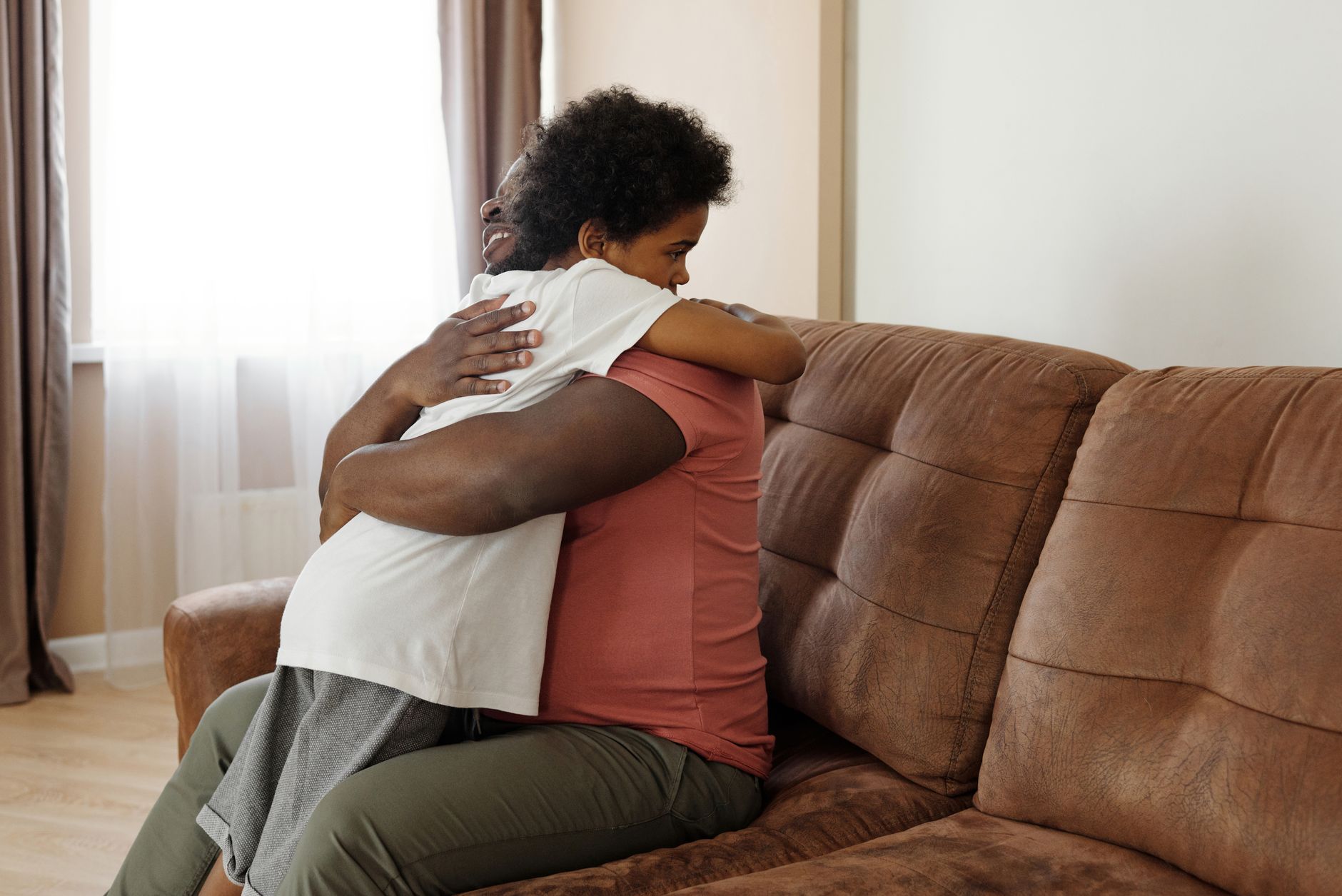
I did the only thing there was to do. I crossed the porch and put my arms around him, this man I had hated on sight and hated for so long that the hating had felt like love for her, and I told him I was sorry, over and over, into his shoulder, and he let me, and after a moment his arms came up around me too, and I felt him let out a breath he had maybe been holding for two years.
“I do not have anywhere to be,” he said, when I finally stepped back and wiped my face. “That is the truth of it. I was going to head on. There is nothing keeping me here now.”
“She kept you here,” I said. “And now I am.”
I told him the house was as much his as mine, that I did not care what any will said, that she had left it to me to keep in the family and he was family, he was the most family of any of us, he had earned it a hundred times over and I would not hear another word. He argued, of course he did, quiet and stubborn the way he argued everything. It took me the better part of a year to make him stop trying to give it back.
He stayed. He is still here, if you want to know how it ends. He keeps up the house, and he built a little bench out under the pecan tree by the two graves, Walt’s and Ruth’s side by side, and on Sunday evenings he sits out there with a glass of tea and I come up from town and sit with him, and sometimes we talk and sometimes we do not. He tells me things about her now, the way she hummed when she cooked, the joke she used to make about his driving. He is the last living door into the last good year of her life, and I nearly slammed it shut out of pride I mistook for love.
I think about that a lot. I had nearly all the same information the whole time, and I built it into a monster, because a monster was easier to believe in than a miracle. It is a humbling thing to learn about yourself at thirty-four, that you would sooner assume the worst of a good man than let yourself be surprised by grace. My grandmother knew that about me. That is why she wrote the letter instead of just telling me. She knew I would not have believed her out loud. I had to be proven wrong all the way to the bottom before I could hear it.
She was right, in the end. About all of it. Everything worked out, the way she kept promising me it would on that porch while I stood there sure I knew better. The house is in the family. Sam has a home. And I have a grandfather who did not die alone in a ditch, because a stranger stopped, and a grandmother who did not die afraid, because that same stranger came back, and a lesson I did not want and will carry the rest of my life, which is that the person you have decided is the villain is sometimes just a good man being quiet about it, waiting on the truth to catch up.
I keep her letter in the drawer of the little table by the porch swing, out where the gardenia blooms. Some evenings I take it out and read it again, in her looping careful hand, and I get to the last line every time, and every time it makes me smile and ache at once.
I told you it would.
She did. I just was not listening. I am now.