The Inheritance My Sister Demanded
The first call came on a Tuesday, a little after six, while the Denver sky outside my window was going that bruised purple it gets in early spring. I almost let it ring out. I had a report due at ten the next morning and a half-eaten bowl of soup going cold on the counter. But it was my mother, and in our family you do not let your mother ring out. That is the first thing you learn, before you learn to walk. You answer.
She did not say hello. She did not ask how I was, or whether I had eaten, or whether Denver was cold. She said, “We need to talk about the house.”
I knew right away which house she meant. There was only ever one house that mattered when my mother used that voice. Abuela Rosa’s house, the little brick ranch on Camino Verde in Los Robles, the suburb outside San Antonio where I grew up, where the live oaks drop their leaves in February and the cicadas start screaming by May. My grandmother had died three weeks earlier. We had buried her on a Saturday so hot the folding chairs at the graveside burned the backs of your knees. And now my mother wanted to talk about the house.
“Okay,” I said. “Let’s talk about it.”
“You know it isn’t right,” she said. “What Rosa did. You know that in your heart.”
I did not know that in my heart. What I knew in my heart was that my grandmother had left me everything, and that she had done it on purpose, and that she had spent the last decade of her life being the only person in my family who ever looked at me and did not see a problem to be fixed.
What Abuela Rosa Actually Left Me
My grandmother had a will. A real one, drawn up two years before she died, signed and witnessed and filed with an attorney in downtown Los Robles. In it she left me the brick house on Camino Verde. She left me the two investment accounts, the ones she had built quietly over forty years working the front office of a heating and air company and never once telling anyone how much she was setting aside. She left me the savings, the good dishes with the little blue flowers that only came out at Christmas, the sewing machine, the shoebox of photographs, and the rosary that had belonged to her own mother.
Everything came to me. Everything, that is, except a donation to the animal rescue over on Old Blanco Road, the one that took in the barn cats nobody wanted. She left them a set amount, in writing, because she loved those cats more than she loved most of the people now calling me about her money.
The house alone was worth more than three hundred thousand dollars. The accounts were worth more than that. It was, by the standards of our family, an enormous amount of money, more than my mother had ever seen in one place. And every dollar of it had my name on it. Not because I asked. I never asked. I did not even know the size of it until the attorney read it out loud.
My grandmother had chosen me. That was the part nobody in my family could sit with. Not the money itself, but the choosing. In a family where I had always been the one who left, the one who did not marry, the one who moved eight hundred miles away to a cold city and a job nobody understood, my grandmother had decided I was the one she trusted to hold what she had spent her life building.
“Mija,” my mother said on the phone, softer now, the way she got soft right before she asked for something big. “You have to split it with your sister. That is what family does. Rosa would have wanted that.”
I stood in my kitchen in Denver with the soup going cold and I said, as calmly as I could, “If Abuela wanted Marisol to have half, she would have written Marisol into the will. She had two years. She had an attorney. She thought about every dish, Mamá. She thought about the cats. She was not confused.”
There was a silence on the line, and then the silence turned into the thing I had been bracing for my whole life. The guilt. The machine that never broke down.
The Guilt Machine
“Your sister has children,” my mother said. “You know she has children. Three of them, and one on the way in October. Do you know what diapers cost now? Do you know what daycare costs? Marisol cannot even go back to work full time because the daycare would eat the whole check. And you. You are up there in Colorado with nobody but yourself to feed.”
There it was. The oldest math in our family, the equation I had been failing since I was a girl.
Marisol has a family, so Marisol needs. I do not have a family, so I do not need. My sister built the life my parents understood, the husband and the babies and the house with the trampoline two streets over from my mother, and so her wanting was always automatically legitimate. My life did not look like theirs, and so my wanting was always suspect. Selfish, even.
“What do you even need all of it for?” my mother asked, and that question went into me like a splinter, because I had heard some version of it my entire adult life. Why do you need to move so far. Why do you need that fancy job. As if a woman like me, unmarried at forty-two, was supposed to want nothing and take up no space and hold nothing in her two hands.
Denver never once made my independence feel like a defect. Los Robles always did.
I told my mother I loved her and that I needed to think, which was true, and I hung up before she could hear my voice change. I sat down at the counter. The soup had a skin on it now. My phone was already buzzing again, and this time it was Marisol.
Her text started warm. It always started warm. “Hey Sofi, ignore Mom, she’s all worked up, I just miss you.” A little heart. A photo of my niece Camila in a paper crown. And then, three messages later, so smoothly you could almost miss the turn, the ask. Preschool was going up in the fall. The baby would need everything. Diego’s truck needed a transmission. “It’s just a lot right now,” she wrote. “It would mean everything if we could figure something out as a family.”
Not one word about Abuela Rosa. Not one. Not the woman herself, not the funeral, not the good dishes, not who she had been. Just the money, dressed up in her children like it always was, handed to me as a bill I had somehow run up.
I put the phone face down on the counter. Then I turned it back over and reopened the attorney’s email, the one I had been avoiding, and I read the whole estate summary again, line by line, the numbers and the account names and the plain flat legal language, and at the bottom, in a paragraph I had skimmed the first time, I saw a sentence I had missed. It said that my grandmother had left additional written instructions with the office, to be produced under certain conditions, and that the attorney would discuss those in person.
I did not know what that meant. I filed it away. I would understand it soon enough.
I want to stop here and tell you about my grandmother, because if I do not, then this is just a story about money, and it was never about money.
She was five feet tall in her church shoes. She kept peppermints in her purse and a paring knife in her kitchen drawer that she had sharpened so many times the blade had worn down to a curve. She made her tamales at Christmas in an assembly line on her kitchen table, and she let me be the one who spread the masa because she said I had patient hands, and my sister, she said with a laugh, spread it like she was mad at it.
She was the only person in my family who remembered my deadlines. When I had a big presentation, she would call the night before and tell me to eat a real breakfast and wear the blue blouse, because I looked serious in blue. She sent me postcards from the H-E-B, three sentences on the back in her slanted careful hand. Nobody else in my family could have told you what I did for a living. My grandmother could have told you the name of my boss and whether I thought I would get the promotion.
Once, on her back porch, with the ceiling fan going and a jar of tea sweating between us, she took my hand and said, “There is not just one way to build a life that means something, mija. Your sister built hers. You are building yours. Do not let anybody tell you yours is smaller. It is only different.” I was thirty-six years old and I cried right there on her porch, quietly, so she would not fuss, and she pretended not to notice, and squeezed my hand once and let go.
She saw me. Without comparison attached. She was the only one who ever did. And when she died and left me everything, I understood it was not an accident and it was not manipulation. It was the last thing she got to say to me. I trust you with what I built. And I was not going to let my family take that and cut it in half and pretend it was fairness.
By the time I closed my laptop that night, I already knew what I was going to do. I was not going to argue on the phone anymore. I was not going to send long messages defending myself. I was going to go handle it in person, the way my grandmother would have, with my back straight and my paperwork in order.
I booked a flight to San Antonio for Friday evening. Then I emailed the attorney’s office and asked for the first appointment they had on Saturday morning. They gave me nine o’clock.
The pressure escalated the moment they realized I was not going to fold on the phone.
My mother sent long messages about family and duty and what people would say at church, how the whole town would know I turned my back on my sister’s babies. My mother has always cared enormously about how things look. It is its own kind of currency in Los Robles, the looking, and she spent it freely.
Marisol called me crying. Real crying, the kind that catches in the throat, and I am not going to pretend it did not get to me, because she is my sister and I have loved her since before I could talk. She said Diego was stressed about money and they were fighting. She said she never thought I would be the kind of person who would watch her struggle and do nothing. Every sentence was a hook, and I knew it was a hook, and it still went in, because that is how it works with the people who know exactly where you are soft.
Then my father left a voicemail. He is a quiet man who fixed transmissions his whole life and let my mother do the talking, so when he spoke, it landed harder. He said I was humiliating the family. He said Abuela Rosa was barely in the ground and I was already counting her money. He said if I kept everything I should not expect a warm welcome, that I would be walking into a house that did not want me.
And then, late Wednesday night, my mother sent the one that stripped away all the pretending. No paragraph this time. No church, no looks, no duty. Just eleven words on my screen, glowing in the dark of my bedroom.
Transfer it to Marisol or don’t bother coming home.
I read it once. Then I read it again. Then I sat on the edge of my bed and stared at it until the screen went black and I was looking at my own dim reflection in the glass. My whole life, the threat had always been unspoken, hovering just under everything, the understanding that love in my family was conditional and the conditions were not written down where you could read them. And now my mother had finally written it down, in the plainest language she owned. Do what we want or you are not one of us.
Something in me went very quiet and very clear.
Locking Every Door
I did not text back. There was nothing left to say to a sentence like that.
Instead, I opened my laptop, and I started closing doors.
I changed the password on my bank accounts, every one of them, to long strings I did not save anywhere but in my own head and a locked note. I turned on two-factor authentication on everything, the bank, my email, the investment accounts, the account where the estate money would eventually land. I froze my credit at all three bureaus, one after another, typing in the confirmation codes with steady fingers. And then I sent one email to my grandmother’s attorney, short and clear, that said his office was not to discuss any detail of the estate with my mother, my father, my sister, or anyone claiming to represent them, under any circumstances, and to please confirm he had received and understood the instruction. He wrote back within the hour, at almost midnight his time, one line. Understood, Ms. Herrera. We take our instructions only from you.
It was not paranoia. In our family, boundaries were treated as insults and locked doors as declarations of war, and I had spent forty-two years leaving mine unlocked to keep the peace. I was done. If they wanted to call it a war, that was their word to choose. I was just changing the locks on a house that was mine.
The family group chat detonated. My mother, twelve minutes apart: Think very carefully before you destroy this family. Marisol: I never thought you were this selfish. Wow. My father: Call me right now. Then a photo Marisol sent of all three kids in their pajamas with the caption, “They keep asking when Tía Sofi is coming.”
By midnight I had forty-three missed calls. I counted them, sitting up in bed with the lamp off, the little red number climbing, and I felt something I had not expected. Not guilt. Not fear. A strange, level calm, like the surface of a stock tank at dusk after the wind finally dies.
I listened to my father’s voicemail exactly once.
He was angrier than I had ever heard him. He said the money had changed me. He said Marisol had real responsibilities, three kids and a mortgage and a life, while I had, and I remember the exact way he said it, “nothing but yourself and your spreadsheets.” And then he said the thing that stayed with me all night, the thing I have not been able to shake even now.
He said, “Nobody leaves everything to the daughter who walks away. Nobody does that unless she’s been worked on. Unless somebody got in her ear.”
Worked on. Manipulated.
Not trusted. Not loved. Not chosen. In my own father’s mouth, the only possible explanation for my grandmother leaving me her life’s savings was that I had somehow tricked a dying old woman into it. It could not be that she loved me. It could not be that she saw something in me worth trusting. In his mind, and I understood then that this was how all of them saw me, the daughter who moved away was not a person you would freely choose. She was a person who had to have manipulated her way in.
I put the phone down. I did not cry. I had done all my crying about these people on a back porch six years earlier, holding my grandmother’s hand. I turned off the lamp and I lay in the dark and I made myself a promise. I was going to go home. I was going to sit in that attorney’s office. And I was going to find out exactly what my grandmother had wanted, in her own words, and then I was going to honor it, whatever it cost me.
Saturday Morning in Los Robles
I flew into San Antonio on Friday evening. The heat hit me on the jet bridge like a wet towel, that thick August air that smells like asphalt and cut grass and, underneath, mesquite smoke. Home always smelled the same. My body remembered it before my mind did.
Marisol spent the whole flight sending photos of her kids, queued up and arriving in a burst the second I turned my phone on. Camila missing a front tooth. The twins asleep in their car seats. A sonogram with the caption “your niece or nephew.” Each one placed like a stone on my chest. I looked at every single one, because they are my blood and I love them, and then I put the phone away and did not answer.
I did not stay at my parents’ house. I checked into a hotel off the interstate. This was, according to the messages that immediately started arriving, an act of profound cruelty. My mother called it childish. My father called it disrespectful. Marisol wrote that the kids had been “so excited” to see me, which was interesting, because forty-eight hours earlier my mother had told me not to bother coming home at all. The invitation had been reissued the moment they realized I was actually coming.
I slept better in that hotel than I had in weeks.
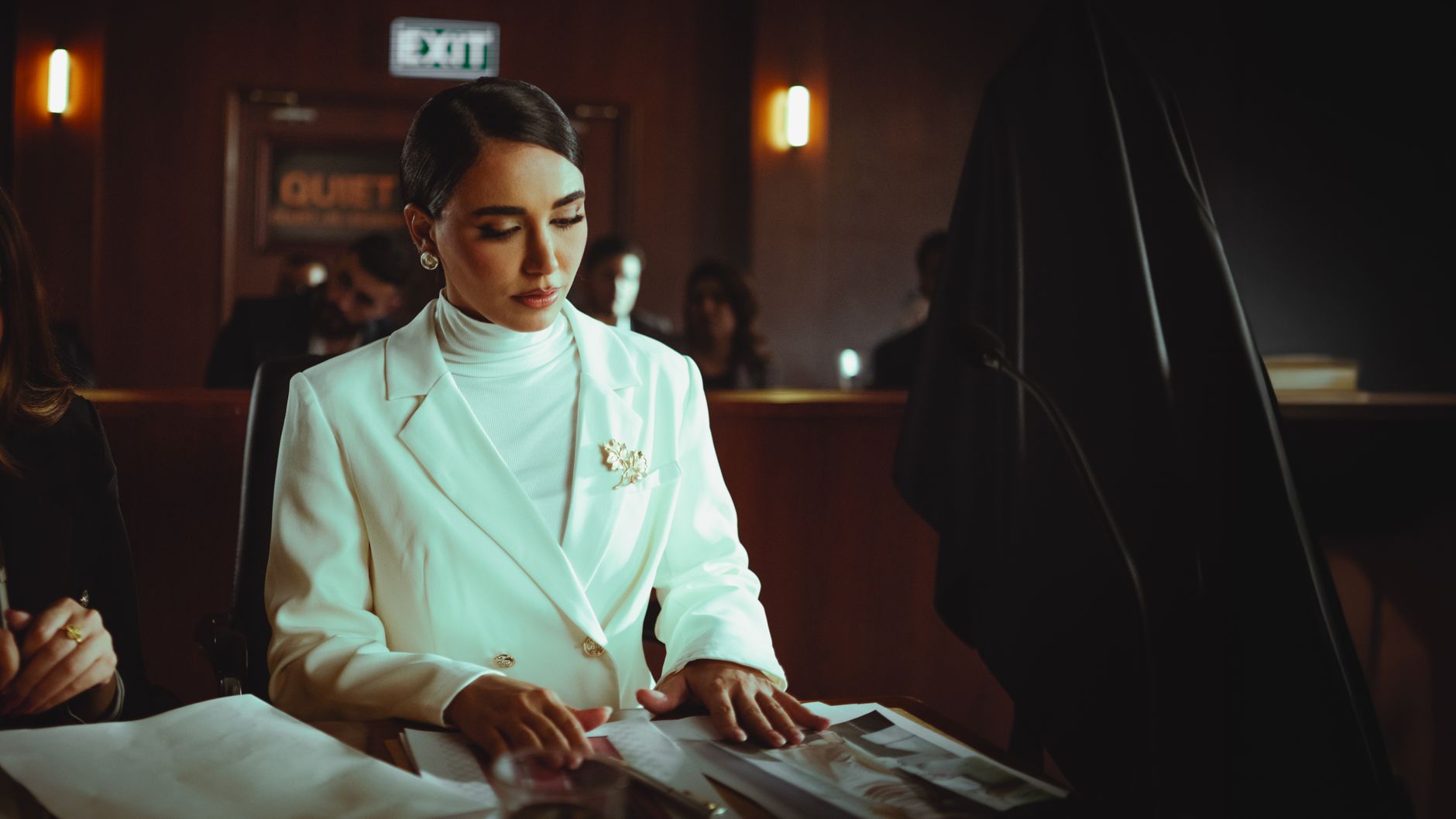
Saturday morning I put on the blue blouse. I want you to know that. I stood in front of the hotel mirror and I put on the blue blouse my grandmother always said made me look serious, and I said her name once, out loud, and then I drove into downtown Los Robles.
The attorney’s office was in an old two-story building on the square, red brick, with a barber shop on one side and a shuttered feed store on the other, the kind of downtown that was half hanging on and half fixing itself up. There was a coffee place now that had not been there when I was a girl. There was still the war memorial in the little grass plaza, the names of local boys from three wars, and the flag, and a bench where an old man sat feeding pigeons out of a bread bag. I fed the meter two quarters and went in.
The Envelope
The attorney was a heavyset man in his sixties with reading glasses pushed up on his forehead and a handshake like a warm brick. His name was Mr. Delgado, and his office smelled like old paper and burnt coffee, and there was a fan in the corner that ruffled the edges of the documents every time it swung our way.
He was kind. He called my grandmother “Miss Rosa” and meant it warmly, and he told me she used to bring the office ladies pan dulce every December, and I found my throat closing up in the first two minutes. He walked me through the estate slowly, the house, the accounts, the tax situation, the shelter donation, all of it exactly as the email had laid out. I signed where he pointed. My hand was steady. I remember being proud of that, how steady my hand was.
And then he stopped. He set down his pen and folded his hands on the desk and looked at me over the top of his glasses.
“There is one more thing, Ms. Herrera,” he said. “Your grandmother left it with me personally. She was very specific about the conditions.”
He explained that two years earlier, when she made the will, my grandmother had also left a sealed envelope in his safe. Her instruction, written and signed, was that it was to be opened only if any member of the family tried to pressure, guilt, threaten, or intimidate me into giving up what she had left me. If everyone simply accepted her wishes, the envelope was to be quietly destroyed after the estate closed, unopened, and no one would ever know it existed.
“Given the messages you forwarded to my office this week,” Mr. Delgado said, and his voice was very gentle, “I believe the conditions she described have been met. But I will not open it without your say-so. It is your call.”
I opened my mouth to answer, and that was when I heard the voices in the hallway.
I knew them before I could make out the words. My mother’s, pitched high and carrying. My sister’s, cracking. My father’s low rumble underneath. The receptionist saying, “Sir, ma’am, you cannot just,” and then the office door opened without a knock, and my family walked into the room.
Marisol came in first, already talking, already mid-sentence, something about doing the right thing for the children, her hand resting on the small curve of her belly like a piece of evidence. My father came behind her with his jaw set, saying that family money belonged to the family and no lawyer was going to tell him otherwise. And my mother came in last and sat down in the empty chair beside me like the meeting had been called for her, like she had chapters of it, and folded her purse into her lap, and looked at Mr. Delgado as if he worked for her.
Mr. Delgado did not react. He did not raise his voice or stand up or ask them to leave. He simply waited, hands folded, until the noise of them ran out of road, the way it does when nobody is fighting back. And then, in the quiet, he pulled open the bottom drawer of his desk, and he lifted out a cream-colored envelope, sealed, my grandmother’s name written across the flap in her own slanted careful hand, and he set it in the middle of the desk where everyone could see it.
“Miss Rosa left this with me,” he said. “In case something exactly like this happened.”
The room went silent. My mother’s eyes went to the envelope and stayed there. Marisol stopped talking mid-word. My father, who had not sat down, put one hand on the back of a chair.
Mr. Delgado looked at me. “Ms. Herrera?”
I said, “Open it.”
He broke the seal with a letter knife, and he unfolded the pages inside, and I watched my mother’s face as the first page came open, and I saw it change. I saw the color go out of it. I saw the exact moment the truth she had spent two years outrunning finally caught up and put its hand on her shoulder.
What My Grandmother Actually Wanted
There were four pages, and there was more than a letter.
The first page was in my grandmother’s own hand, and Mr. Delgado read it aloud, slowly, because she had asked that it be read aloud if it was ever opened. She wrote that she loved all of us. She wrote that she had not been confused and no one had gotten into her ear, and she named that fear directly, because she knew someone would say it. “If you are hearing this,” she wrote, “it is because I was right about what this family would do, and I am sorry to be right.”
Then she laid it out.
She had watched, for twenty years, how the family treated its two daughters. She had watched Marisol be given, and given, and given, and watched me be told I needed nothing. She said she had done it too, in the early years, and was ashamed of it, and this was her attempt to make it right before she died.
And then came the part that took the floor out from under the room. Behind her letter was a second document, typed, notarized, a plain ledger. For eleven years my grandmother had quietly kept a record of every dollar she had given my sister. The down payment on Marisol and Diego’s house. Eighteen thousand dollars. Most of the wedding. The medical bills when the twins came early. Diego’s first truck. The credit card she had “loaned” against three times and never been paid back for. The tuition, the Christmases, the emergencies that were always emergencies. Line after line, dated, in her own bookkeeping, the way she had kept the books at the heating and air company for forty years.
The total at the bottom was underlined twice. It was more than a hundred and forty thousand dollars.
“Marisol has already had her inheritance,” my grandmother had written under the total. “She had it in pieces, over many years, when she needed it, and I gave it gladly, and I would give it again. But I will not pretend it never happened so that she can be given a second share while my Sofia is given nothing and called selfish for keeping the first thing anyone in this family ever put in her name. That is not fairness. That is just the same old story with better manners.”
Nobody said anything. The fan swung our way and lifted the corner of the ledger and set it back down.
But she was not finished, and this is the part that broke my heart open, because it showed me exactly who my grandmother was. There was a fourth page, and it was about the children.
She had set up a separate education trust. Not for Marisol. For the kids. For Camila and the twins and the baby who was not born yet, an account each, funded out of a small policy she had carried for years and never mentioned, with Mr. Delgado as the trustee and the money locked to school, tuition, books, whatever they needed to learn, released directly for that purpose and nothing else, no adult hands in between. “My great-grandchildren will be taken care of,” she wrote. “They will go to school and they will not go without. That was always my worry, and I have handled it myself, the way I handle things. What I will not do is hand a lump of cash to grown adults in the children’s name and watch it disappear the way it always has. The children are provided for. Let no one use them as a reason to bleed my Sofia dry.”
She had even spelled bleed wrong. Bleed. She always did, in every note she ever wrote me, and I laughed, one broken sound in that silent room, because it was so completely her, correct about everything that mattered and never once able to spell that one word.
I looked at my mother.
She was not looking at me. She was looking at the ledger, at her own mother’s handwriting laying out eleven years of numbers she had spent the week pretending did not exist. Because she had known. That was the thing that landed on me sitting in that chair. My mother had known all along that Marisol had already been given more than the whole estate was worth. She had helped ask for half of it anyway, and then picked up the phone and told me I was the selfish one, the one who had manipulated a dying woman. She had done it because in her arithmetic Marisol’s wanting was always real and mine never was.
She had made me feel that way my whole life. And here, in her own mother’s careful hand, was the proof that it had never been true.
My father sat down. He sat down slowly in the chair he had been gripping, and he did not say anything about spreadsheets. He did not say anything at all. He is not a stupid man. He could read a total underlined twice as well as anyone.
Marisol started to cry, and this time it was not the strategic crying from the phone, it was the ugly, cornered kind, and she said, “That’s not fair, she can’t, that was help, that was different.” And Mr. Delgado, still gentle, said, “It’s all in the letter, ma’am. Miss Rosa knew someone would say it was different. She wrote that part too.”
He turned the page and read it. My grandmother had written: “If anyone says the money I gave over the years was help and not inheritance, ask them this. Add up what Marisol has had, let Sofia keep the same, and whatever is left over, split it. I have done that math. There is nothing left over. That is why no one wants to do the math. So we will not do it. Sofia keeps what I left her. It is already more than fair, and everyone in that room knows it, whether they will say so or not.”
Everyone in that room did know it. You could feel it settle over them. There was no version of “family” you could hold up against that ledger. My grandmother had thought of every move before any of them made it, from two years and a grave away, and she had checkmated them with nothing but her own handwriting and forty years of keeping honest books.
I did not gloat. I want to tell you I said something cutting, something that put a period on forty-two years, but I did not have it in me, and my grandmother had already said everything that needed saying, better than I ever could.
I stood up. I thanked Mr. Delgado, and asked him to send me copies of everything, including the trust papers, because I wanted the kids to know one day where the money for their school came from. He said he would. Then he said, quietly, so the others could not hear, “She was proud of you. She told me. I thought you should know that from somebody who was in the room.”
I walked out past my family. My mother said my name once, “Sofia,” not a threat this time, something closer to a plea. I stopped. I looked at her. I did not have anger left, which surprised me. I had something quieter and heavier than anger.
“You knew,” I said. “You knew the whole time, and you called me selfish anyway.”
She did not deny it. That was the closest thing to an apology I would get from my mother. She just looked down at her purse in her lap.
I went out into the heat. The old man was still on the bench feeding his pigeons. I sat down on the low brick wall in front of the coffee place and let myself shake for a minute, because I had been holding my body still for three days and it wanted to let go.
Then I got a coffee and I drove out to the little brick house on Camino Verde.
I let myself in with my own key. The house was quiet and warm and it smelled like her, that impossible mix of clean laundry and peppermint and something baking that was not baking anymore. The good dishes with the blue flowers were in the cabinet. The rosary was hanging on the corner of her bedroom mirror where she had left it the last morning she was well enough to pray with it.
I sat down at her kitchen table, the one where we spread the masa, and I cried, and this time it was not grief exactly, or not only grief. It was being seen. It was the strange, overdue feeling of a woman finally getting to keep something that was hers, out loud, with her name on it and nobody’s permission required.
What I Did With It
People always want to know what happened after, so I will tell you, because the ending matters and I am not going to leave it open the way the phone calls left everything open.
I kept the house. I did not sell it, though the market was hot and everyone assumed I would. I fly down four or five times a year, and I have slowly made it mine, new paint, the porch fan fixed, the same jars of tea sweating on the same porch table. I am thinking, in a few years, of moving back into it. Denver never made my independence feel like a flaw. But my grandmother’s kitchen never made me feel like too much, either, and at forty-two I have started to want a little of that.
I kept the accounts. I invested them the way she would have wanted, carefully, with patient hands. I gave the animal rescue on Old Blanco Road double what she left them, in her name, and they put a little brass plate on the barn cats’ shed that says Rosa’s House.
The children’s trusts are exactly as she set them. Camila is nine now and reads two grades ahead and does not know yet that her great-grandmother made sure college would never be a fight in her house. She will know. I will make sure she knows that a small woman in church shoes did the math nobody else would do and made it come out fair.
Marisol and I do not talk much anymore. That is the honest part, the part these stories usually smooth over. She sent me a long message a few months later, and it was not really an apology, it was a renegotiation, and I read it once, the way I listened to my father’s voicemail once, and I did not answer. I love my sister. I will probably always love my sister. But I have stopped mistaking being needed for being loved.
My mother and I talk, a little, carefully, on holidays. It is not warm. It may never be warm. But something changed in that office when she looked down at her own mother’s handwriting and could not lie her way past it. She has never once, since that Saturday, asked me what I need money for. Not once. I think she finally saw the total, underlined twice, of everything she had asked of one daughter and never of the other, and I think she cannot unsee it now, and I have decided that is enough. You do not get every ending you want. You get the one you can live with, standing up straight, with your paperwork in order.
My grandmother left me a house and two accounts and the good dishes and a sewing machine and a rosary. But the thing she really left me was in that cream-colored envelope, and it was not money at all. It was the truth, in her own hand, with her own spelling mistakes, waiting two years in a lawyer’s safe for the exact moment I would need it. She could not be there to defend me. So she wrote it down and she locked it up and she trusted that when the day came, her Sofia would have the spine to sit in that room and say, open it.
I did. And I would do it again, in the blue blouse, with steady hands, every single time.