The Seat My Grandson Saved
The usher could not have been more than nineteen. He wore a clip-on bow tie that sat a little crooked, and he held his clipboard against his chest the way a boy holds a schoolbook when he is about to be scolded.
“Ma’am, I’m so sorry,” he said. His voice was barely a whisper. “Those front rows are spoken for now. You’ll need to find a spot in the back.”
I looked past him, down the center aisle of the crowded gymnasium at Marion Township High, out here in the flat farm country of central Ohio where I have lived my whole life. The first rows were already full. Proud parents in their church clothes. Grandparents fanning themselves with programs. Teachers with cameras. Rows of nervous seniors in navy caps and gowns, whispering and shifting in their folding chairs.
Row B.
Seats four and five.
Those were mine.
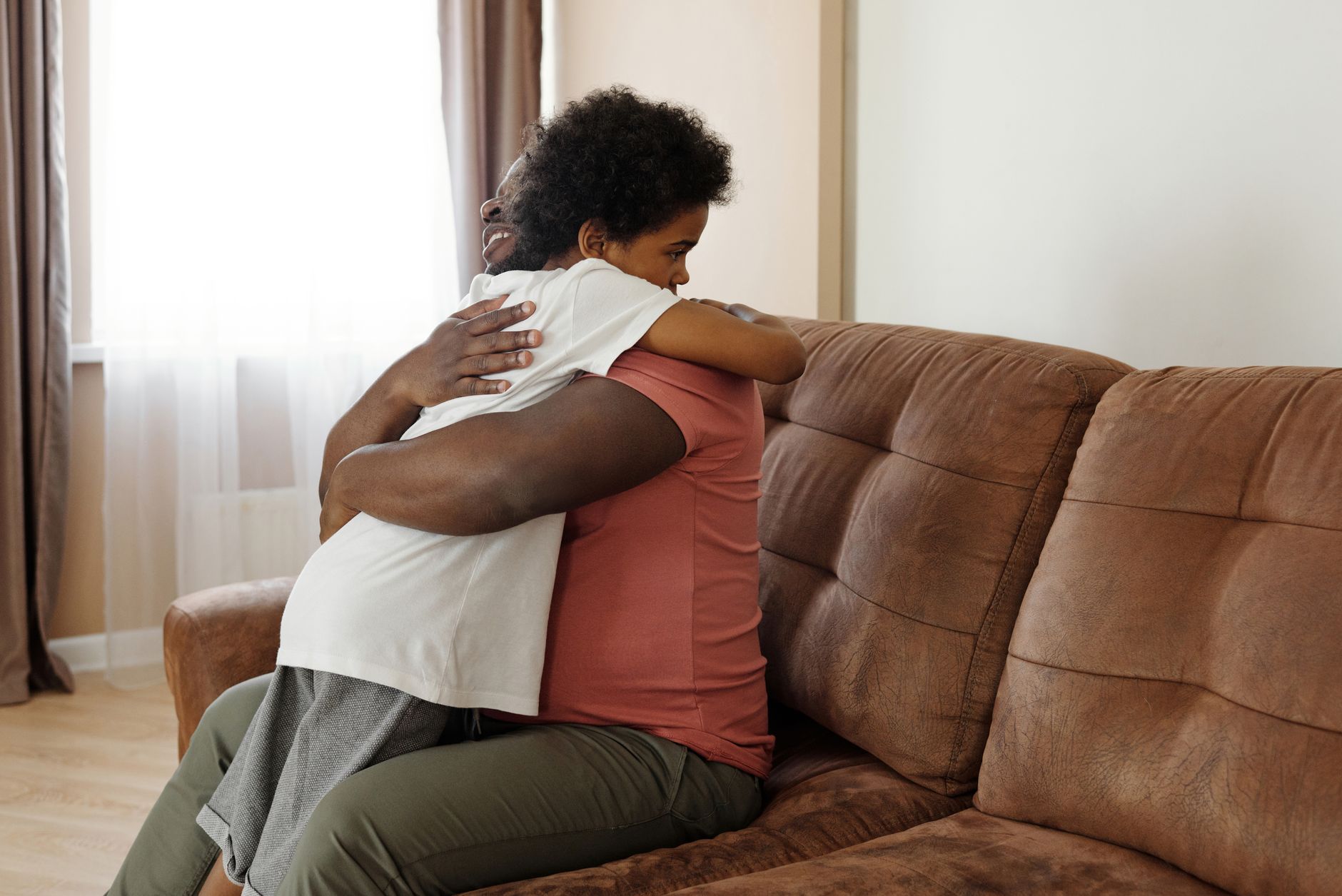
My grandson Michael had walked those cards down to the second row himself that morning. I watched him do it at a quarter to nine, in the gray light coming through the tall gym windows, right after he hugged me so hard my glasses went sideways and said, “Grandma, second row. I saved you the best seat in the house.”
Now the cards were gone.
No.
Not gone.
One of them lay on the floor beneath the row ahead of me, torn cleanly down the middle.
Ruth Calloway.
My name.
Ripped in two like a grocery receipt somebody had decided they did not need.
The Woman in My Seat
Sitting in my chair, with her legs crossed and her chin tipped up like she owned the whole building, was Vanessa. My son David’s new wife. Thirty-one years old. A silk dress the color of a robin’s egg. Hair that must have cost more than my monthly grocery bill. A phone held loose in one hand, the screen already lit.
A woman who had spent two years telling everyone in three counties that she was Michael’s “bonus mom,” even though the boy only ever spoke to her when she was between him and the salt shaker.
Beside her sat David. My own son. He stared down at his printed program like the words on it had suddenly turned into scripture, like reading them one more time might keep him from having to look at the woman who raised him standing at the back of the room.
I am not a person who makes scenes. I never have been. But I walked down that aisle anyway, one hand on the chairbacks to steady my knees, and I stopped at the second row.
“David,” I said. Quiet. Only for him. “Those are my seats. Michael put the cards there this morning.”
His jaw worked. That little flinch I have known since he was six years old and caught with his hand in the sugar tin. “Mom,” he said, too smooth, too rehearsed. “There was a mix-up with the seating. Vanessa talked to the office. It’s fine.”
Vanessa did not look up. Not at first. She kept scrolling, thumb moving lazy across the glass.
Then she smiled.
“Honey,” she said, loud enough for the row to hear, soft enough to sound sweet, “his grandmother can watch from the back. She’s used to it by now, aren’t you, Ruth.”
And then she laughed.
Not loud. That would have been easier to forgive. It was light. Musical. The kind of small pretty laugh that says, out of the side of its mouth, I did this on purpose and there is not one thing you can do about it.
My sister Claire, seventy-two and mad as a hornet, gripped my elbow so hard I felt her wedding ring through my sleeve. “Ruth,” she hissed. “You say the word and I will drag that girl out of your chair by her fancy hair. I mean it.”
I did not say the word.
Because after seventy-one years on this earth, and thirteen of them spent raising a boy who was not my responsibility on paper, I knew exactly what a woman like Vanessa wanted from me. She wanted a scene. A shaky video. A caption. She wanted a clip where the tired old grandmother in the outlet-store dress loses her temper in a high school gym while the beautiful young wife sits calm and blameless in the good seats.
I had not spent thirteen years packing lunches and driving to science fairs in a truck with a bad heater just to become somebody’s fifteen seconds of entertainment.
So I stepped back. I stood beneath the red glow of the EXIT sign near the double doors.
And I waited.
Who I Am
My name is Ruth Calloway. I am seventy-one years old, and for thirteen of those years I have been the one who showed up.
It started the winter Michael turned five. My daughter-in-law at the time, a sweet lost girl named Bethany, passed away far too young, and my son David fell apart in a way I have never fully understood and have long since stopped trying to. He did not fall apart quietly, at home, with his boy. He fell apart in bars two towns over. He fell apart on the highway to Columbus. Within a year he had signed the boy over to me “just for a while, Mom, just till I get on my feet,” and the while turned into a childhood.
So Michael came to live with me in the little white farmhouse on Route 9, the one my late husband Harold and I bought in 1978 with money we saved a dollar at a time. Harold had been gone four years by then. The house was too quiet. And then it was not quiet at all, because there was a five-year-old in it who wet the bed and cried for a mother he could barely remember and asked me every single night, “Is Daddy coming tomorrow?”
I always said, “We’ll see, sweetheart.” Because I would not lie to that child, and I would not break his heart with the truth all at once either.
I was fifty-eight. I had planned, in whatever quiet way a widow plans, to spend those years slowing down. Instead I sped up. I went back to part-time work at Dinsmore’s fabric and alterations shop off the square, hemming trousers and taking in wedding dresses, four dollars a hem, seven for a zipper, twenty for a full suit. I cleaned the offices at the grain co-op two evenings a week. And in the hours between, I raised a boy.
David sent money when he remembered to. It was always late, always short, always tangled up in some story about a job that fell through. But he never once missed a chance to show up for a photograph. A science fair ribbon. A perfect report card taped to my refrigerator. He would appear at the awards night at the school, arrive late in a nice shirt, put his arm around the boy for the picture, post it online with some caption about how proud he was, and be gone before they served the cake.
That was David. A father in photographs. A man who came for the applause and vanished before the dishes.
Michael saw all of it. Children always do. But he did not turn bitter. He turned quiet. Careful. He turned his hurt into homework.
By first grade he was reading the newspaper out loud to me at the breakfast table. By fourth grade he was working through a pre-algebra book he checked out of the county library while I hemmed bridesmaid dresses across the kitchen from him, the two of us under one lamp. By high school his teachers were stopping me in the grocery store to say words like “remarkable” and “once in a career” and “you keep him pointed at college, Mrs. Calloway, whatever it takes.”
I kept him pointed at college. Whatever it took.
There were seasons it took nearly everything. The winter the furnace died, we heated the whole house with the wood stove in the front room and slept in that one room with the door shut, Michael on the couch and me in Harold’s old recliner, and I told the boy it was camping so he would not know it was poverty. The spring the truck threw a rod, I walked him the two miles to the school bus stop on County Road 12 in the dark before my shift, both of us with flashlights, and he never once said he was cold. Church helped when I would let it. Pastor Gene at Marion Grace never made a thing of it, just left a ham on the porch every Christmas and a card that said “from a friend,” as if I did not know his handwriting from thirty years of bulletins. The women’s circle passed me hand-me-down winter coats for the boy and never once asked a question, and I sewed the buttons back on and told Michael they were new. In a small town, people know your business whether you want them to or not. What I learned is that the good ones know it and then quietly help, and never bring it up again. That is a kind of dignity you cannot buy in a silk dress.
I watched that boy grow up. Every single day of it.
I watched him build a robot out of a busted lawn mower motor and a coffee can. I watched him win the regional math meet in a pair of dress shoes a half size too small because I could not afford the next size up that month and he never once complained. I watched him fall asleep over scholarship applications at that same kitchen table with a pencil still in his hand and the lamp still burning, and I would slip the pencil out of his fingers and turn off the light and cover him with the quilt my mother made.
So when he hugged me that graduation morning and said, “Grandma, please don’t be late,” I thought it was only nerves.
It was not nerves.
He knew something I did not.
David remarried three years ago. Vanessa came into the picture like weather. She was young and glossy and full of opinions about a boy she had never once cooked a meal for. She started calling herself Michael’s stepmother, then his “bonus mom,” posting photos of the three of them at restaurants I later learned Michael had sat through in near silence, counting the minutes until David dropped him back at my door.
She did not like me. I understood why. I was the proof. As long as I existed, the real story existed with me: that this boy had been raised on hems and co-op paychecks and a grandmother’s stubbornness, in a farmhouse with a wood stove, while his father collected the credit at award ceremonies. Vanessa wanted a clean, pretty story with herself at the center of it. I was the smudge on the picture.
I did not know, until that morning, how far she would go to wipe the smudge away.
The Ceremony Begins
At a quarter to ten, Claire and I had come into the gym together. By ten minutes to, I was standing against the cinderblock wall in the back.
At five past ten, I watched Vanessa lift her phone, tilt it just so, and aim the camera not at the stage but at me. At the tired old woman under the EXIT sign. She wanted proof. Proof that she had put me exactly where she believed I belonged. In the back. Out of the frame. Away from my own boy’s morning.
The band played the processional, a little flat on the high notes the way high school bands always are, and it was still the most beautiful thing I had heard in years. The seniors filed in. I found Michael in the line by the set of his shoulders before I could even see his face. He walked like Harold used to. Straight-backed. Sure.
The principal, a kind man named Dr. Alan Foster, welcomed the class of 2026. Parents clapped. Somebody’s baby cried and got carried out. Claire kept her arm pressed against mine so hard I could feel her pulse through her sleeve, and every minute or so she would mutter under her breath something about that girl’s nerve.
I told myself none of it mattered. I told myself Michael knew I was there. I told myself one stolen chair could not erase thirteen years.
Then Dr. Foster leaned into the microphone again, and the gym went from a rustle to a hush.
“It is my great honor,” he said, “to introduce this year’s valedictorian. A young man his teachers describe as the finest student they have had the privilege to teach. Michael Calloway.”
For a moment I forgot how to breathe.
Calloway.
My name. Not David’s. The boy had graduated under my name, and had never once told me he was the top of his class.
The gym erupted. Six hundred people came to their feet. David stood up first, clapping with his hands over his head, his chest thrown out like the ribbon had been pinned on him. Vanessa rose beside him, phone already up, already recording the version of this morning she planned to show the world by lunchtime.
Our valedictorian. As if.
My heart climbed right up into my throat and stuck there.
Michael crossed the stage to the podium in his navy cap and gown. He looked, all at once, both smaller and taller than I had ever seen him, the way children do the exact instant you understand they turned into adults while you were busy just getting through the days.
He did not look at his father.
He did not look at Vanessa.
He looked straight to the back of the gym.
Straight at me.
Under that red EXIT sign.
And his face changed. Not sad. Not embarrassed. Something older than either. Something set.
He laid his printed speech on the podium. He looked down at it. Then he picked it back up, and he folded it in half. Once. Twice.
The gym, which had been settling, went dead still. Six hundred people felt the air change at the same moment, the way cattle do before a storm.
Dr. Foster took one small step forward behind him.
Michael slid the folded speech into the inside pocket of his gown, leaned in toward the microphone, and spoke.
“I wrote a speech,” he said. “It was about gratitude. About the future. About everything I’m supposed to say up here.”
He paused.
“I’m not going to give that speech.”
Vanessa slowly lowered her phone.
David’s shoulders went tight.
“I was going to thank the people who got me here,” Michael went on, and his voice was steady, clear, filling that big room without any strain at all. “My teachers. My coaches. Mr. Dinsmore, who let my grandmother bring me to work so she could keep an eye on me while she paid our bills.”
A soft ripple of laughter, warm and confused.
Then his voice dropped, and the laughter died.
“But this morning, someone in this gym did something to my family that I am not going to stand up here and pretend didn’t happen.”
You could feel the whole room lean.
Vanessa’s smile stayed put, but something under it cracked, like ice over a pond in March.
What He Held Up
Michael raised one hand and pointed. Directly at her. At my seat, the one with her sitting in it.
“You’re in that chair,” he said, calm as still water, “because you decided nobody saw you do it. You thought my dad’s money made you untouchable in this town.”
Heads turned. All through the gym, people twisted in their folding chairs to follow the line of his arm. Phones came up. Somewhere a woman gasped.
Vanessa grabbed David’s sleeve. “Do something,” she said, low and hard.
The microphone was close enough to catch it. Just barely. Enough.
David did nothing.
For once in his whole life, he had no camera to stand behind and no photograph to hide inside.
Michael reached into his gown.
My knees went soft under me. Claire caught my arm.
He drew out a torn piece of white card stock and held it up over his head, high, so the light hit it.
Even from the back of that room, from clear under the EXIT sign, I knew what it was.
Ruth Calloway.
My name. Torn in half.
Michael looked at Vanessa, then out at all six hundred of them.
“This morning I walked into this gym at eight o’clock and put two cards on two chairs in the second row,” he said. “One of them had my grandmother’s name on it. The woman who raised me. The woman who has come to every event I have ever had in my life, in the same navy dress, sitting wherever they’d let her sit, for thirteen years.”
He turned the torn card so they could see the writing.
“When I came back at nine forty-five to line up, both cards were gone, and this one was on the floor. In two pieces. And my grandmother was standing in the back of the room, where a person told her she belonged.”
The gym had stopped breathing.
Vanessa’s face had gone the color of paper.
David had gone gray.
Then my grandson leaned in close to that microphone, holding my torn name in front of six hundred witnesses, and he said the thing I will hear in my head for the rest of my life.
“Before I take this diploma, everybody in this room is going to know exactly who showed up for me. And exactly who showed up for a photograph.”
He reached back into his gown.
And this time he did not pull out the speech.
He pulled out a photograph. An old one, soft at the corners from being carried.
“This is my grandma teaching me to read at our kitchen table,” he said, holding it up beside the torn card. “I was five. She was fifty-eight. Her husband had been dead four years and her son had just handed her a kid to raise, and she said yes without one second of complaining, and she has never complained since.”
He set the photograph on the podium, gentle, like it might break.
“I don’t have a mom. She died when I was little. I don’t say that for sympathy. I say it so you understand what this woman is.” He nodded toward the back, toward me, and I felt six hundred people turn and find me there against the wall. “She is not my bonus anything. She is not the backup. She is the whole reason I am standing on this stage.”
I could not see him anymore. My eyes had filled and everything had gone to water and light.
Claire was crying too, and she is not a woman who cries. “Ruth,” she kept whispering. “Ruth, honey. Look at him. Look what you made.”
Michael’s voice did not break. That was the thing that undid me. He was steadier than any of us.
“So here’s what’s going to happen,” he said. “My grandmother, Ruth Calloway, is going to come sit in the second row, in the seat that has her name on it. And whoever is in it right now is going to stand up and let her.”
The Longest Walk
Nobody moved for a second. And then, from three rows back, an old farmer I recognized from the co-op stood up, took off his cap, and started to clap. Slow at first. Then the woman next to him. Then a whole cluster of them. Then the seniors, all of them, in their navy caps, on their feet.
Six hundred people, clapping, and turning, and looking at me.
Dr. Foster came down off the stage. He walked up the center aisle, and he stopped at the second row, and he looked at Vanessa, and he said something I could not hear over the noise. Whatever it was, she stood. Fast. Her face was a storm of things, none of them the calm she had walked in wearing. She stepped out into the aisle. She did not look at me.
David stood too, and reached for her, and she pulled her arm away from him right there in front of everyone.
And Dr. Foster held out his hand toward me. Across all that distance. An invitation.
I did not want to walk down that aisle. I want to be honest about that. I am a woman who has spent her life at the edges of rooms, and I was more comfortable under that EXIT sign than I have ever been in the middle of anything. My legs did not want to carry me. My old church shoes felt like they were nailed to the floor.
But my boy was standing up there on that stage, waiting. And he had not folded up his whole future and thrown it away just so I could keep hiding in the back.
So I went.
Claire walked beside me with her arm hooked through mine, and we came down that long center aisle together, two old women in outlet dresses, while six hundred people clapped and a high school band teacher wiped his eyes and my grandson watched me the whole way, the way he used to watch me from his bedroom door when he was small and could not sleep.
I sat down in the second row. Seat four. Where a torn card had had my name on it that morning.
Michael waited until I was settled. He waited until I looked up at him.
Then he said, into the microphone, in a voice that finally, just a little, cracked, “Okay. Now I can do this.”
The Speech He Actually Gave
He took the folded speech back out of his gown. He unfolded it. And he read it after all, the one about gratitude and the future, except he stopped every few lines to say something that was not on the page, something about a woman who hemmed strangers’ clothes at four dollars a hem so a boy who was not even hers on paper could have new pencils for the first day of school.
He talked about the wood stove and the bad truck heater and the library books. He talked about learning what love actually is, which he said is not the person who shows up when the cameras are out. It is the person who is there on the ordinary Tuesday when nothing is happening and there is nothing to post and the only witness is a tired old lamp over a kitchen table.
He named me four times. He never once said the word grandmother without the whole gym going quiet to listen.
And when he finished, when Dr. Foster handed him that diploma and shook his hand and the band struck up again, my grandson walked straight down off that stage, past the front row, past his father, past the empty chair where Vanessa had been, and he came to the second row and he put that diploma in my hands.
“That’s yours,” he said. “You earned it more than I did.”
I could not say a single word. I just held his face in my two old hands, the same way I did when he was five and crying for a mother he could not remember, and I let him see me cry for the first time in his life.
Afterward
There is not much drama left to tell, and I am glad of it, because I have had all the drama I can stand.
Vanessa did not come to the reception in the cafeteria. She left the building, I am told, and sat in David’s car in the parking lot with the door shut. Somebody’s video of the speech was online before we had finished the sheet cake, and it did not go the way she had planned her own little clip to go. The comments were not kind to her. I take no pleasure in that part. I truly don’t. I have prayed for that girl more than once since, because a person does not do a thing like she did unless something inside them is starving.
David and I had a long talk on my porch a week later. The first honest one in years. He cried. He asked if it was too late. I told him the truth, which is that it is never too late to start showing up, but that you cannot start at the finish line. You have to come back to the ordinary Tuesdays. You have to earn the photographs by first being there when there is no picture to take. He is trying. I will believe it when I have watched it for a while. I have gotten good at watching.
Vanessa and David are separated now. I did not cause that and I did not want it, whatever anyone thinks. That was a house built on the wrong ground, and the wrong ground gives way on its own.
The town did a thing I will never forget. The Tuesday after graduation, I walked into Dinsmore’s to open up, and there was a line at the counter that was not for alterations. Half the county had come in to bring me things. Not money. I would not have taken money. They brought me sewing. A whole month of it, all at once, on purpose, so my slow summer would not be so slow. Mrs. Hartley brought four pairs of her husband’s work trousers that did not even need hemming. The farmer who stood up first at the graduation, a man named Earl Suggins, brought in a barn coat with one busted zipper and paid me twenty dollars and would not take change. “Saw the video, Ruth,” was all he said, and put his cap back on and left. That is how a heartland town says I see you. It does not make a speech. It brings you work.
Michael left for college in August on a full scholarship, engineering, the first Calloway ever to go. I drove him myself, in a truck with a heater that finally worked, and I did not cry until I was back on the highway and safely alone. He calls me every Sunday night, the same as he promised, and every single time, before he hangs up, he says the same thing.
“Second row, Grandma.”
It is our joke now. It means I see you. It means you are not in the back. It means the best seat in the house is wherever you are.
I framed the torn card. Both halves, taped back together behind the glass, right next to the photograph of the two of us at that kitchen table. People who visit ask me why on earth I would keep a thing that somebody ripped up to hurt me.
I tell them the truth.
Because a boy I raised on hems and stubbornness picked it up off a gym floor, held it over his head in front of six hundred people, and turned the worst thing anybody ever did to me into the best morning of my life.
That is not a torn card anymore.
That is the day my grandson taught the whole county the difference between the people who take the good seats and the people who deserve them.
And I will keep it, taped and framed and shining, until the day they carry me out of that little white farmhouse on Route 9 for the last time.
Second row.
The best seat in the house.
Right where he saved it for me.