
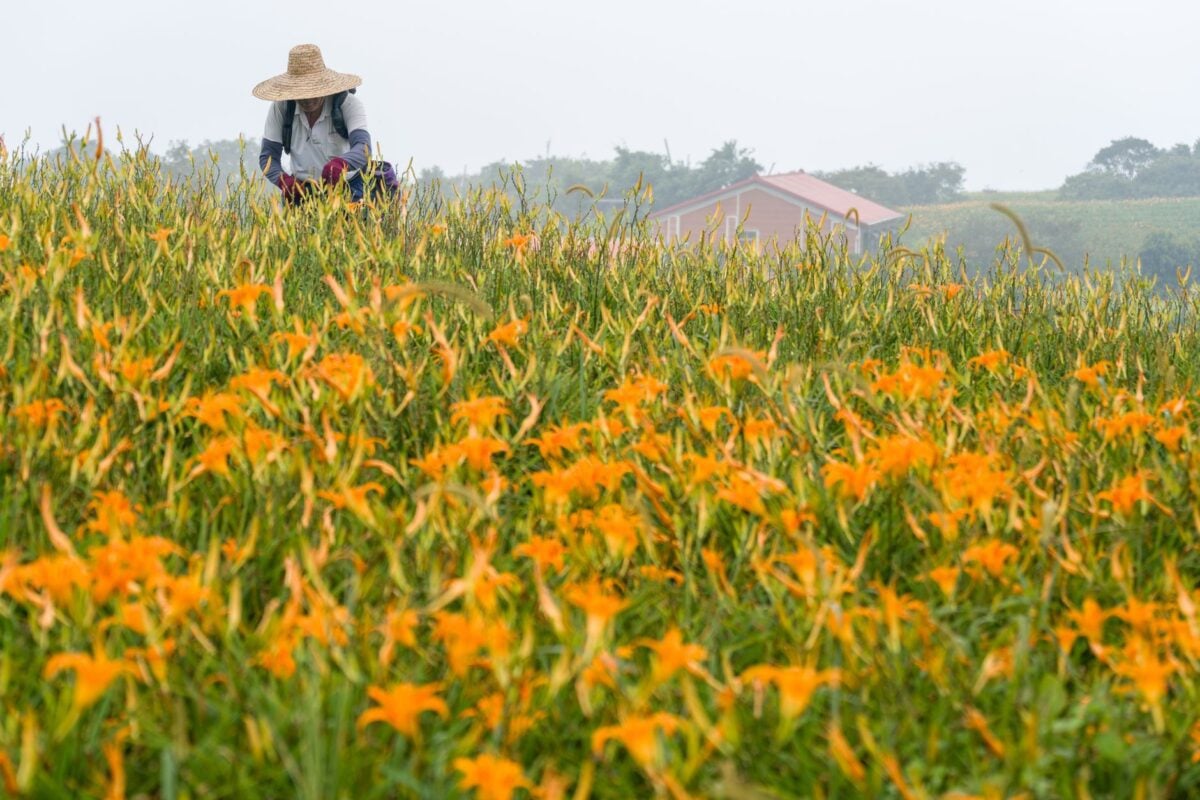
The first thing I noticed was the color. Half a mile of the ditch along County C had gone the brown of a paper grocery sack, flat and limp in the morning sun.
I was driving to the cheese plant for my six o’clock shift. I slowed the truck down to a crawl and rolled the window down to be sure I was seeing it right.
I was. From the culvert by the old school section all the way to the curve before my place, every clump of Frieda Ruegsegger’s daylilies lay folded over and rusty.
They had not been mowed. Mowing leaves green stubs and clippings. These had been burned down where they stood, the way a fence line looks after somebody hits it with weed killer.
I knew that look. Everybody who grew up on a farm in Green County knows that look. You see it along field edges every spring, and you never think much about it.
Get a new story in your inbox every morning.
Facebook doesn’t show you every story we post. Our free newsletter does. Join 2,500+ readers.
Except these were not weeds. These were Frieda’s lilies, and she had been putting them in that ditch since 1984.
I sat there with the engine running and my hands on the wheel. Then I looked across the road at the red barn and the long green fields of corn and beans, and I knew whose sprayer had done it.
I was late for work that morning. It was the first time in nine years.
The Lilies on County C
I should tell you who Frieda is, because if you are not from around here, you would not understand why half a mile of brown ditch would make a grown woman sit in her truck and shake.
Frieda Ruegsegger is 87 years old. She lives in the white farmhouse across the road from my place, the one with the green porch swing and the lilac bushes along the drive.
She and her husband farmed that ground for almost 50 years. They milked 60 cows in that red barn until his knees gave out, and then they sold the herd and rented the land.
Her husband passed in 2009. I never met him, but everyone says he was the kind of man who waved at every car on the road, even the ones he did not know.
In the spring of 1984, Frieda dug up a clump of orange daylilies from beside her mailbox. She split it with a spade into six pieces, and she planted them in the ditch along the road.
Her husband asked what on earth she was doing. She told him the ditch looked bare, and the Lord gave us flowers so we would have something to look at besides gravel.
Every fall after that, she dug and split a few more. Daylilies multiply if you let them. One clump turns into three, three turn into ten, and ten turn into a ditch full.
By the time I moved out here in 2015, those lilies ran three miles along County C. Three miles of orange, every July, from the township line clear down to the creek bridge.
People drove out from Monroe on Sunday afternoons just to see it. I have watched cars pull over on the shoulder so somebody’s grandmother could get out and take a picture.
Frieda never asked anybody for help, and she never asked the county for permission past the first year. The highway man back then told her as long as the ditch drained and the mower could get through, he did not care what grew in it.
She gave lilies away like other women give away zucchini. Anybody who stopped to admire them went home with a bucket of divisions in the back seat.
That was how I got mine. The first fall I lived here, she walked across the road with a five gallon pail and a spade and said, “Your yard needs some color, Heidi.”
I was 31 then and newly married. I did not know a daylily from a dandelion. She showed me how to set the crown an inch under the dirt and no deeper, and she stood there while I did it.
Those lilies are still beside my back step. There are about 40 clumps of them now, all from that one pail.