Grandmother Barred From Wedding Fights Back
The gravel crunched under Idella Marsh’s heels as she stepped out of the car, smoothing the pale pink dress she had bought for this one day and told herself she would not wear again for a very long time.
The Beaufort air was warm and thick with the smell of tea roses. Somewhere past the hedges, a string quartet tuned up in the courtyard of the Egret House Hotel, the same courtyard where Idella had walked the caterer through the seating chart three separate times, had argued the florist down on the price of white hydrangeas, and had signed the deposit check that saved the whole event when the original venue fell through in March.
She had spent six months on this wedding. Not the fun parts, mostly. The unglamorous parts. Deposits. Contracts. A tasting menu that had to be redone twice because the first caterer used walnuts and her granddaughter’s maid of honor had an allergy. A seating chart that went through four revisions because two of Desmond’s uncles hadn’t spoken since a hunting trip in 2019. She had done all of it quietly, the way she did most things, because it had never once occurred to her that quiet meant invisible.
So when she saw her son standing near the entrance to the courtyard, arms crossed, jaw tight, she assumed nerves. Corwin had always gotten strange before big events, ever since he was a boy giving book reports.
She smiled at him.
He did not smile back. He stepped directly into her path.
“Mom.” His voice was low, meant only for her, though the acoustics of the entryway carried it further than he intended. “Your name isn’t on the list.”
For a second she truly did not understand the sentence. It was like being handed a math problem in a language she used to speak fluently and had somehow forgotten overnight.
“What do you mean?”
Guests kept arriving behind her, small clusters of taffeta and cologne, and a few of them slowed as they passed, sensing the particular stillness of two people having a fight they were trying very hard not to have in public.
Corwin glanced toward the check-in table, where a young woman in a headset was frowning at a tablet. “It must’ve been some mistake.”
A mistake.
Not, Let me fix this. Not, Wait right here, Mom, I’ll go straighten it out. Just a mistake, delivered the way you’d explain a delayed flight to someone you’d never see again.
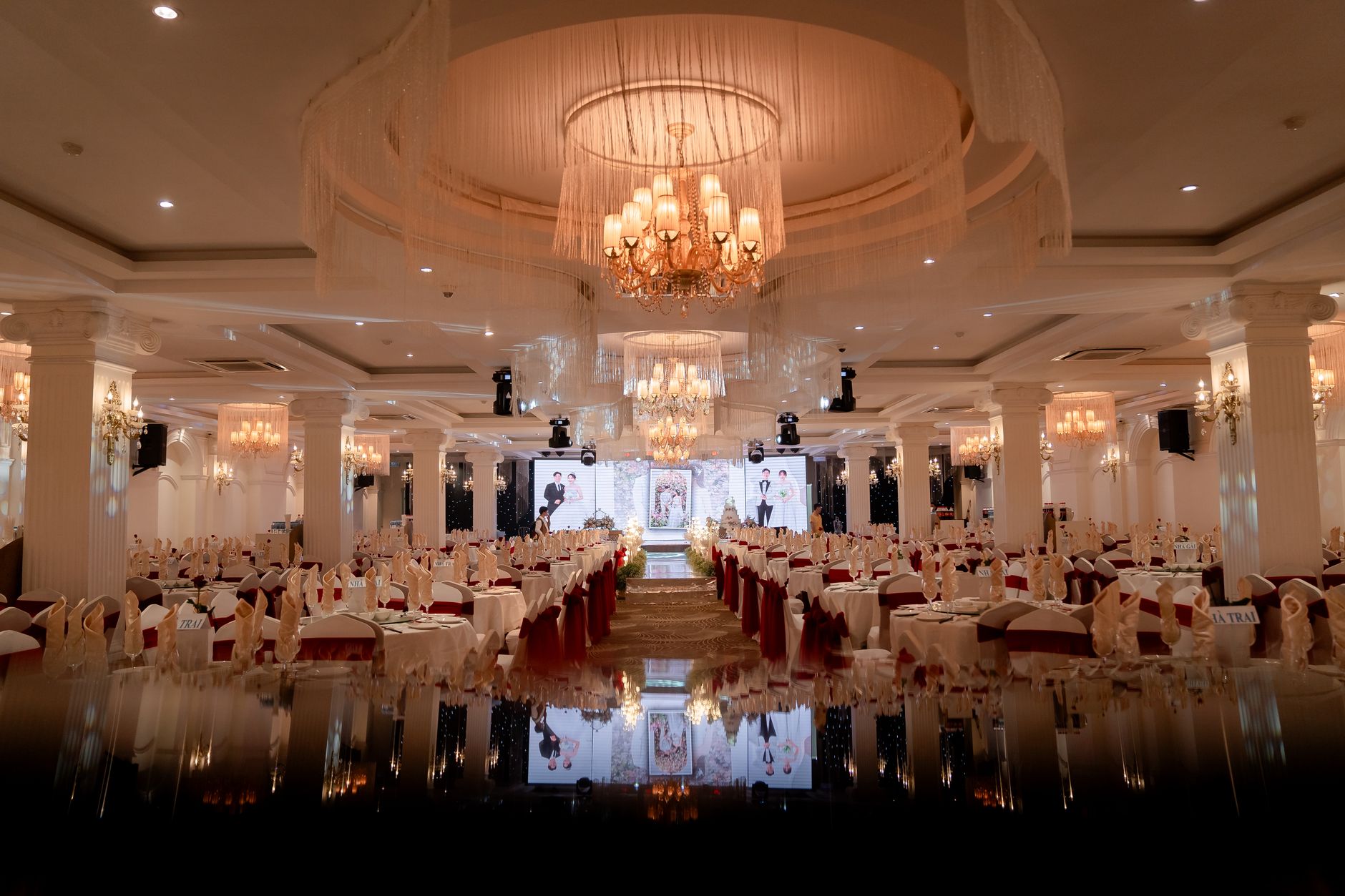
Idella looked past her son’s shoulder at the arch draped in white flowers, the candles already lit and trembling faintly in the evening air even though the sun hadn’t fully set. Everything was exactly as they had planned it together over a hundred phone calls. Exactly as she had helped pay for, down to the linens.
That was the part that actually hurt. Not that her son was blocking a door. That he was blocking her from something that existed, in real and specific ways, because of her.
Two hundred guests were arriving for a wedding that would not have looked like this, would not have happened on this timeline, in this venue, with this florist, without eleven checks from her personal account over the last six months. She could have said so. She could have said it loudly enough for the woman with the tablet to hear, loud enough for Corwin’s wife Odalys, hovering by the gift table in emerald silk, to hear it too.
She thought about it for exactly as long as it takes to blink.
Then she thought about her granddaughter, twenty minutes from walking down that aisle, and what it would do to the day if her grandmother made a scene at the gate.
Dignity gets very quiet after it has been pushed far enough. It doesn’t disappear. It just stops needing an audience.
“It’s okay, son,” Idella said.
She turned around. She did not look back to see his face, though she felt his eyes on her spine the entire walk to the car, and she thought, with a kind of distant clarity, that some part of him had wanted her to turn back around and make it easier for him by being angry. She didn’t give him that either.
The drive home took eighteen minutes. She did not cry, not because she wasn’t hurt but because the hurt had gone somewhere past the part of her that produced tears, into a colder, more organized room.
The house on Bellinger Street was silent when she let herself in. She set her purse on the hall table, stepped out of her heels, and stood for a moment in the front hallway of the house she and her late husband Wendell had bought in 1979, back when Bellinger Street still had a working feed store on the corner and half the neighbors kept chickens.
Wendell had died eleven years ago, quick and sudden, a heart that gave out on a Tuesday morning while he was fixing the porch rail. He had left her the house free and clear, a modest but well-managed nest egg, and one rule he’d drilled into both of them across thirty-six years of marriage: nothing involving money and family gets left as a handshake. Write it down. Sign it. Date it. Not because you don’t trust them. Because paper remembers what people conveniently forget.
Idella had kept that rule with everyone, including her own son.
She walked into the study, the small back room that still had Wendell’s rolltop desk in it, and unlocked the bottom drawer of the filing cabinet with the small brass key she kept on her own ring, not hidden, never hidden, because she had never once imagined she would need to defend having it.
Inside were folders for nearly everything that mattered. The house deed. Her will, updated four years ago. And a slim manila folder labeled, in Wendell’s old label-maker tape that she’d never had the heart to replace, MARSH OUTDOOR LIVING, CORWIN.
She pulled it out and set it on the desk.
Nine years ago, when Corwin wanted to leave his sales job and start a landscaping and patio design company, Idella had lent him forty thousand dollars. Not given. Lent, on a signed promissory note at two percent interest, payable on demand, because that was how her husband had taught her to do it and because some part of her had known even then that Corwin needed the discipline of an actual obligation more than he needed a gift. He had signed it at her kitchen table without complaint, even joked that his mother was tougher than any bank.
She had never called the note due. Not once in nine years, not through two lean winters when the business nearly folded, not when Corwin bought a boat two years ago that she privately thought was a poor use of cash flow. She had let it sit, a quiet, patient thread connecting her to her son’s life, because she loved him and because she had believed, without ever needing to test it, that the thread ran both ways.
She opened the folder, looked at Corwin’s signature, dated nine years and four months ago, and then she picked up the phone and called Foster Langley.
Foster had been Wendell’s attorney and, after Wendell died, hers. He was seventy-one now, still practicing three days a week out of a converted house on Craven Street, and he had known Corwin since Corwin was in Little League.
“Idella.” His voice was warm, then immediately careful, the way it got when he could tell from two syllables that something was wrong. “What’s happened?”
She told him. All of it. The gate. The list. The two hundred people watching her son explain her out of her own granddaughter’s wedding as though she were a caterer who’d shown up on the wrong day.
There was a long pause on the line.
“What do you want to do,” Foster asked, and it wasn’t really a question about revenge. Foster knew her well enough to know that.
“I want the note called,” Idella said. “In full. Thirty days, standard terms, nothing dramatic in the language. And I want my name removed as the emergency contact and secondary signer on the business line of credit at First Palmetto, the one I co-signed when he opened his second location. I’m not interested in a fight, Foster. I’m interested in no longer being the invisible foundation of a house that won’t put my name at the front door.”
“That’s your right,” Foster said quietly. “It always has been.”
“I know,” she said. “I just never needed to use it before.”
They spoke for twenty more minutes, working out the specific language, and when Idella hung up the phone the house did not feel empty anymore. It felt, for the first time since she’d stepped out of that car in her pink dress, settled.
She did not know, sitting there at Wendell’s old desk, that back at the Egret House her granddaughter was already asking where she was.
Junie noticed twenty minutes before the ceremony, scanning the courtyard from the bridal suite window for the one face she’d been looking forward to seeing all day, the woman who had sat with her at the kitchen table over spreadsheets and swatches for six straight months, who had cried happy tears over the dress fitting, who had told her, the week before, that walking her down half the aisle alongside her father would be one of the great honors of her life.
“Where’s Grandma Idella?” she asked her mother, Odalys, who was fussing with the veil pins and did not quite meet her eyes.
“She had to head out, sweetheart. Something came up.”
Junie knew her mother’s voice well enough to know when it was smoothing over something instead of answering it. She found her father in the hallway outside, straightening his cufflinks in a mirror, and asked him directly.
Corwin told her. Badly, haltingly, in the language of a man trying to make a cruelty sound like an administrative error. The list. The mix-up. He’d handle it after the ceremony, he said. It wasn’t a big deal.
Junie stood very still in her wedding dress, twenty minutes before she was supposed to walk down an aisle her grandmother had helped build, and felt something in her chest go cold and clear.
“You told her it was a mistake,” she said. “Was it a mistake?”
Her father didn’t answer, and that was its own answer.
Junie did not cause a scene at the ceremony. She had inherited enough of her grandmother’s instincts for that. She walked down the aisle on schedule, she said her vows to Desmond Calloway with a full and steady voice, because none of what her parents had done was Desmond’s fault and she loved him too much to make their wedding about anyone else’s smallness. But during the toasts, when it came her turn to speak, she set down her champagne glass and said, in front of two hundred guests including several members of the Calloway family who had known money and manners their whole lives and recognized real grace when they saw it:
“I want to thank my grandmother, Idella Marsh, who isn’t able to be here tonight. She spent six months of her life on this wedding, and honestly, most of what you’re all enjoying, this venue, these flowers, this evening, exists because of her generosity and her work. I love you, Grandma. I’m sorry tonight didn’t turn out the way it should have.”
The silence that followed was not the silence of embarrassment. It was the silence of two hundred people recalculating what they thought they knew about the Marsh family.
Corwin sat through the rest of the reception like a man underwater. Odalys kept glancing toward the Calloways, gauging damage. But Junie, once the cake had been cut and the first dance completed, took Desmond by the hand, still in her wedding dress, and drove the eleven minutes to Bellinger Street.
Idella opened the door to find her granddaughter standing on the porch in white satin, veil pushed back, mascara slightly smudged, with her brand-new husband a respectful step behind her holding both their shoes.
“You’re supposed to be at your own reception,” Idella said, though her voice cracked on it.
“I was,” Junie said. “Now I’m here.” She stepped forward and put both arms around her grandmother, careful of the dress, careless of it too. “I didn’t know, Grandma. I promise you I didn’t know until twenty minutes before I walked down that aisle.”
“I know you didn’t.”
“What Dad did was wrong. What Mom did, letting it happen, was wrong too. I told them so, in front of everyone.”
Idella pulled back and looked at her granddaughter’s face, so much like Wendell’s around the eyes, and felt the cold, organized room in her chest finally start to thaw. “You didn’t need to do that on my account. It was your wedding.”
“It was my wedding,” Junie agreed. “Which is exactly why I got to decide what mattered in it. And you mattered.”
They sat on the porch for an hour, the bride still in her dress, the groom fetching sweet tea from Idella’s own refrigerator like he’d lived there for years, and by the time Junie and Desmond finally drove off toward the hotel to catch the last of their own reception, something had been repaired that no lawyer’s letter could touch.
The letter itself arrived at Corwin and Odalys’s house the next morning, hand-delivered by a courier from Langley’s office, exactly as Foster had promised. Corwin read it standing in his kitchen still in yesterday’s dress shirt, and by the third paragraph his hands were not entirely steady.
Full repayment of the outstanding note, principal and accrued interest, due within thirty days. Formal withdrawal of Idella Marsh as co-signer and secondary contact on the Marsh Outdoor Living line of credit, effective immediately, which meant the bank would be reassessing the loan’s terms on its own schedule and likely calling for additional collateral. It was not vindictive language. Foster had written it the way he wrote everything, plainly, correctly, without a single word wasted on cruelty. It did not need cruelty. The facts did the work.
Corwin sat down at his own kitchen table, the same kind of table his mother had made him sign that note at nine years ago, and understood for the first time in his adult life exactly how much of his footing had always rested on a foundation he had never once thanked her for and had, at the first opportunity to protect his own comfort, tried to hide.
He did not call a lawyer of his own. He drove to Bellinger Street.
Idella was in the garden when he arrived, deadheading the roses that had bloomed early that year, still in yesterday’s exhaustion but standing straighter than he’d seen her stand in months. He stood at the edge of the yard for a long moment before she acknowledged him.
“I read the letter,” he said.
“I assumed you would.”
“Mom, I…” He stopped, started again. “I panicked. Odalys was worried about what the Calloways would think, about seating and optics and I don’t even know anymore, and I let that worry turn into the worst thing I’ve ever done. There’s no version of the last twenty-four hours where what I did makes sense to me now. It didn’t even make sense to me then. I just didn’t stop it.”
“No,” Idella agreed. “You didn’t.”
“I’ll pay the note back. All of it. I’m going to sell the boat, and if that’s not enough I’ll take a second position at the shop on weekends. I’m not asking you to undo the letter. I don’t think I’ve earned that.”
Idella set down her shears and studied her son for a long moment, the boy who used to fall asleep on her shoulder during Sunday drives, now a grown man standing in her garden trying to figure out how to become someone worth trusting again.
“I don’t want to punish you forever, Corwin,” she said finally. “I want you to understand that love isn’t a background service you can call on without ever showing up for it yourself. That’s all this ever was. Not the money. The showing up.”
“I know.”
“You’ll pay the note back because that’s what was signed and that’s what’s right. But I’d rather you spend the next year showing your daughter, and showing me, who you actually are when nobody’s watching the optics, than spend it just writing checks.”
It took Corwin four months to repay the loan in full, most of it from the sale of the boat and a hard, humbling stretch of extra hours. He did not miss a single Sunday dinner at Bellinger Street in that time, uninvited at first, then simply expected. Odalys came around slower, but she came, eventually arriving one Sunday with a peace offering of a rose bush for Idella’s garden and an apology that, while late, was not insincere.
When the final payment cleared, Idella did not spend it. She put the entire sum, plus a little more of her own, into an account for Junie and Desmond’s first house, a wedding gift she gave not because she had to, and not to prove a point, but because by then the debt that had actually mattered to her, the one written nowhere on any paper Foster Langley had ever drafted, had finally been paid in full.
The following spring, on a warm Beaufort evening thick with the smell of roses from her own garden, Idella Marsh sat on her porch with her granddaughter and new grandson-in-law, her son refilling glasses of sweet tea without being asked, and thought that dignity, it turned out, had never needed to be loud to win. It had only needed to wait for the people who loved her to remember what she was worth.