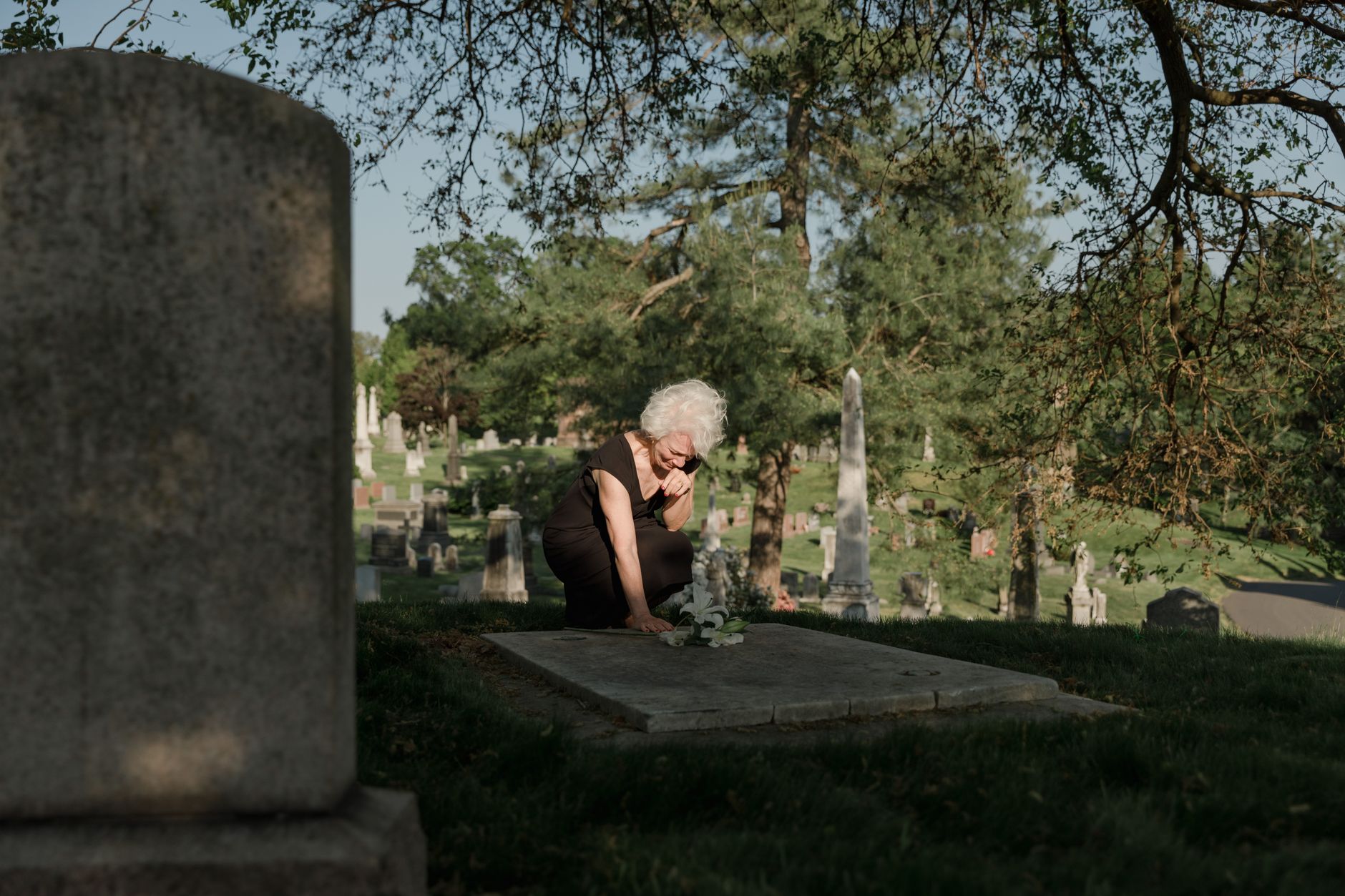
The Ashes My Brother Would Not Share
I was standing in the fluorescent hush of the Begley & Sons Funeral Home lobby with a photocopied receipt trembling in my hand when I finally let myself believe that my brother Lyle had been lying to me and to our sister for thirteen months. Not exaggerating. Not misremembering. Lying, plain and flat, the way you’d lie about a dented fender or a missed payment, except this lie was about our mother’s body, what was left of it, and the promise the three of us made to each other over her hospital bed six weeks before she died.
My name is Sudie Combs. I am sixty-seven years old, and until last spring I would have told you that my brother Lyle, sixty-three, was a hard man in some ways but not a cruel one. Cheap, maybe. Slow to call. The kind of brother who showed up to help move a couch but never once showed up to sit with you after a hard diagnosis. I would not have told you he was cruel. I know better now.
This is the story of what he did with our mother’s ashes, and what it cost me to find out the truth, and what happened the day I stood in my brother’s living room and made him say it out loud in front of our sister and my daughter and the whole rest of the family, the sentence he had been avoiding for over a year.
The last six weeks
Our mother was named Ruby Combs, and she was born in 1937 in a two-room house up a hollow outside Hazard, Kentucky, the kind of place where the road still turns to gravel a half mile before you get there. She married our father, Ford Combs, in 1957, and the two of them raised tobacco and three children on forty acres that had been in his family since before the first war. Daddy died in 2004, heart trouble, out in the barn on a Tuesday morning with his boots still laced. Mama outlived him by twenty-two years.
I was the one who took care of her at the end. I want to say that plainly, not to build myself up, but because it matters to everything that came after. I am not proud of needing you to know it. I am only telling you because Lyle, when the time came, tried to rewrite it, and rewriting it is one of the cruelest things a person can do to a woman who spent three years of her life doing something hard and doing it out of love.
Mama’s heart started failing in the winter of 2023. By that spring she could not climb her own porch steps without stopping twice to catch her breath. I was already retired from thirty-one years teaching third grade at the elementary school in town, and my husband Harlan had passed four years before that, so there was nobody at my house who needed me the way Mama did. I moved into the back bedroom of the home place in April of that year. I did not ask Lyle. I did not ask Elna, our younger sister, either. I just went, because somebody had to, and it was clear early on that it was not going to be him.
For three years I slept in that back bedroom, close enough to hear her if she called out in the night. I learned to give her insulin shots without waking her all the way up. I learned which of her nine pills went with food and which ones on an empty stomach, and I kept a chart on the refrigerator with a red pen because the county nurse said a chart might catch a mistake before it became an emergency. I drove her forty minutes each way to the cardiologist in Hazard twice a month, and when her hearing went, I learned to say things twice, slow, facing her, because she read lips better than she let on and hated being asked to admit it.
Lyle lived an hour and a half away in London, Kentucky, doing electrical work on commercial builds, and Elna lived four hours off in Ohio with her husband’s job. I am not going to pretend distance is nothing. It is something. But Lyle came to see Mama four times in three years. I counted, because at some point, God forgive me, counting became a kind of comfort, proof that I was not imagining the shape of things. Four times in three years, and two of those were Christmas.
In the last six weeks, when the doctors in Lexington finally said the word hospice, all three of us gathered. Lyle took a week off work. Elna flew down from Columbus. We sat in Mama’s hospital room at the regional medical center, the three of us in folding chairs around her bed, and we did what families do when the end is close enough to touch: we talked about what she wanted.
Mama had always been specific about her wishes, the way farm women of her generation tend to be, having buried parents and neighbors and a husband and having strong opinions about how it ought to be done. She did not want a big service. She wanted to be cremated, which surprised the preacher when we told him, because it was not common in our church, but Mama said plain out, “I have spent my whole life taking up room. I do not aim to keep taking it up after I am gone.”
And then she said the thing that has been the compass point of this whole story ever since. She was propped up on two pillows, her oxygen line hissing soft under her voice, and she looked at the three of us in turn, slow, the way she used to look at us across the supper table when she was about to assign chores.
“I want to go three ways,” she said. “Some of me in my rose garden, because I put forty years into those roses and I am not leaving them behind. Some of me in the creek down past the barn, where I baptized every one of you children myself before the preacher ever got the chance, because that water is where this family started. And some of me buried next to your daddy, because I promised him in 1957 I would not leave him alone too long, and I have already left him alone twenty-two years, which is longer than I intended.”
She made each of us say it back to her. I still remember the sound of Lyle’s voice saying it, flat and dutiful, the way he used to recite times tables. “Rose garden, creek, and next to Daddy.” Elna cried when she said it. I did not cry, because somebody in that room had to be steady, and it had been my job to be steady for three years by then.
Mama died on a Thursday morning in September, eleven days after that conversation, with my hand on her arm and the television playing a rerun of a game show she liked, low volume, because she said the silence in a hospital room was worse than any noise.
The urn
The funeral was small, the way she wanted. Begley & Sons handled the arrangements, the same funeral home that had buried our father, run now by Donnie Begley, whose father had done Daddy’s service back in 2004. The church potluck afterward filled the fellowship hall with the smell of fried chicken and three kinds of banana pudding, and half the county came through the line to tell me what a good daughter I had been, which I appreciated and also could not quite hear over the sound of my own exhaustion.
It was Donnie Begley who first raised the question of dividing the ashes. He is a careful man, gentle in the way you want a funeral director to be, and he told us at the arrangement conference, three days before the service, that Begley & Sons offered what he called a tri-division service: the cremated remains split into three separate keepsake urns, each one sealed and labeled, so that a family could carry out exactly the kind of wishes our mother had described. There was a small fee, forty-five dollars per additional urn, ninety dollars total for the two extra containers beyond the primary one.
I said yes before he finished the sentence. Elna said yes too, and wrote a check on the spot for her half of the ninety dollars, because that is the kind of woman Elna is, always squaring accounts before she leaves a room. Lyle was there. Lyle heard all of this. Lyle nodded along and said, “Sounds right,” and did not offer to pay a dime of it, which nobody remarked on at the time because funerals are not where you keep score, or at least I did not think they were.
The plan, as Donnie explained it and as all three of us agreed to it in writing, on a form I signed myself, was that the funeral home would process the cremation and divide the remains into three sealed containers. Because Lyle lived closest to the crematory in London and had offered, unprompted, to be the one to pick everything up once it was ready, Donnie would release all three urns to him, and Lyle would bring two of them to the house the following weekend, when Elna was flying back down before returning to Ohio, so we could each take our portion home at the same time, together, the way Mama had asked.
That weekend came. Lyle did not come. He called Saturday morning and said the crematory had run behind and the ashes were not ready yet, that he would bring them next time Elna was in town. Elna had to fly back to Ohio without her portion. I remember standing in the driveway watching her rental car pull out, feeling a small, cold seed of something I did not yet have a name for.
The waiting
Weeks became months. I called Lyle in October. He said the funeral home still had not released everything, some paperwork issue, he would handle it. I called Donnie Begley myself in November, out of nothing but a teacher’s instinct for checking a fact before you accept it, and Donnie told me, kindly but plainly, that the cremated remains had in fact been released, complete, to Lyle Combs on September the nineteenth, eleven days after Mama’s death. Donnie did not know why Lyle had told me otherwise. Neither, at that point, did I.
I did not call Lyle back and accuse him. I want to be honest about that, because I have turned this decision over in my mind many times since. I did not want to believe my own brother was lying to me about our mother’s remains, so instead of confronting him with what Donnie had told me, I gave him room. I told myself there was some misunderstanding, some detail I did not have. I am a person who has spent a career giving children the benefit of the doubt, and old habits do not know how to stop just because the person in front of you is sixty-three years old and grown.
December came. Christmas came. Lyle drove down for two days, brought his wife Sherry and their two grown boys, and not once mentioned the ashes, and I did not raise it either, because it was Christmas and Mama’s first Christmas gone and I did not have it in me to make it about a fight. I regret that silence more than almost anything else in this whole account. Silence, I have learned, is not neutral. It is a kind of permission.
By February, I had stopped waiting quietly. I called Lyle on a Tuesday evening and I asked him straight: where is Mama. Where is her portion of the ashes that belongs to me, and where is Elna’s.
He told me he had “most of it handled” and would “get it sorted soon.” I asked him what that meant. He would not say more.
March, I drove the hour and a half to London myself, unannounced, on a Saturday, because I decided I was done accepting phone answers. Sherry answered the door and looked, for just a half second before she caught herself, like a woman who has been told not to let something be seen. Lyle came out onto the porch instead of inviting me in, which was new, because I had never in my life stood on that porch instead of sitting in that living room.
I asked him again, plain, standing there in the cold. And that is when he said it. I have turned this sentence over so many times since March that I could recite it to you in my sleep, and I intend to write it here exactly as he said it, because it deserves to be recorded exactly, not softened.
“There was not enough to divide,” Lyle told me. “Mama would have wanted her kept together, with me.”
I remember the particular cold of that porch, colder than the March air accounted for. I remember thinking, even in the moment, that it was a strange thing for a man to say who had never once, in three years of his mother’s decline, offered to keep anything of hers close. He had not wanted her medications organized. He had not wanted her chart on his refrigerator. He had not wanted the two a.m. calls when her breathing changed. But now, apparently, he wanted her kept together, with him, and he had decided this on our behalf, for Elna and me both, without asking either of us, and had then spent six months telling us paperwork was the holdup instead of telling us the truth, which was that he had already decided, alone, that our mother’s wishes did not apply to him.
I did not have the funeral home’s receipt in my hand yet on that porch. I only had a bad feeling and a brother who would not meet my eyes. I drove the hour and a half home in silence, and I did not tell Elna what he had said, not yet, because I did not trust myself to say it without setting a fire I could not control.
What the paperwork said
It took me another two months to go back to Donnie Begley and ask for it in writing. I want to explain why it took me that long, because I am not a woman who is naturally slow to act, and I do not want anyone reading this to think I let this sit out of weakness. I let it sit because some part of me was still hoping I was wrong, still hoping there was an explanation that did not require me to accept that my brother had looked me in the eye, twice, and lied about our mother’s body.
But hope is not the same as evidence, and by May I had run out of the first and decided I needed the second.
I called Begley & Sons and asked Donnie whether a family member was entitled to see the intake and release records for a loved one’s cremated remains, given that I was one of three next of kin and had signed the original tri-division authorization myself. Donnie said yes, that as a signatory on the original service agreement I had every right to a copy, and he apologized that he had not thought to send me one sooner, since most families never ask.
I drove to Begley & Sons on a Wednesday morning in May and sat across the desk from Donnie in the same small office where we had planned Mama’s funeral eight months before. He pulled the file. He was quiet for a moment reading it himself before he turned it around and slid it across the desk to me, and I could see in his face that he already understood what it was going to mean for my family before I had read a single word.
The record was simple, and it was devastating in its simplicity. Ruby Combs, cremated September 15, 2026, total cremated remains recorded at five pounds, six ounces, well above what most funeral homes consider necessary to divide into multiple keepsake portions. The intake form, the one all three of us had signed together at the arrangement conference, clearly requested tri-division into three sealed containers. But there was a second form in the file, a modification request, dated September 18, the day before release, signed by Lyle Combs alone, canceling the tri-division service and requesting the full five pounds six ounces be returned in a single primary urn. The ninety dollars Elna had already paid for the two additional containers had never been charged against a completed service. It sat in the file as a refund owed, one that had apparently never been claimed or mentioned to either of us in thirteen months.
There was, in other words, more than enough to divide. There had always been more than enough to divide. Five pounds six ounces of cremated remains is, by any funeral home’s ordinary standard, a generous amount, easily and routinely split into three, four, even five smaller portions for families who want to spread a loved one across the places that mattered to her. My brother had not run into some unfortunate technical limit. He had, the day before he took our mother home, personally and privately canceled the plan the three of us had agreed to at her bedside, and had never told either of his sisters he had done it. Every phone call after that, every “paperwork issue,” every “I’ll get it sorted,” had been a lie laid on top of a decision he had already made alone.
I sat in Donnie Begley’s office and cried in a way I had not let myself cry since the day of the funeral itself, because it is one thing to grieve a mother, and it is another thing entirely to grieve the discovery that your own brother used her death as an occasion to take something from you and then spent over a year lying to your face about it.
Donnie made me two copies of everything. He did not have to. He told me, quietly, that in thirty years in this business he had seen families split over money plenty of times, but this was the first time he had seen a man lie to his sisters about the weight of their own mother’s ashes, and he was sorry for it, sorrier than his job required him to be.
The gathering
Mama’s first birthday after her death fell on the fourth Saturday in June, and Elna had already planned, weeks earlier, to fly down and gather the family at the home place to mark it, unaware yet of what I had found in Donnie’s office. I decided that day would be the day. Not out of spite. Out of the plain conviction that our mother’s memory deserved better than another year of my brother’s careful evasions, and that Elna deserved to hear the truth in a room where Lyle could not simply hang up a phone.
Sixteen of us gathered on the home place that Saturday: me, Elna and her husband, my daughter Wilda who had driven up from Somerset with her two boys, a handful of cousins, and Lyle, Sherry, and their sons. We ate on the same picnic tables Mama used to set for every Fourth of July, and for the first hour I let it be what it was supposed to be, a remembrance, people telling stories about Ruby Combs and her roses and her sharp tongue and her softer heart.
Then, when the plates were mostly cleared, I asked Lyle to step over to the porch with me and Elna. I did not raise my voice. I did not need to. I had the two copies of Donnie’s file folded in my sweater pocket, and I had thirteen months of practice keeping myself steady in front of this exact man.
I told Elna first, in front of Lyle, everything Donnie had shown me: the five pounds six ounces, the original tri-division form all three of us had signed, the modification request Lyle alone had filed the day before he took Mama home, the ninety dollars sitting unclaimed in the file. I watched Elna’s face change from confusion to disbelief to something harder, something I had not seen on my little sister’s face since we were girls and she caught a cousin stealing from our grandmother’s purse.
Lyle tried, at first, to do what he had done on the porch in March. He said it again, nearly word for word. “There wasn’t enough to divide the way you’re saying. Mama would have wanted her kept together.”
I took the papers out of my sweater pocket and set them on the porch rail between us. I did not say anything else. I let the numbers do what numbers do, which is refuse to be argued with.
Lyle picked up the modification form. I watched him read his own signature. I watched something go out of him, some last piece of the story he had been telling himself for thirteen months, the way air goes out of a tire you did not know was already flat until you leaned your weight on it.
And then, with Elna and me both watching him, with Wilda standing in the yard just close enough to hear, my brother finally said the true thing, the thing he had been avoiding since the day before he brought our mother home.
“I couldn’t do it,” he said, and his voice cracked in a way I had not heard from him since our father’s funeral, twenty-two years before. “I never told her I loved her. Not once, not even at the end, when you two were saying it every visit and I just sat there. And I thought if I gave her up, split her up into three pieces and scattered her out across this farm, it would be like losing her twice, and the second time I’d have nothing left of her at all, not even something I could hold. So I kept her. I kept all of her. And I knew if I told you that, you’d both look at me the way you’re looking at me right now, so I told myself the lie first, and then I just kept telling it.”
Nobody spoke for a long moment. I will tell you honestly that hearing it did not erase thirteen months of being lied to. It did not make Elna’s flight home without her portion of our mother, back in September, hurt any less in the remembering. But it changed something in me anyway, hearing him say the true reason out loud instead of the false one. My brother had not stolen from us out of greed. He had stolen from us out of a grief he did not know how to carry any other way, and instead of asking for what he needed, he had taken it, and then guarded the taking with a lie because he could not bear either the giving or the confession.
Elna was the one who finally spoke. “You should have just told us that,” she said. “We would have understood grief. We can’t understand being lied to.”
Lyle nodded. He did not defend himself further. He asked us, right there on the porch, what we wanted to do next, and for the first time in thirteen months, I believed he meant to actually do it.
What we did
The following Wednesday, all three of us drove together to Begley & Sons, the first time the three of us had been in one car since we were children. Donnie met us with the same careful gentleness he had shown me in May. Lyle brought the primary urn himself, wrapped in a dish towel the way you would carry something you were finally ready to stop hoarding.
Donnie processed the tri-division that afternoon, the service we had originally agreed to and paid for eight months late. He refunded Elna her ninety dollars without being asked, and split what remained into three sealed keepsake urns, each one smaller than I expected, each one enough.
Two weeks after that, on a bright Saturday morning in July, the three of us walked down the hill behind the home place to Mama’s rose garden. Elna and I each carried our small urns. Lyle, at his own request, carried nothing that day. He asked instead if he could dig, the way he used to dig fence post holes for Daddy, and Elna said that seemed right, and so it was Lyle who turned the soil at the base of the biggest rose bush, the old climbing one Mama started from a cutting her own mother gave her in 1958, and it was my hands and Elna’s hands that laid her there.
That afternoon we drove down to the creek below the barn, the water low and clear the way it runs in July, and I waded in past my knees in my church clothes, not caring, and let a portion of my mother go into the same water she had once carried each of us into, newborn, to be baptized by her own hands before any preacher ever laid a claim to us. Lyle stood on the bank and watched, and for once he did not look away.
The last portion, the smallest, we carried to the church cemetery the following Sunday after service, and buried it beside our father, twenty-two years and ten months after she had promised him she would not leave him waiting too long. The preacher said a short prayer over the fresh dirt. Lyle stood between Elna and me, and when the prayer ended, I heard him say, quiet, almost too quiet to catch, “I love you too, Mama. I should have said it while you could hear it.”
I will not tell you that everything between my brother and me healed clean and whole in the space of one summer. I still think, some nights, about the thirteen months I spent believing there was some innocent explanation, and about the particular loneliness of grieving a mother while also being lied to by the one person who should have been grieving her the same way I was. Trust, once you learn it can be spent that carelessly, does not come back to full value. I know that better at sixty-seven than I did at sixty-six.
But I will tell you this. Our mother asked three things of us at her bedside, six weeks before she died, and it took thirteen months, a funeral home’s honest paperwork, and a hard conversation on a porch to make sure all three finally happened. Ruby Combs is in her rose garden. She is in the creek where she baptized her children with her own two hands. And she rests, finally, next to the man she promised in 1957 not to leave alone for long.
I think, in the end, that is the part of this story I want to be remembered, more than the lie, more than the thirteen months, more even than the words my brother finally said out loud on that porch. My mother is where she asked to be. All three parts of her. It took longer than it should have, and it cost more than it should have, but it is done now, the way she wanted it, the way she made each of us promise, and I do not intend to let anyone, not even my own brother, take that promise from her again.
This story is a dramatization. Names, characters, and details are invented, and any resemblance to real people or events is coincidental.