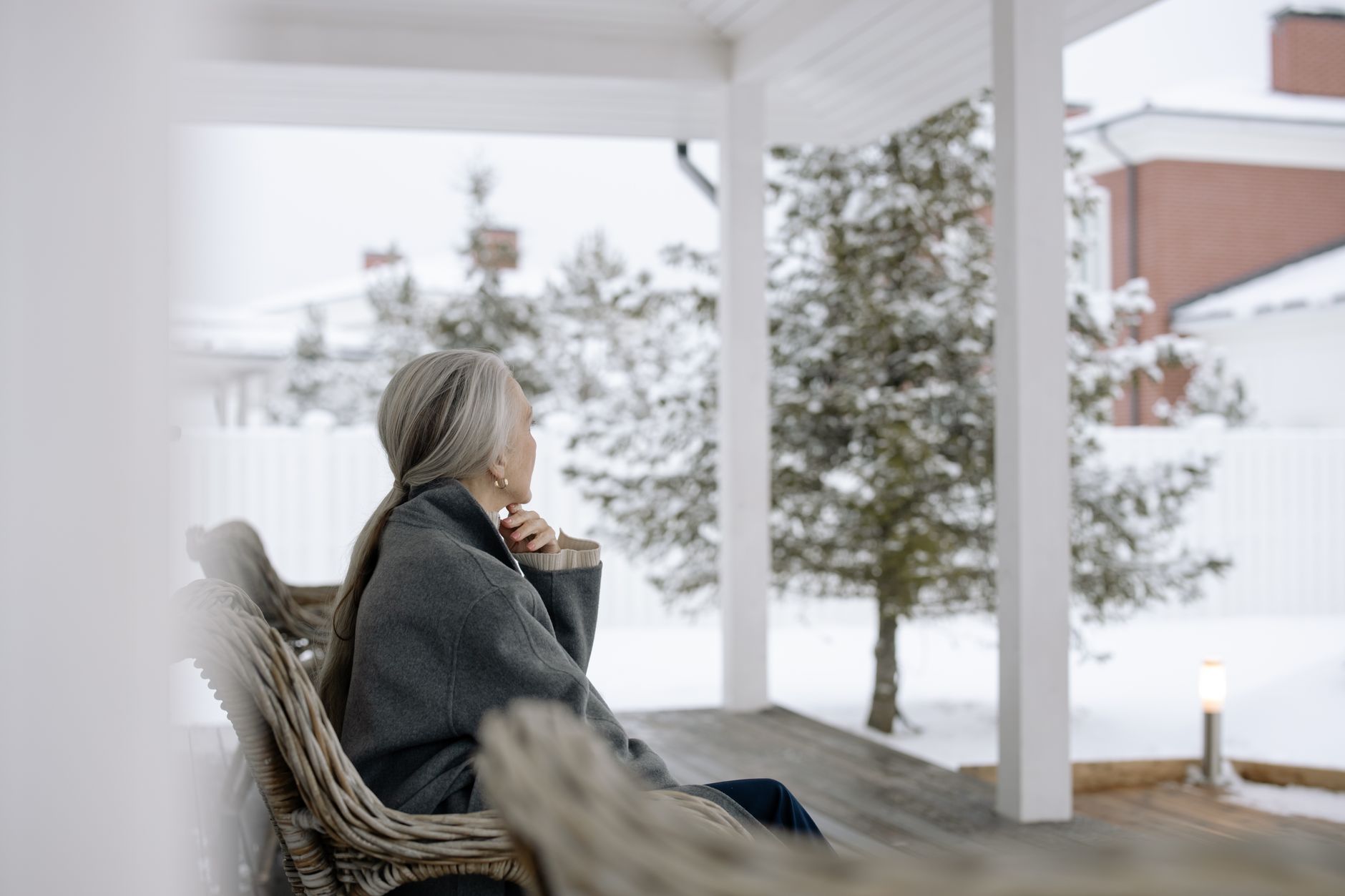
The Wedding Photos She Cropped Me From
My grandson Emmett was nine years old the first time I told him a lie that turned out to be true. I told him that his mother, my daughter Marianne, was going to be at every important day of his life whether he could see her or not. I did not believe it when I said it. I was standing in a hospital hallway in Bedford, Indiana, with a boy who had just watched his mother stop breathing, and I said the only thing a grandmother has, which is a promise she cannot keep and has to keep anyway.
I am Estelle. I am seventy one years old. I live on Route 9 outside a little town called Miller’s Fork, in a farmhouse my husband Harold and I bought in 1979 for eleven thousand dollars and paid off ourselves, one hog auction and one canning season at a time. Harold has been gone six years now, heart, quick, no long goodbye, which I used to think was a mercy and some nights still do. Marianne has been gone fourteen years. Ovarian cancer, diagnosed in March, gone by October, the fastest and cruelest math I have ever done. Emmett was nine.
For three years after that I drove that boy to school every single weekday morning, twenty two minutes each way from his father’s house to Miller’s Fork Elementary, because his father, my son in law Doug, was drowning, and because somebody had to be the one constant thing in a house that had lost its center. I packed his lunches. I sat through band concerts where he played third trumpet badly and I clapped like he was first chair. I was in the stands for every home game once he made varsity, cold metal bleachers, a thermos of coffee, the whole county gathered under those Friday night lights the way we do here. When Doug remarried, a kind enough woman named Vada who never once tried to take my place and I have always loved her for that, I did not step back. I did not have to. There was room.
I am telling you all of this because you need to understand what twenty two years of showing up looks like before I tell you what it feels like to be erased from it with a computer mouse.
Emmett met Brynn his junior year of college, at Purdue, and I liked her fine at first. She was sharp and funny and she had that particular confidence young women have now that I never had at her age, and I told myself that was a good thing, that the world needed more of it. They dated four years. He brought her to the farm for Thanksgiving the second year, and I watched her walk through my kitchen picking things up, my grandmother’s rolling pin, the cast iron skillet Harold’s mother gave me as a wedding gift, turning them over like she was pricing them at an estate sale rather than meeting the woman who raised the man she loved. I told myself I was being an old woman who did not like change. I have thought about that a great deal since.
The small things started early, if I am honest with myself now. Brynn began referring to Doug and Vada’s house as “Emmett’s family home” in a way that quietly stopped including mine, even though I was the one who had rocked that boy to sleep the year his mother died, even though my farmhouse was the one with his height marked in pencil on the pantry doorframe, seven different years, seven different Coles growing an inch or two taller each summer. She started scheduling holidays so that “his side” meant Doug and Vada, full stop. I was folded in as an afterthought, a phone call on Christmas evening instead of a seat at the table. Emmett never seemed to notice the shape of it changing. He loved her. I understood that. I had loved Harold blind for the first two years too.
They got engaged on a Tuesday in April, at the top of a ski lift in Colorado, and Emmett called me from the gondola down, so happy his voice was shaking, and I cried standing at my kitchen sink with dish soap still on my hands, truly happy for him, hopeful in the particular way you are hopeful when you decide not to look too closely at a thing because looking closely might spoil it.
The engagement ran fourteen months. I offered what I could. I am not a wealthy woman, I live on Harold’s pension and what the eighty acres bring in from the Kesslers who lease it for corn now that I cannot farm it myself, but I wrote Emmett and Brynn a check for two thousand dollars toward the reception when they were choosing between the country club in Bedford and a restored dairy barn out past the fairgrounds, because I wanted them to have the barn, the real one, the one with the hand hewn beams and the hay door they’d turned into a window, because it looked like something Marianne would have loved. I paid three hundred and eighty dollars to have my dress altered so I would not be the grandmother standing at the edge of the photographs in something ten years out of fashion. I wanted, very badly, to look right in those pictures. I think about that now and it is almost funny, in the way that only true things are funny after they have finished hurting you.
The wedding was the second Saturday in June, one hundred and forty eight guests, at the Kessler barn, the light gold and slanting the way it only is in Indiana in early summer, the kind of evening that makes you believe, for a few hours, that everything is going to be all right. I sat in the second row on the groom’s side, which felt correct to me, not the front, that was for Doug and Vada, but close, close enough. During the ceremony the officiant asked everyone to bow their heads for a moment in memory of “those who could not be here,” and I watched Emmett’s jaw tighten and I knew he was thinking of his mother, and I reached over without asking and put my hand on his arm, and he did not pull away.
At the reception there was no mother of the groom to do the traditional dance, for reasons that should be obvious by now, and Emmett had asked me, weeks before, quietly, over the phone, if I would dance with him instead, to a song his mother used to sing along to in the car, a Patsy Cline song, and I had said yes and then hung up and cried in my kitchen for the second time that year. We danced to it. I am not a graceful woman anymore, my hip has given me trouble since the winter I fell on the porch ice, but Emmett held me steady and turned me slow and at the end he put his forehead down against mine for just a second and said “thank you for staying” and I understood exactly what he meant by staying, and it had nothing to do with a dance floor.
I tell you that because I want you to understand that I was there. Not on the edges. Not tolerated. There, in the frame, in the memory, in the marrow of that day.
Three weeks later the photographer’s gallery went live, and Brynn posted a curated set to a shared wedding album on Facebook for family and friends who could not attend, forty three photographs chosen out of what I later learned were nearly two thousand. I opened it on my phone at my kitchen table on a Tuesday evening with a cup of decaf going cold beside me, scrolling slow, smiling at each one, looking for myself the way you look for yourself in every photograph of an event you attended, an old habit, harmless, the eye simply hunting for the version of the day that has you in it.
I was not in a single one.
Not the processional. Not the family formal that I remembered standing for, squeezed between Doug and Emmett’s uncle Alton, the photographer calling out “grandparents in the middle, there we go.” Not the reception, not one candid, not the toasts, not the cake, not the dance floor. Forty three photographs of the happiest day of my grandson’s life and his grandmother did not exist in a single one of them. Where I had stood in the family formal there was now, I realized on the third pass, a slightly too clean stretch of barn wall and a hanging string of café lights that had definitely not hung there when the photograph was taken, because I remembered looking straight past it at Emmett’s face.
I told myself it was an oversight. A batch export gone wrong. I have used enough of the internet to know that things get lost, that photographers sometimes misnumber a folder, that a person can be cropped out of a group shot by simple accident, a bad edge, a bad instinct about composition. I did not want to believe the other thing yet. I am seventy one years old and I have buried a husband and a daughter, and I have learned that the mind will build you a gentle explanation and hand it to you like a blanket, for exactly as long as it can, before the truth walks in and takes the blanket away.
What took the blanket away was my neighbor Joyce, who is not family but has known me thirty years, calling me two days later to say, gently, the way you tell someone there is spinach in their teeth, “Estelle, honey, I looked through the whole wedding album twice. I couldn’t find you in it anywhere. Is everything all right?”
I said everything was fine. I am from a generation and a place where you say everything is fine to your neighbor on the telephone even when your hands are shaking around the receiver.
I did what I should have done from the start, which was call the photographer directly, a young man named Rufus who had been kind to me the day of the wedding, refilled my water glass twice without being asked, told me my dress photographed beautifully in that light. I asked him, plainly, whether there had been some technical trouble with the shots that included me. There was a long pause on the line, the kind of pause that tells you the answer before the words arrive.
He said the raw gallery, the full two thousand frames he had delivered to Brynn for her to choose from, included me in eleven separate photographs. The family formal. Three from the ceremony. The father daughter, or in this case grandmother grandson, dance, four separate frames of it, including one he said was, in his words, “one of the best images from the whole day, real, unguarded, you two with your foreheads together.” He said Brynn had requested a specific set of edits before the final gallery went out publicly. He said he had assumed, because it is not his place to assume otherwise, that it was simply her curation of the day, her right as the bride to choose which forty three photographs told her story.
He did not know, because I had not told him, that eleven of those photographs contained the only living witness besides Emmett to who his mother had been.
I want to be careful here, because I have turned this next part over in my hands more times than I can count, trying to find a kinder shape for it, and I have not found one. I called Brynn. I did not call to accuse. I am not a woman who leads with accusation, that was not how Harold and I raised our daughter and it is not how I have lived my life. I called to ask, honestly, gently, whether there had been some mistake, because I wanted so badly for there to have been one.
She did not deny it. I will give her that much. She did not pretend confusion or blame a computer glitch or an overwhelmed editing app. She was, in fact, entirely calm, and that calm is the part I have had the hardest time forgiving, because it told me this had not been a moment of bad judgment. It had been a decision, made with a clear head, more than once, across forty three separate choices.
She said, “I wanted the album to feel like a fresh start. New family, new pictures.” I asked her what that meant, exactly, fresh start from what. And she said, in a voice with no heat in it at all, the flattest, most reasonable voice, the kind that somehow cuts deeper than yelling ever could, “You’re not the grandmother I want in the frame.”
I did not say anything for a long moment. I do not think I could have.
She kept talking, filling the silence the way people do when they have decided a thing is fair and are waiting for the other person to catch up to that fairness. She said Emmett’s family had always been “a lot,” her word, meaning, I came to understand, that it had history, that it had a dead mother in it, that it had a widow with a rolling pin and a pencil marked doorframe and a claim on her husband’s heart that predated her by twenty two years and would outlast the wedding album by a great deal longer than that. She said she wanted the photographs “clean.” She said, and this is the sentence I have not been able to set down since, “It’s not personal, Estelle. It’s just the vibe we’re going for.”
It’s just the vibe we’re going for. Forty three photographs, a boy’s whole childhood grief, and a woman who raised him through the worst year of both their lives, reduced to a word that belongs on a paint chip.
I hung up the phone. I did not cry right away. I sat at my kitchen table for a long time in the quiet, the same table where Emmett did his homework for three years, where I taught him to play gin rummy, where I signed the check for two thousand dollars four months earlier without a moment’s hesitation, and I looked at the pencil marks on the pantry doorframe through the kitchen doorway and I thought, not for the first time in my life, that grief does not always come from a funeral. Sometimes it comes from a folder of forty three photographs and the specific, deliberate absence of a person who was standing right there.
I did not call Emmett. This is the part of the story I am least proud of and most certain was right. He was on his honeymoon, ten days in the Smoky Mountains, and I was not going to be the woman who called her grandson on his honeymoon to tell him his new wife had erased her. I told myself I would find the right moment when he came home. I told myself a great many things that June, most of them designed to let me keep breathing through the days.
What I did not know, sitting alone at that table, was that the truth was already out of my hands, sitting on a phone that belonged to a woman named Patty Hollis.
Patty had been my daughter Marianne’s closest friend since the two of them were girls riding bikes down Route 9 with playing cards clothes pinned to the spokes, and she had loved that boy Emmett like an aunt every day of his life, and she had come to the wedding with a plan nobody had asked her to make. She told me later she had decided, months before, that she wanted to give Emmett and Brynn something the professional photographer never could, which was the sound of the day. The real toasts, unedited, the laughter between them, the parts nobody poses for. She had set her phone up on a little tripod at the edge of the reception, moved it twice through the evening to catch different angles, and simply let it run, on and off, capturing nearly ninety minutes of raw, unglamorous, entirely real footage across the night, meaning to stitch it into a slideshow gift for their first anniversary.
She had not looked at most of that footage yet in the three weeks since the wedding. She was a busy woman, a hospice nurse with two jobs’ worth of hours, and the footage sat untouched on her phone until the night Joyce called her too, because word travels fast and quiet in a town the size of Miller’s Fork, and word had gotten to Patty that Estelle Whitfield had somehow vanished from her own grandson’s wedding album.
Patty told me she sat on her back porch that night with a glass of iced tea going warm beside her and watched all ninety minutes straight through, and somewhere in the second half of it she started to cry, because there I was. Not tolerated. Not on the edges. There, in the family formal, standing exactly where I remembered standing, between Doug and Uncle Alton, my hand on Emmett’s shoulder. There in the ceremony, head bowed during the moment of remembrance, Emmett’s hand finding mine without either of us looking down. There, unmistakably, unforgettably, in four minutes and eleven seconds of unbroken footage that Patty had happened to catch from the far side of the dance floor, dancing with my grandson to a Patsy Cline song, his forehead against mine, both of us with our eyes closed, and the sound, the actual sound, of him saying “thank you for staying” clear enough to make out every word.
I did not know any of that yet, on the night I sat alone at my kitchen table with the phone still warm in my hand from the call with Brynn. I found out four days later, when Patty drove out to the farmhouse unannounced, walked in without knocking the way she has done since she was twelve years old, sat down across from me at that same kitchen table, and set her phone down between us with the video already cued up.
I have never in my life watched something so hard to watch and so impossible to look away from. There was my daughter’s best friend, sitting across from me with tears already standing in her eyes, and there, on a four inch screen, was proof, plain and moving and entirely unedited, that I had not imagined my own place in that day. Proof, more than that, that the version of the wedding the world had been shown was not an accident of composition. It was a decision to erase a specific woman from a specific set of memories, and it had been made with such care, such precision, eleven photographs out of two thousand chosen and removed one by one, that there was no gentle explanation left standing.
Patty asked me what I wanted to do with it. I did not know yet. I asked her not to post it anywhere, not to send it to anyone else, not yet. I needed to think, and I am not a woman who thinks fast, I am a woman who thinks slow and sure, the way Harold and I built a farm, one true step at a time.
Emmett and Brynn came home from the Smoky Mountains on a Sunday. He called me Monday evening, full of stories about a black bear they’d seen from the car and a waterfall hike that had nearly done Brynn’s knees in, and I let him talk, let him have that lightness a little longer, and then I asked him, as gently as I know how, whether he had looked closely at the wedding album yet.
He said he had glanced through it on the plane, that it was beautiful, that Brynn had done a wonderful job picking the photos.
I asked him to look again, and to look for me.
There was a silence on the line that went on long enough that I thought the call had dropped. And then he said, in a voice I had not heard from him since he was nine years old standing in a hospital hallway, “Grandma, you’re not in it. You’re not in any of it.”
I told him I knew. I told him what Brynn had said to me on the phone, as close to word for word as I could manage, because I did not want to soften it for him and I did not want to embellish it either. I told him about the fresh start, the vibe, the sentence about not being the grandmother she wanted in the frame. I heard him breathe out, slow and shaking, on the other end of the line, and I heard, underneath it, something I recognized, because I had felt it myself fourteen years earlier standing in that hospital hallway. The particular, specific anger of a person realizing that someone they love has tried to take something from them that was never theirs to take.
I did not tell him about Patty’s video that night. I wanted him to sit with the truth on his own first, without a piece of evidence in his hand to hide behind, because I have learned, at seventy one, that the truth a person arrives at themselves lands differently than the truth you hand them.
He drove out to the farmhouse two days later, alone, no Brynn, and he sat where Patty had sat, at my kitchen table, and I told him everything, calmly, the whole of it, the eleven photographs, the flat voice on the phone, the word vibe. He put his head down on his folded arms on that table, the exact table he had done his multiplication tables at as a boy, and he was quiet for a long time, and when he lifted his head his eyes were red and his jaw was set in a way that reminded me, painfully, of his mother.
He said, “I need to see it. Everything. Whatever there is to see.”
That was when I told him about Patty’s footage. I called her, and she drove out within the hour, and the three of us sat together in my living room, the good lamp on, and we watched ninety minutes of his wedding day the way it had actually happened, not the way it had been curated for public consumption. He watched himself dance with me. He watched himself say thank you for staying, on camera, to a grandmother who had, according to his own wife, no place in the frame. He watched the family formal, watched himself stand exactly where I remembered standing, next to me, both of us smiling at a photographer who had captured us together and been told, afterward, that we should not be seen that way.
When it ended he sat very still for a while. Then he said, quietly, “She knew. She had to have watched the raw gallery to pick forty three out of two thousand. She saw me with you. She saw all of it. And she cut it anyway.”
I did not answer, because there was nothing kind left to say that would also be true.
What happened over the following two weeks is the part I am least eager to walk through, because it is the part where a family had to decide what it actually was, underneath all its good manners. Emmett did not stage a public confrontation. That is not who I raised his mother to raise him to be, and it is not who Doug and Vada raised either. He went home and he talked to Brynn, alone, for a long time, on a Tuesday night, and he told me afterward that he had shown her the video without a word first, let her watch her own new husband dance with the grandmother she had erased, let her watch him say thank you for staying, and only after it finished did he ask her to explain the vibe she had been going for.
She cried. He told me that too, without much sympathy in his voice when he said it, and I understood why. She said she had felt, from the start, like she was competing with a dead woman for a place in Emmett’s heart, like every family gathering was a memorial with her accidentally invited, like I represented a version of his life she could never be part of and never fully replace. She said cutting me out of the photographs had felt, in some twisted private logic she had built for herself over four years of dating and fourteen months of engagement, like taking back a little bit of ground in a competition that existed almost entirely in her own mind, because I had never once, not in four years, treated her as anything but the woman my grandson loved.
I do not say any of that to excuse her. A person’s fear does not entitle her to erase another person’s grief, or another person’s grandson, or another person’s twenty two years of showing up, out of a wedding album two thousand frames deep. But I have lived long enough to know that cruelty this specific, this deliberate, almost always comes from a wound the cruel person has never once let anyone look at, and I think, underneath the flat voice and the word vibe, there was a young woman who truly believed, wrongly and sadly, that there was only room in that family for one woman who had loved Emmett first.
There was not, in the end, a dramatic villain’s reckoning. There was something slower and, I think now, more honest than that. Emmett insisted the full, uncropped gallery, all eleven photographs, be added back to the shared family album, publicly, with no explanation offered and none needed, because the pictures spoke plainly enough on their own. Patty’s video, with Brynn’s tearful blessing once she understood there was no undoing what she had chosen and no dignity left in pretending otherwise, was edited into the anniversary gift Patty had always intended to make, four minutes and eleven seconds of a grandmother and grandson dancing to Patsy Cline, and it was played, eleven months later, at the christening of Emmett and Brynn’s first daughter, in front of the whole family, on a projector screen set up against the same barn wall where I had once been quietly erased.
Brynn came and found me that afternoon, after the christening, out by the corn Kessler’s men had planted along the fence line, and she did not perform an apology at me the way some people do, all tears and no substance. She said, plainly, that she had been wrong, that fear had made her small and cruel in a way she was ashamed of, and that she hoped, in time, I would let her earn a different kind of place in the family than the one she had tried to take by force. I told her, honestly, that I did not know yet whether I could, but that I was willing to let her show me over years rather than words, because that is the only currency I have ever fully trusted.
They named their daughter Marianne. I want you to sit with that for a moment the way I had to sit with it, standing by that fence line in the late afternoon light, because it undid me more completely than the cruelty ever had. A young woman who had once told me I was not the grandmother she wanted in the frame had chosen, eleven months later, to give her own daughter my daughter’s name.
I hold no illusion that this fixed everything between us in a single afternoon. Some things, once said, leave a mark on a family the way a brand leaves a mark on a fence post, visible for as long as the wood stands. But I have a granddaughter now named for my daughter, and a grandson who drove out here two days after learning the truth and put his head down on my kitchen table the way he did as a boy, and a video, four minutes and eleven seconds long, that no one can crop out of anything, because Patty had the good sense, and the love, to point a phone at the truth and simply let it run.
I still drive Route 9 into Miller’s Fork most Sundays, past the fairgrounds, past the Kessler barn where a whole family portrait once had me quietly removed from it, and I do not feel erased anymore when I pass that building. I feel like a woman who was there. I was there for twenty two years before that wedding and I intend, the good Lord and my hip willing, to be there for a great many more. No one gets to decide, after the fact, with a mouse and a word like vibe, that a woman who showed up every single day did not belong in the picture. The picture was always going to need me in it. It just took a stranger’s patient, unglamorous, entirely uncropped ninety minutes of video to prove it back to the people who should never have needed the proof at all.
This story is a dramatization. Names, characters, and details are invented, and any resemblance to real people or events is coincidental.