The Stranger She Asked
I had not planned to stop in that town at all. I was sixty years old, driving a truck that smelled like cold coffee and old road maps, and I was only passing through on my way to see a man about a piece of farm equipment I did not really need. The turnoff came because I was hungry, and because the sign at the county line promised a diner two miles ahead, and because at my age you learn to trust a full parking lot the way you trust an honest handshake. I have thought a hundred times since then about how close I came to driving right past that exit. If I had, I would still be the man I was before, and I would never have known what I was missing.
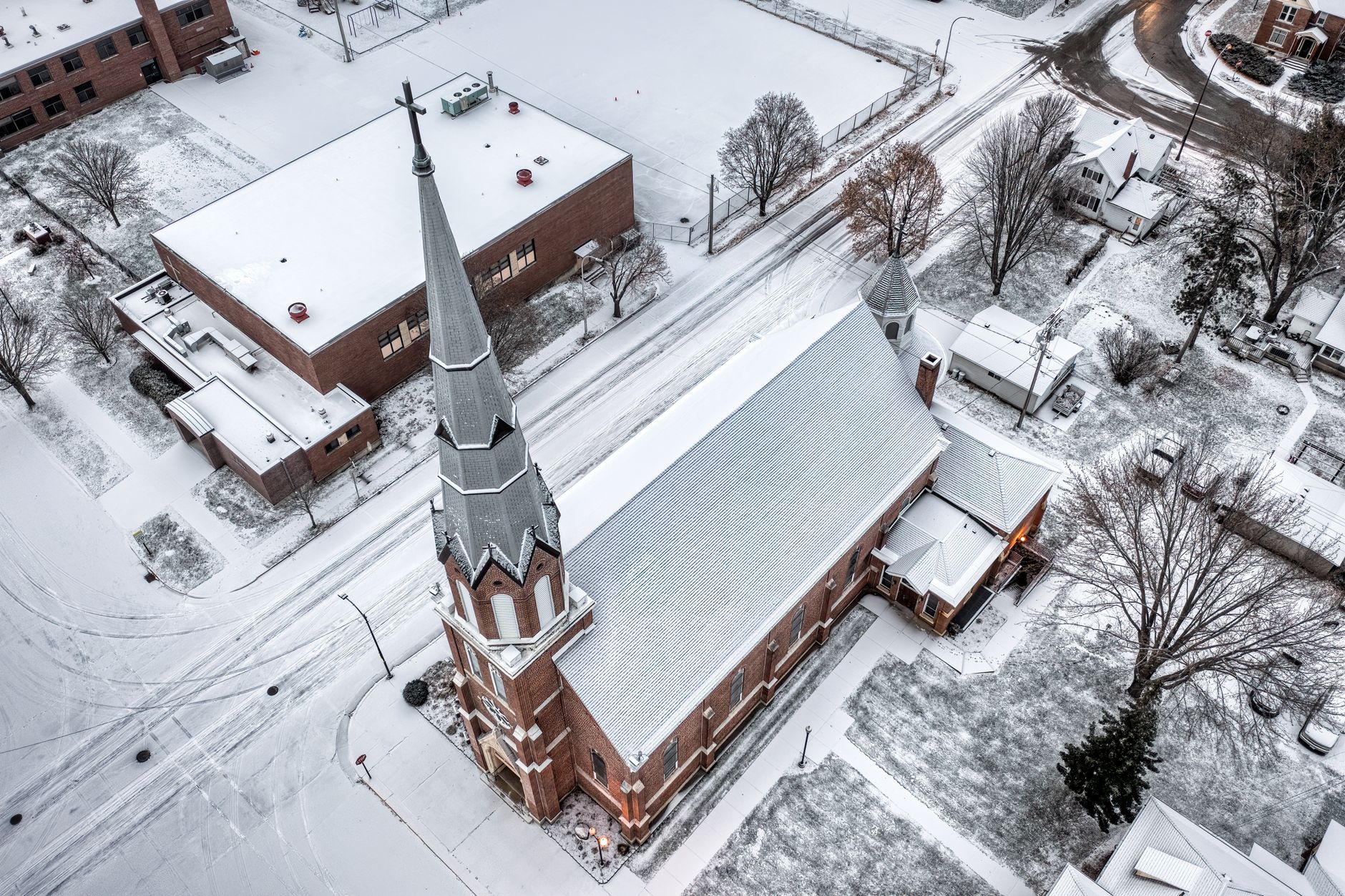
The town was small enough that the whole thing felt like one long main street with a school stapled to the end of it. There was a feed store with a hand-painted sign, a church with white siding and a steeple that leaned a hair to the left, and a war memorial in the little square with names on it going back further than I wanted to read. It was late May, and the whole place had that scrubbed, hopeful look that small towns get on the day something important is about to happen. Banners hung from the light poles. Somebody had strung balloons on the fence outside the high school gymnasium, and they were bobbing in the warm wind like they knew a secret.
I parked, and I ate, and I should have left. But the waitress at the diner, a woman about my age with reading glasses on a beaded chain, told me the whole town was headed over to the graduation and asked if I had somebody walking. I told her no, I was just passing through. She looked at me the way people look at a man traveling alone at my age, a little kindly and a little sorry, and she said, “Well, you should go anyway. It does a person good to watch young folks step into their lives.” I paid, I left her a tip that made her smile, and I told myself I would drive on. Instead I found my boots carrying me toward the gymnasium, following the sound of a band tuning up and the murmur of a crowd that had known each other their whole lives.
The Girl in the Blue Dress
I want to tell you first about the loneliness, because that is where this story really starts, and it is not her loneliness I mean. It is mine.
I had lost my wife three years before. Her name was Ruth, and she was the better half of me by a mile, and when she went the house went quiet in a way I never got used to. We never had children. It was not for lack of wanting. It was one of those private griefs that a couple carries between them and does not talk about at church suppers, and after Ruth passed there was no one left who even knew to grieve it with me. So I sold most of what we had, and I bought the truck, and I started driving, telling myself I was seeing the country when the truth was I was running from a silence I could not fix. A man can convince himself of almost anything if the road is long enough.
That is the man who walked into the back of that gymnasium and stood against the wall because all the folding chairs were spoken for. I was a stranger in a room full of family. Every face there belonged to somebody. Grandmothers fanned themselves with folded programs. Fathers in their one good shirt held up phones already recording. Little brothers squirmed and got hushed. The whole place hummed with the particular warmth of people who are about to watch their own succeed, and I stood at the edge of it feeling like a man looking through a window at a fire he was not allowed to warm his hands on.
Then I saw her.
She was standing off to the side by a set of double doors, apart from the other graduates who were milling and laughing and straightening each other’s caps. She wore a plain blue dress under her gown, and shoes that had been polished carefully but had seen a few graduations already, and she was holding her cap in both hands like she was afraid of dropping it. Her hair was pinned up simple. She kept glancing out at the rows of chairs, scanning them, and every time her eyes swept across the crowd her face did a small thing that I recognized, because I had been doing it in mirrors for three years. She was looking for someone she already knew would not be there.
I do not know how long I watched her. Long enough to be sure. There is a difference between a girl who is nervous about walking across a stage and a girl who is standing in a room full of families and belongs to none of them. I have carried enough of my own emptiness to spot it in someone else across a crowded room. She was the loneliest person in that whole gymnasium, and I was the second, and something in me could not look away.
She caught me looking. I expected her to turn her face, the way people do. Instead she held my eyes for a moment, and then she seemed to make some decision, and she started walking toward me through the crowd. I remember thinking she had mistaken me for somebody. A relative of a friend, maybe. I straightened up off the wall and got ready to apologize for staring.
She stopped in front of me, close enough that I could see her hands were shaking around that cap.
“Excuse me, sir,” she said. Her voice was steady, but only because she was working hard to keep it that way. “I know this is going to sound strange. Please don’t walk away before I finish.”
I said, “I’m not going anywhere. Take your time.”
She took a breath the way you do before you step off something high.
“My name is Grace. I’m graduating today.” She glanced back at the stage, then at me. “My mom passed away when I was little, and my dad was never around, and the aunt who raised me, she passed this winter. I don’t have anybody coming. Everybody up there is going to have people stand up and cheer for them when they call their name, and I’m going to be the only one nobody claps for.” She swallowed. “So I wanted to ask. Would you sit with me? Would you pretend, just for today, to be my family? Just so I’m not the only one with an empty seat?”
What I Almost Said
I am ashamed of the first thing that rose up in me, so I will tell you, because a story you can only tell the pretty parts of is not worth telling.
The first thing I felt was fear. Not of her. Of what it would cost me. I had spent three years building a wall between myself and anything that could hurt me again, and this girl in her blue dress was asking me to knock a hole in it in the middle of a crowded room, in front of five hundred strangers, on a Tuesday afternoon in a town I would never see again. Every careful, cowardly instinct I had spent three years cultivating told me to say something kind and get gone. “I’m sure someone will sit with you, honey.” “You’ve got friends, I bet.” The easy lies that let a man off the hook.
I looked at her, and I thought of Ruth.
Not because Grace looked like her. She did not. But Ruth had a way of walking straight at the thing that scared her, and she would have skinned me alive if I had turned my back on a child who had gathered up every ounce of courage she owned to ask a stranger not to let her be alone. I could hear my wife’s voice as clear as if she were standing at my elbow. “Well?” she would have said. “What are you waiting for? Go on.”
So I did not say the easy thing. I said the true thing, which came out of me before I had fully decided to say it.
“Grace,” I said, “I would be proud to sit with you. And I don’t think we’ll have to pretend very hard, because from where I’m standing, any family would count itself lucky to claim you.”
Her whole face changed. It did not crumple into tears, the way you might expect. It went still, and then it went bright, like a lamp coming up in a dark window. She put her hand over her mouth and let out a shaky laugh, and she said, “Really? You mean it?” and I said, “I have never meant anything more in my life,” and God help me, in that moment it was the truest sentence I had spoken since Ruth died.
I told her my name. She said it back to me, careful, like she was memorizing it. Then a woman with a clipboard called for the graduates to line up, and Grace’s eyes went wide with the sudden nearness of it, and I put my hand on her shoulder the way a father would and I said, “Go on. Get in your line. I’ll be right there in the front, and I’ll be watching for you the whole time. You won’t be able to lose me if you tried.”
She went. And I went and found a seat, and for the first time in three years I was not a man looking through a window at somebody else’s fire. I was in the room. I had a reason to be there. There was a girl about to walk across a stage, and I was hers to cheer for, even if only for a day, and I had not felt that useful, that necessary, in longer than I cared to admit.
The Longest, Sweetest Hour
I have sat through weddings and funerals and long church services, and I have never in my life paid such close attention to anything as I paid to that graduation ceremony.
The principal spoke. A local pastor gave an invocation and asked the Lord to watch over these young people as they went out into a world that would test them, and I found myself saying amen under my breath, which was not a habit of mine anymore. A girl gave the salutatorian speech and cried halfway through it. A boy gave the valedictorian speech and did not, and you could tell his mother wished he would. The band played something that was mostly in tune. And the whole time I sat with my program rolled up in my fist, watching the row of graduates, keeping my eye on one blue dress in a sea of gowns.
I got to know a little about her before her name was even called, just from watching. She sat up straight. She clapped for every single classmate, loud and honest, even the ones I suspected had not always been kind to the girl with no family. When the boy next to her dropped his tassel she picked it up and handed it back and said something that made him grin. She was not a girl who had let being alone make her hard. That is a rare and difficult thing, to be handed loneliness that young and refuse to let it curdle into meanness. I have known grown men who could not manage it. She was eighteen and she had.
The names started. They went alphabetically, and her last name put her a good ways down the list, so I had a long time to sit with the strange, swelling thing that was happening in my chest. Each family did their bit when their child crossed. Some hollered. Some rang little bells. One father stood up and put two fingers in his mouth and whistled fit to crack the windows, and everybody laughed. And with each one I watched Grace clap, and I thought about how in a few minutes it would be her turn, and how the whole point of what I had agreed to was that this time the seat would not be empty and the silence would not be hers.
I decided I was not going to whisper my part. I had been quiet for three years. I was done being quiet.
When they called her name, “Grace,” and then her last name, ringing out over the microphone across that packed gymnasium, I stood up. I stood up all the way, and I put my hands together and I clapped as hard as my sixty-year-old hands could stand, and then I did something I had not done since I was a young man at a ballgame. I cupped my hands around my mouth and I hollered her name like she was the only graduate in the whole county who mattered, because in that moment she was. “That’s my girl! Way to go, Grace!” My voice cracked on it and I did not care.
She was halfway across the stage when she heard me. She stopped. She turned and found me in the crowd, standing there red-faced and hollering with tears running straight down into my collar, and her hand flew up to her mouth again, and then she laughed, this bright, disbelieving laugh, and she waved at me with her whole arm, and the principal handing her the diploma broke into a grin, and I will tell you what, the people around me, strangers every one, they stood up too. They did not know the story. They just saw an old man crying and hollering for a girl and a girl waving back at him like he had hung the moon, and something about it got into them, and they rose up and they clapped for her, and the noise for Grace was as loud as the noise for anybody in that room. Louder, maybe. She got her diploma to a standing ovation from a gymnasium full of people who had, until that day, mostly forgotten she existed.
I sat back down and I could not see for a while. I just sat there with the program crushed in my hand and let it come. Three years of it, if I am honest. I was not only crying for Grace. I was crying because for the space of one held breath I had been a father, which was the one thing on this earth I had wanted and been quietly denied, and I had not known how much of that grief I was still carrying until a stranger’s child handed me a reason to set it down.
After the Caps Came Down
You know how it goes at the end. The caps go up, and there is that scramble of families onto the floor, everyone finding everyone, cameras and flowers and grandmothers being hugged half to death. I stood at the edge of it again, the way I always stood at the edge of things, except this time I was not looking for a fire to warm my hands at. I was looking for one particular face.
She found me first. She came running across that gymnasium floor in her gown with her cap in her hand, dodging families, and she ran right up and stopped short of me, suddenly shy, like she had remembered we were strangers. And I opened my arms because I did not know what else to do, and she stepped into them and hugged me hard around the middle, and I held onto a graduate’s shoulders and I told her, “You did so good. You did so, so good.”
When she stepped back she was crying and laughing both. “I heard you,” she said. “The whole place heard you. I was so scared nobody would make a sound and then you, you were louder than anybody’s whole family.” She wiped her face with the heel of her hand. “Thank you. I don’t have a way to tell you what that. I’ve never had anybody.” She stopped. She could not finish it, and she did not have to.
I had a hundred things I wanted to say and no right to any of them. I was a stranger. My part was over. The polite thing, the correct thing, was to tell her I was proud of her one more time, and shake her hand, and walk back out to my truck and drive on to see a man about farm equipment I did not need, and let her get on with the rest of her life among people who actually belonged to her. That is what a sensible man does. He does his one kind thing and he does not overstay it.
But I stood there in that emptying gymnasium and I thought about the thing she had said. I’ve never had anybody. And I thought about my quiet house that I had sold and my quiet truck that I was living out of, and I thought, here are two people standing in the middle of a crowd who have both spent a long time being nobody’s anybody, and only a fool walks away from that twice.
So I said, “Grace, what are your plans? After today. Where do you go from here?”
And her face did that small flinch again, the one from before, and she said she did not really know. The aunt’s apartment was only hers through the end of the month. She had a job lined up at the diner, actually the same diner I had eaten in, and a spot at the community college two towns over in the fall if she could figure out the getting there and the paying for it. She said it all matter-of-fact, the way a person says hard things they have already made peace with because there was never any point in crying over them. And I realized she had a graduation and a diploma and a whole open road in front of her and not one single soul to help her walk it. It was my own situation exactly, turned inside out. She was starting a life alone. I was ending one alone. It seemed to me, standing there, that the Lord does not usually arrange a coincidence that neat by accident.
I did not make her any grand promises in that gymnasium. I have learned that grand promises are cheap and a scared young person has heard plenty of them. What I did was simpler. I said, “I’m going to be honest with you, because you were honest with me. I lost my wife three years ago and I’ve been driving around ever since like a man looking for his own grave. I don’t have anybody either. And I think maybe I stopped in this town for a reason I didn’t understand until about an hour ago.” I told her I was not asking for anything and she owed me nothing, but I said I would like to take her and her friends and whoever she had to that diner and buy the biggest graduation supper they had, and that if she was willing, I would like to stay a few days and see if there was a way I could help a young woman get to college. No strings. Just an old man who suddenly had a use for himself again.
She looked at me for a long time. She was a smart girl, and a girl who had learned the hard way to be careful, and I watched her weigh it. Then she said, “My aunt used to say God sends who He sends when you need them, and you’re not supposed to argue with Him about the paperwork.” And she laughed at her own saying, and she stuck out her hand to shake mine like we were closing a deal, and I shook it, and that handshake is the most important thing I have ever agreed to in my life.
Building Something Real
I want to be careful here, because I know how these things can sound. An old man and a girl with no family. People will imagine all sorts of things, and they will be wrong. What we built was not complicated and it was not improper and it was not, at bottom, even unusual. It was the oldest arrangement in the world. A person who needed looking after found a person who needed someone to look after. That is all a family has ever been, when you scrape away the blood and the paperwork. It is people deciding to be responsible for each other and then actually doing it, day after ordinary day, when it would be easier not to.
I stayed. I got a room at the little motel by the highway for the first while, which mattered, because I wanted everything about it to be plain and above-board, and I wanted the town to see that it was. And this is where I have to give the town its due, because a lonely girl and a stranger could have gone very differently in a place like that. But small towns, for all the things people say about them, know how to close ranks around a child, and they had a lot to answer for where Grace was concerned, and I think some of them knew it. The waitress from the diner, whose name was Carol, she took one look at the situation and appointed herself the general manager of it. She checked on Grace. She checked on me, harder. She let it be known around town what was what. The pastor who had given the invocation came by and sat with me for two hours drinking bad motel-lobby coffee and asking me plain questions, and at the end of it he shook my hand and said, “I think you’re the answer to a prayer that girl has been praying since she was six years old, and I’ve been wondering when the Lord was going to get around to it.” Having a whole town decide to trust you is a heavy and a wonderful thing. I did not take it lightly. I have not to this day.
We figured out the college. It was not as hard as she feared, which is how it usually goes once somebody stands beside you instead of watching you drown politely from the shore. There was money from Ruth’s and my old life, more than I needed for a truck and cold coffee, and I could not think of a better monument to a woman who wanted children and never got them than to spend it launching one good soul into her life. Grace fought me on it at first. She did not want charity, she said, she wanted to earn her own way, and I respected that so much that I nearly gave in. But I told her the thing I had come to understand, which is that letting somebody help you is not weakness, it is a gift you give them, because the helping is what heals the helper. I told her she would be doing me the favor. It took her a while to believe me. She believed me eventually. The paying of that tuition did more for my grief than three years of driving ever did.
She started school that fall. I bought a little house in that town, a real one, with a real kitchen and a room she could stay in on weekends and over the summers, and I planted a garden in the back the way Ruth used to keep one, and I got a couple of hens because Carol said a man rattling around a house alone needs something to feed in the mornings. I stopped being a man passing through. I became a man who lived somewhere. I got a truck for hauling instead of for running, and I did odd jobs and repairs around town because it turned out my hands still knew how to be useful to people, and the town let me be useful, which is its own kind of belonging.
The Word She Started Using
There was a Sunday, that first winter, when Grace was home from school for the holiday, and we were at the church, the one with the steeple that leans, and the pastor asked from the front if anybody had a word of thanks to share before the service. It is a thing they did there. People stood up and thanked God for a good harvest or a healed hip or a grandchild born safe. I never stood up for those things. I sat in the back the way I sat at the edge of everything, out of an old habit that was slowly wearing off me.
Grace stood up.
I did not know she was going to. She stood up in her Sunday clothes, eighteen years old, and she said, in front of the whole congregation, “I want to thank God for sending me a family when I didn’t have one.” And she looked back at me in the back row, and she said, “That’s my dad back there. He wasn’t, and then he was. He sat with me at my graduation when I asked a stranger to, and he never left.” And she sat back down, and the church was quiet, and then somebody said amen, and then a lot of somebodies said it.
She had never called me that before. Dad. We had never discussed it. We had been careful with each other, the way two people are careful with something that matters too much to risk breaking. I had been “sir” and then my name and then nothing much, just the man she lived near and leaned on. And there in that church she reached out and picked up the biggest word she had and she handed it to me in front of God and the whole town, and I could not have said a single thing back if the building were on fire. I just nodded at her from the back row and let it run down my face, and the woman in the pew beside me, a stranger, patted my hand and gave me a tissue from her purse without a word, the way people do in a place where everyone has, at one time or another, cried in church.
That is the thing nobody tells you about being asked to pretend to be someone’s family. The pretending is a door. You step through it thinking you are only playing a part for an afternoon, and on the other side of the door is the real thing, waiting, and it turns out it was never pretend at all. It was just a family that had not been introduced to itself yet.
Where We Are Now
That was some years back. I am an old man now for real, not just for a fresh-cut sixty, and my hands do not haul what they used to. But I want you to know how it came out, because you have read this far and you have earned the ending, and because I know how many stories about lonely people just stop, leaving you to fear the worst.
Grace finished at the community college and then she went on and finished at a four-year school, and she did it while working, and she did it well, and I sat in the crowd at both of those graduations too, and both times I stood up and hollered her name loud enough to embarrass her, and both times she waved at me with her whole arm and did not mind one bit. She is a nurse now. She works with old folks, of all things, the ones whose families do not come to see them, and when I asked her once why she chose that she looked at me like I had asked a foolish question and she said, “Because I know what it is to be the one nobody claps for.” She sits with them. She holds their hands when their people do not come. There are old men and women in this county who die less alone than they would have because a stranger once sat down beside a girl in a blue dress and decided not to walk away.
She married a good young man, a farmer’s son with an easy laugh, and I gave her away, and standing at the front of that leaning-steepled church with her arm through mine, I thought about the afternoon she crossed a crowded gymnasium to ask a stranger to pretend, and I thought, look how far the Lord will carry a small brave thing if you only let Him. She has two children now. They call me Grandpa. The oldest one has Ruth’s stubborn chin, which is impossible, since they share no blood at all, and yet there it is, and do not tell me that families are only made of blood, because I have held that child and I know better.
I do not drive around anymore looking for my grave. I have a place. I have a girl who is a woman now and calls me on Sundays and comes for supper and worries about my blood pressure. I have grandchildren who climb on me. I have a town that knows my name and a garden that comes up every spring the way Ruth’s used to and a church pew near the front that I stopped hiding in the back of a long time ago. I am not a stranger anywhere anymore. All of it, every bit of it, came from one afternoon when I almost drove past an exit, and a scared eighteen-year-old gathered up more courage than most people spend in a lifetime and asked me for the one thing I did not know I had left to give.
People sometimes hear this story and they say to me, what a wonderful thing you did for that girl. And I let them say it, because they mean well. But they have it backwards. I did not rescue Grace. Grace rescued me. She walked up to the loneliest man in a room full of families and she did not see a stranger in a suit or an old man passing through. She saw somebody who needed to be needed, and she was brave enough to ask, and in asking she gave a grieving man back his whole life. I went into that gymnasium a man with nobody. I came out a father. It took about an hour, and it took the rest of my life, and I would not trade one minute of it.
If you are the one standing at the edge of the room today, the one scanning the crowd for a face you already know will not be there, I want to tell you something an old man has learned. The person you are afraid to ask might be praying you will. We are all so much lonelier than we let on, all of us standing along the same wall, each one sure he is the only one. Sometimes the bravest thing in the world is to cross the room and ask. And sometimes the answer, against everything you have taught yourself to expect, is yes. It was for Grace. It could be for you. I am living proof that it is never, ever too late to become somebody’s family.