The Timestamps My Sister Couldn’t Explain
My sister sold our mother’s heirlooms two days before we buried her, then spent three weeks looking me in the eye and telling me she hadn’t touched a thing.
I want to start with the phone call that broke it open, because that is where the truth actually lives, but I cannot tell you what that phone call meant unless I first tell you what was inside Unit 114 at Prairie View Self Storage, out on the county road past the feed store in Cedar Hollow. So bear with me. I promise you it matters, every piece of it, because the size of the lie only makes sense once you understand the size of what she took.
*What was in the unit*
My mother rented that storage unit six years ago, after the assisted living place asked her to downsize out of her apartment into one room. She could not bear to sell her furniture to strangers or give it to a thrift store, so she paid forty-two dollars a month, without complaint, to keep the things that mattered within driving distance of the rest of us. I used to tease her about it. I’d say, Mom, that’s five hundred dollars a year to store furniture, and she would just smile and say some things are worth paying to keep close, Sandra, even if you can’t sit on them every day.
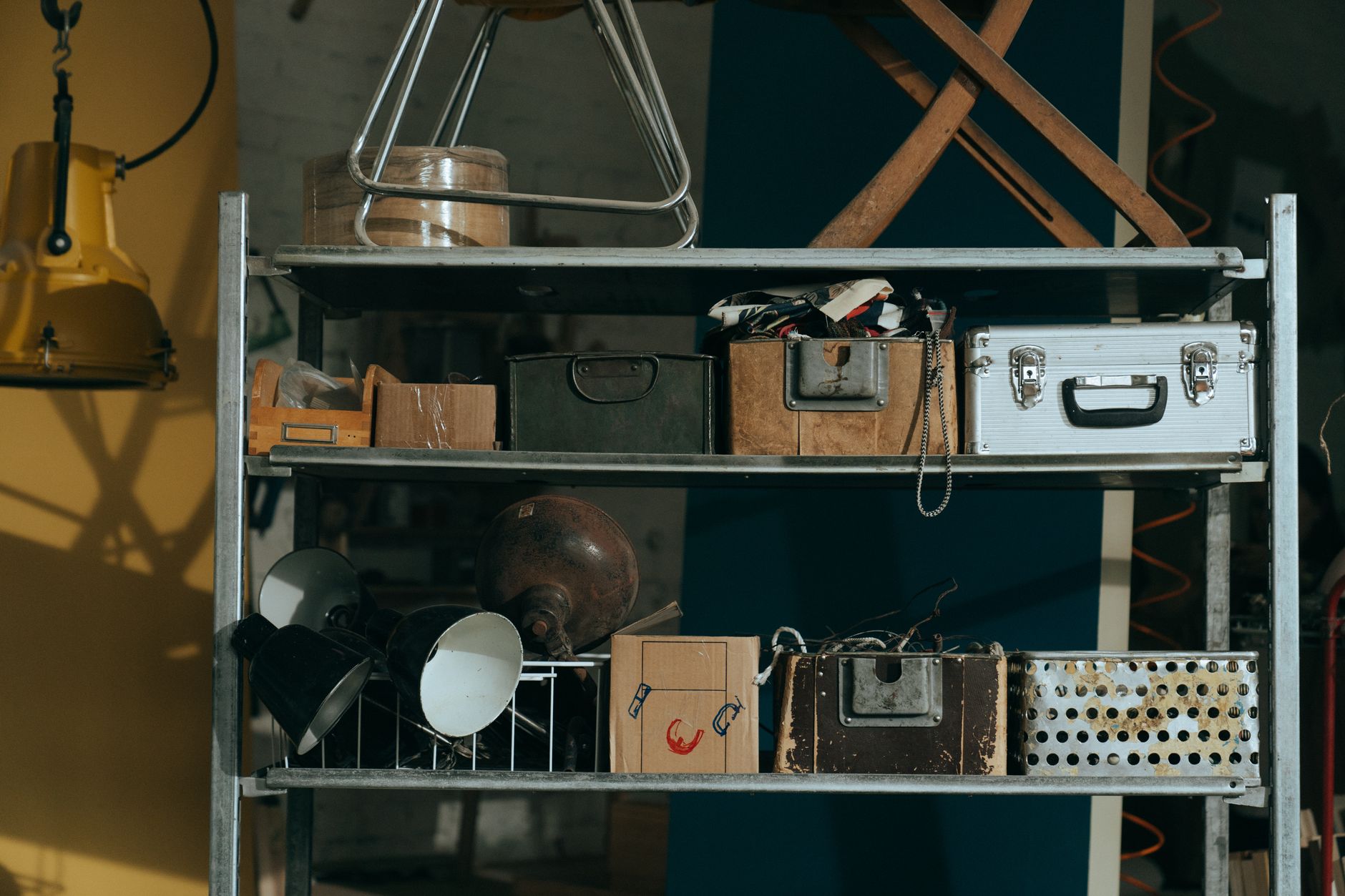
Inside that unit was a walnut curio cabinet our grandfather built with his own hands the winter he came home from the war, the one with the little brass latch he installed backward on purpose because he said a latch that worked the easy way wasn’t worth trusting. There was my mother’s wedding china, a pattern discontinued sometime in the nineteen-seventies, service for twelve, not one chip on it in over sixty years, because she only used it twice a year and washed every piece by hand. There was a cedar hope chest with our old baby blankets folded inside, mine and Regina’s both, plus every one of our children’s after that, four generations of the same soft yellow wool blanket passed down and never once thrown away. There was the rocking chair. My mother rocked me in that chair. She rocked Regina in it. She rocked every single one of her seven grandchildren in it, including my own two kids, and there is a worn spot on the left armrest from sixty years of thumbs rubbing the same six inches of wood while somebody’s baby finally settled down to sleep.
There were boxes of photo albums going back to black and white prints with scalloped edges. There was our grandmother’s sewing machine, still in its cabinet, still threaded with the last spool of thread she ever used. There was a set of sterling silver flatware, service for eight, engraved with our grandmother’s maiden initials, that came out exactly twice a year, Thanksgiving and Christmas, and got hand-dried and put away the same night so it never had the chance to tarnish.
None of it was worth a fortune to a stranger. All of it was worth everything to us.
I should say, too, that there was nothing chaotic about that unit. My mother was not a hoarder. She did not keep boxes of newspapers or broken appliances she meant to fix someday. Everything in Unit 114 was there on purpose, wrapped in moving blankets she bought specifically for the job, labeled in her careful, looping handwriting on masking tape stuck to the side of each box. Curio cabinet, top shelf glass, wrap separately. China, Grandma’s pattern, do not stack. Baby blankets, S and D and grandkids. She had thought about what would happen to these things after she was gone. She had made it as easy as she possibly could for whoever opened those boxes to know exactly what they were holding and why it mattered. That is part of what makes this so hard to forgive. Regina did not stumble onto some disorganized jumble she could plausibly claim she misjudged the value of. She read those same labels. She knew exactly what she was selling.
*Our mother, and who we were before this*
My mother died on a Tuesday in June, in her sleep, at eighty-one, after four hard years of a heart that kept giving out a little more each season. I was the one who drove her to appointments. I was the one who sat with her through two hospital stays, who learned to read her lab numbers better than some of her nurses did, who moved a hospital bed into my own living room for the last six weeks so she wouldn’t have to die in a facility surrounded by people who didn’t know her name before they knew her diagnosis. My husband and I have two kids in high school, and for six weeks our dinner table was folding chairs pulled up around a hospital bed, because that is where my mother wanted to eat, with all of us close enough to touch.
Regina lives two hours away, in a bigger town, in a bigger house, with a husband who works in something to do with commercial real estate that I have never fully understood and have stopped asking about. Regina came on weekends, when she could. I do not say that with the bitterness I might have said it with five years ago. I had made a kind of peace with it. Somebody has to be the one who’s close by, I used to tell myself, and somebody has to be the one who has a life two hours away, and neither one is a moral failing on its own. I believed that. I really did.
Growing up, Regina and I shared a bedroom until I was twelve, in a house with one bathroom and a mother who stretched a factory paycheck and, later, a school cafeteria paycheck, across two girls who never once went without. Regina was the pretty one, the one teachers remembered, the one who got asked to homecoming three years running. I was the one who could fix a running toilet and balance a checkbook by fifteen, because our mother worked nights sometimes and somebody had to keep the lights on and the bills paid while she was gone. We were close in the way sisters who share a childhood are close, not because we chose each other but because we had no one else in that house to choose. I loved her. I still do, even now, even after everything, because that kind of love does not simply switch off no matter how badly it gets tested.
What I did not know, the whole time I was believing it, was that Regina had already started keeping a private ledger in her head of everything in that storage unit and what she thought it was worth, and had already decided, long before our mother’s heart finally gave out for good, how she meant to handle it.
*The days before the funeral*
My mother died on a Tuesday. The funeral was set for the following Monday, six days out, because the funeral home was backed up and the pastor was out of town until the weekend.
Regina came into town that Wednesday, the day after Mom died, and stayed at a hotel instead of my house, which she explained by saying she needed her own space to grieve, and I did not push on it, because grief makes people want strange things and I was not in a position to argue with anyone’s coping mechanism that week.
On Thursday, at the funeral home, while we were picking out a casket, Regina brought up the storage unit herself, before I even had the chance to. She put her hand flat against her chest, the gesture she has made since we were girls whenever she wants you to believe she is being sincere, and she said, “I haven’t touched Unit 114, and I’m not going to, not until we can all go through it together, properly, like a family. Mom would want us to do this the right way.”
I remember being grateful. I remember thinking, thank God, at least we agree on this one thing, because I had honestly worried she might want to rush through dividing things up before I was ready.
On Friday, at the church, going over the service with the pastor, she said it again, almost word for word, to our aunt this time. Properly. Like a family. Our aunt squeezed her hand and told her what a good, thoughtful daughter she was being.
What I did not know on Wednesday, Thursday, or Friday was that Regina had already driven to Prairie View Self Storage on Thursday afternoon, between picking out the casket and going over the service, and used the gate code she still had on file from years earlier when she used to help Mom move seasonal things in and out, and spent just under two hours inside Unit 114, alone.
She came back Monday morning, the morning of the funeral itself, an hour before the rest of us put on black and drove to the church, and spent another hour and fifty minutes inside that unit.
Two visits. Six days apart in her story. Four days apart in reality between the two visits, and Thursday to Monday means the first visit happened two full days before we buried our mother, while the rest of us were still choosing hymns and writing an obituary and trying to remember to eat.
*The funeral itself, and the weeks after*
I will not pretend the funeral was anything other than what funerals are. We got through it the way families get through these things, on autopilot, on casseroles, on the particular exhaustion that comes from crying and hugging relatives you only see at funerals and weddings.
In the weeks after, Regina kept bringing up the storage unit in the same careful, generous language. She said we should wait until everyone had “had time to breathe” before going through it. She said she didn’t want to rush anybody. She said, more than once, that she thought it would be healing to go through it together as a family, maybe over a weekend, maybe with coffee and old photo albums, like it might be some kind of gentle ceremony instead of an inventory.
I believed every word of it. I want to be honest about that, because it matters to what happened next. I was not suspicious of my sister. I was grieving, and tired, and grateful that for once we seemed to be on the same page about something that could easily have turned into a fight.
In those same weeks, my kids kept asking when we were going to go through Grandma’s things, because my daughter wanted a particular photo album and my son had his eye on our grandfather’s old fishing tackle box, which as far as any of us knew was still sitting exactly where it had always sat. I told them soon, we’re waiting on Aunt Regina, she wants to do it properly. I said that sentence out loud, to my own children, at my own dinner table, more than once, with complete confidence, while the truth sat two hours away in an auction house’s back room waiting for a sale date.
It was three weeks after the funeral when I called Prairie View Self Storage myself, not because I suspected anything, but because the monthly bill was still coming out of an account I had access to and I wanted to know whether we should keep paying it or whether Regina had already made arrangements to close it out.
*The phone call*
A man named Lyle answered. He has managed that facility for eleven years, he told me later, and in all that time he has learned that families dealing with a death are usually tired, usually polite, and usually grateful when somebody just makes things simple for them. He was trying to be helpful. That is the only reason any of this came out the way it did.
“Your sister already came and cleared that whole unit out,” he said, easy as anything, like he was doing me a favor by saving me a trip. “Real efficient about it too. In and out in under two hours, both days.”
Both days.
I hadn’t asked about days. I had asked whether the unit still needed a monthly payment, expecting him to tell me sure, go ahead and close it whenever you’re ready, or maybe that Regina had already come by sometime last week to start sorting things.
“When you say both days,” I said, “what do you mean?”
He read the dates off his screen like they were nothing. The Thursday before the funeral. The Monday morning of it.
I was standing in my kitchen. I had a wooden spoon in my hand that I do not remember picking up, and I did the math out loud, quietly, the way you do when you’re hoping saying it slower will make it come out differently.
Our mother wasn’t even in the ground yet on that first visit.
*What she actually did*
I called Regina that same afternoon. I did not lead with an accusation. I asked her, plainly, when exactly she had gone to clear out the unit, giving her every chance to tell me the truth on her own.
She told me she had gone “a little while after the funeral, once things had settled down.” Her exact words. I asked her to be more specific. She said she didn’t remember the exact day, it had all been such a blur, and did it really matter?
It mattered because I already had the dates from Lyle, and none of them matched a single word she was telling me.
I asked her directly what had happened to everything in the unit. There was a pause on the line, the kind of pause where you can hear someone deciding which version of the truth to give you.
“I sold it,” she said. “Most of it, anyway. To an auction house. I was going to tell everyone eventually, once the estate stuff settled down, I just didn’t want to make it a whole thing at the funeral.”
I asked her why, if she planned to tell us eventually, she had told all of us, repeatedly, in the days before the funeral, that she hadn’t touched the unit and wouldn’t until we could go through it together.
“It’s not stealing if it was going to be mine anyway,” she said, and her voice had gone flat and reasonable in a way that frightened me more than yelling would have. “I just didn’t feel like waiting around for some family vote on furniture, Sandra, while Mom’s body was still at the funeral home. Somebody had to be practical. You were all busy being sad. Somebody had to actually handle things.”
I want you to sit with that sentence the way I had to. Somebody had to actually handle things. As if selling our grandfather’s cabinet and our mother’s wedding china two days before her funeral was handling things, instead of the exact opposite.
Not after. Before. The whole time she was saying properly, like a family, she already knew there was no unit left to go through.
*Getting the proof*
I did not want to believe my own sister could do this, even with her own words on the phone. Some part of me kept looking for an explanation that made it smaller than it was. Maybe she was confused about the dates. Maybe Lyle had it wrong. Maybe there was a version of this where the timeline still worked out to something forgivable.
I drove out to Prairie View myself the next morning. I stood inside the empty concrete box that used to hold everything left of my mother’s whole life, swept clean, not even a stray thread of packing tape on the floor, and I asked Lyle to walk me through the log one more time, slowly, because I needed to hear it a second time before I could let myself believe it.
“Two separate visits,” he said again, tapping his screen and turning it so I could see it myself. “Both logged under her code, since your mom had her down as an authorized user years back. You want me to print this for you?”
I said yes. He printed two pages, timestamped down to the minute, gate entry and gate exit, both visits, both under Regina’s name and code.
That same week, I called Route 9 Auction House, the name Regina had let slip on the phone before she caught herself. I told them I was a family member trying to settle an estate and needed a copy of any consignment or sale paperwork tied to a drop-off from that Thursday. It took two calls and a fax number that still somehow works, but they sent it over. A sale receipt, dated that same Thursday afternoon, itemizing furniture and china consigned by Regina, and a second sheet showing the final sale total once the pieces went to auction eleven days later: eleven thousand four hundred dollars, minus the house’s commission.
I laid both documents on my kitchen table side by side. The gate log. The sale receipt. Two days before the funeral, and the morning of, in black and white, timestamped by two businesses that had no reason on earth to lie for either of us.
*The Sunday gathering*
Regina had organized a family lunch for that Sunday at our parents’ old house, which she still had a key to, calling it a proper goodbye, a chance for everyone to come together one more time before the estate paperwork really got underway. I understood, by then, exactly why she wanted everyone gathered in one room while there was still no unit left for anyone to ask about.
I folded the gate log and the sale receipt in half, then in half again, and put them in my coat pocket. I did not tell Regina I was bringing them. I did not tell anyone.
I walked in. I hung up my coat with the papers still folded inside it. I hugged our cousins and our aunt and my uncle, who had all made the drive in for what they still believed was a simple family lunch. I watched Regina move through the kitchen, refilling glasses of sweet tea, smiling at everyone, entirely at ease, because as far as she knew, nothing had caught up with her yet.
We sat down to eat. Regina said a few words about our mother, about togetherness, about how proud Mom would be to see all of us in this house one more time. It was, in its own way, a good speech. I let her finish it.
Then, before anyone lifted a fork, I took the folded papers out of my coat pocket, set them on the table between the deviled eggs and the pitcher of sweet tea, and unfolded them slowly enough that everyone at that table had time to look up and wonder what I was doing.
“I have a question,” I said, “and I’d like you to answer it in front of everybody, since everybody heard you promise the same thing I did. When exactly did you clear out Unit 114?”
Regina’s smile didn’t move right away. “I already told you, Sandra. A little while after the funeral.”
“That’s not what this says.” I turned the gate log so she could read it upside down if she wanted to, though by then she wasn’t looking at the paper, she was looking at every face around that table looking back at her. “This says Thursday, June the eleventh, two days before the funeral. And this says Monday, June the fifteenth, the morning of it. Both visits, logged under your gate code, at a facility where you told me, and told Aunt Carolyn, and told the whole room at the funeral home, that you hadn’t touched a thing.”
Somebody’s fork clinked against a plate and stopped. Nobody said anything for what felt like a very long time.
My son, who is sixteen and had been asking for weeks about his great-grandfather’s fishing tackle box, looked at me across the table with the particular expression teenagers get when they realize the adults in the room have been performing a version of calm that was never real. My daughter reached over and took my hand under the table without saying anything. I remember being grateful for that more than almost anything else that afternoon, that my own kids were old enough to understand what was happening without needing it explained to them in smaller words.
*What came apart*
Regina tried, first, to say the dates had to be wrong, that the facility must have made a mistake. Our uncle, who had said almost nothing all lunch, asked the obvious question: if the dates were wrong, why not call the facility together, right now, and clear it up? Regina did not answer that.
She tried next to say it didn’t matter when she went, only that she’d eventually planned to tell everyone about the sale. Our aunt, who had squeezed her hand at the church and called her a good, thoughtful daughter, set down her own fork very quietly and asked how selling a house full of heirlooms behind everyone’s back, while telling your own family a different story to their faces, could be described as eventually planning to tell them anything.
By the time I set the auction house receipt down next to the gate log, showing the eleven thousand four hundred dollar total, the room had gone somewhere past shock and into something colder and more practical. Our cousin Reggie, who does something with contracts for a living, picked up both papers and read them twice before he set them down and said, flatly, that this was going to need a real accounting, not an apology over lunch.
Regina cried. I want to say that plainly, because it is true, and because I do not think every tear a person cries in that moment is fake, even when the tears come from being caught rather than from remorse. She said she’d been under financial strain we didn’t know about, that the commercial real estate thing her husband did had cost them more than it had brought in for the better part of two years, and that she’d looked at that storage unit and seen a way to quietly fix a problem before anyone else in the family ever had to know they were struggling. She said she panicked. She said she never meant for it to look like this.
Some of that, I believe, was true. I think Regina really was frightened about money in a way she was too proud to say out loud to any of us. But being frightened does not require lying to a room full of grieving relatives, twice, in careful, rehearsed language, about a promise she had no intention of keeping even as she made it. Plenty of people in this family have been frightened about money at one time or another. None of the rest of us sold our mother’s wedding china out from under her before the funeral to solve it quietly.
Nobody at that table told her it was fine. For the first time in longer than I can remember, nobody rushed in to smooth it over for her.
*The accounting*
What followed over the next several weeks was not dramatic in the way movies make these things dramatic. It was slow, and it was mostly paperwork, and it mattered more than any single moment at that lunch table.
Our cousin Reggie, since he actually understood contracts, helped us get an itemized copy of everything Route 9 Auction House had sold and to whom, where the buyers could be identified. Some pieces had already resold or left the area and were gone for good. But the curio cabinet our grandfather built had been bought by a dealer two towns over who still had it sitting, unsold, in his own shop, and he agreed, once he heard the full story and saw the paperwork, to sell it back to us for close to what he’d paid, rather than what he could have gotten flipping it. The rocking chair had gone to a woman at the auction itself who, it turned out, hadn’t even wanted it for herself, she’d bought it as a favor to a friend who was furnishing a nursery, and once I explained whose hands had rocked four generations of babies in that chair, she gave it back for exactly what she’d paid, no profit at all, and cried almost as hard as Regina had at that table.
The wedding china did not come back whole. Some pieces had already sold individually to different buyers before anyone traced them, and we recovered maybe two-thirds of the set. The cedar hope chest came back. Our grandmother’s sewing machine came back. The sterling flatware came back complete, still in its case, unused by whoever had bought it.
Regina paid for every piece we recovered, out of her own pocket, at whatever price it took to get it back, plus what it cost to track each item down. It came to more, in the end, than the eleven thousand four hundred she’d made selling it in the first place, because buying back scattered pieces at retail costs more than consigning them wholesale ever earns you. Our uncle pointed that out to her directly, without much sympathy in his voice, and she did not argue with him.
She also agreed, without anyone forcing the specific number, to put the difference for what could never be recovered, the missing china pieces mostly, into a fund the family used later for our mother’s headstone and a small bench at the church, the kind of thing our mother actually would have wanted her money spent on.
*Where things stand now*
I am not going to tell you Regina and I are close again, because we are not, not yet, and maybe not ever in the way we once were. Trust, once you have watched somebody plan and lie in careful, patient stages, does not snap back into place just because the paperwork gets settled. We speak. We were both at our aunt’s birthday dinner last month, and it was civil, and it was careful, and it was not warm.
But the curio cabinet is back in my living room, backward brass latch and all, and I catch my kids running their thumbs over it sometimes without knowing why they do it, the same way I used to as a girl. The rocking chair sits by my own window now, and I rocked my niece’s new baby in it last spring, the worn spot on the left armrest still exactly where sixty years of thumbs put it. The cedar hope chest still has our old baby blankets folded inside, plus one more folded in now, for whichever grandchild comes next.
What Regina did was not a misunderstanding, and it was not, whatever she told herself in that storage unit those two visits, practicality. It was a decision, made twice, four days apart, to take what belonged to all of us while the rest of the family was too busy grieving to watch, and to build a careful story to cover the gap until enough time had passed that nobody would think to check.
She got caught because a kind stranger named Lyle had no idea he was saying anything wrong, and because timestamps do not care whose sister you are. I am grateful, more than I know how to say, that the truth turned out to be something you could print on two pieces of paper and set on a table in front of the people who deserved to see it.
Our mother spent six years paying forty-two dollars a month to keep those things close to her family. It seemed, for a little while, like that patience and that care were about to be worth nothing at all. They weren’t. It just took longer than it should have, and cost more than it ever needed to, for the rest of us to get them back.
This story is a dramatization. Names, characters, and details are invented, and any resemblance to real people or events is coincidental.